Meidas Touch has been featuring Beto on their podcasts lately. This is an excerpt
Now This News – Biden, Seamus Heaney, and “Phloctetes”
VoteVets makes me very proud with this ad. (I fear they will get a lot of pushback, and they know it, but it’s the right thing to do.)
Budweiser
Over the past year, we’ve seen America’s collective resilience. We’ve seen everyday people turn isolation into connection, and strength into hope. We made our new Super Bowl ad – “Bigger Picture” narrated by Rashida Jones – to champion those stories and honor the ordinary people of America doing extraordinary things.
Has anyone else ever looked at “Bad Lip Reading” videos? IMO they’re not uniformly good … but this one is hilarious.
Beau on what intelligence people and agencies need – and don’t need.
Possibly the least obvious, most misunderstood civil rights song ever.
Lyrics: “Blackbird singing in the dead of night/Take these broken wings and learn to fly./All your life you were only waiting for this moment to arise./Blackbird singing in the dead of night/Take these sunken eyes and learn to see/All your life you were only waiting for this moment to be free.||:Blackbird, fly:||”
This is almost 9 minutes but it’s – amazing. It has no CC and I could not find it on YouTube or the CNN site with a search. There appears to be no way to activate captions.
It is available here with captions, but there appears to be no way to embed this.
Drew Morgan is the third member of WellRED Comedy, along with Trae and Corey
When I put up a video which referenced “The Alt-Right Playbook” I noted that it might be from an actual series – and it is. Here’s the introduction.
Beau – Kevin McCarthy should really try not to get under Beau’s skin. The results are not preety (at least not for Kevin.)
Republicans for the Rule of Law – the video I intended to include yesterday that didn’t get it. It was three days old yesterday, and it’s older today – and as I said it’s a bit confusing because the sound and the captions don’t match. But it makes a point.
OwlKitty. No CC because no dialog – just music and a purr
Beau on what will happen with the Coronavirus, numbers, vaccinations.
Yo Yo Ma at the Inauguration playing Amazing Grace. He managed to include the Star Trek them and George Takei is so here for it. (Mostly unaccompanied ‘cello but this brief message at the beginning) “…Families and communities. But – in the midst of devastation and loss there were moments when a flickering light pointed us toward a bright future. You comforted us, you sustained us, and so that light grew and became bright in the universe. This is for all of you who found new ways for us to smile together.
”
Joe Biden on dignity
Republicans for the Rule of Law – the captions are all Trump**, whereas the sound is mostly sane former Presidents talking about the way transitions are supposed to be. It makes it a little confusing but I hope effective.
Puppet Regime – Unwelcome Guest
What will happen to QAnon?
After-Trump Delight – Parody
Beau – “I don’t see any way that this could possibly go bad for Representative Greene” is where I started laughing out loud. But it gets better.
Experts in autocracies have pointed out that it is, unfortunately, easy to slip into normalizing the tyrant, hence it is important to hang on to outrage. These incidents which seem to call for the efforts of the Greek Furies (Erinyes) to come and deal with them will, I hope, help with that. As a reminder, though no one really knows how many there were supposed to be, the three names we have are Alecto, Megaera, and Tisiphone. These roughly translate as “unceasing,” “grudging,” and “vengeful destruction.”
The autocracy may have been flushed … but that doesn’t mean we can forget about ti. It happened so easily and gradually and, so to speak, seeped into our bones. That won’t be gone so fast. But, more importantly, it happened during normal. That means – we must recognize it – normal isn’t good enough. We must – we absolutely must – take some steps to strengthen and protect our safeguards against this sort of thing.
================================================================
Why Trump’s challenges to democracy will be a big problem for Biden
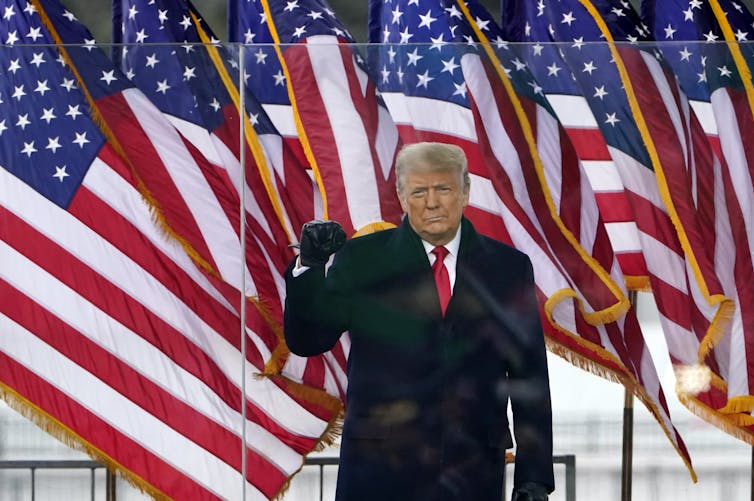
Just because he’s leaving office doesn’t mean Donald Trump will stop being a threat to democracy. AP Photo/Jacquelyn Martin
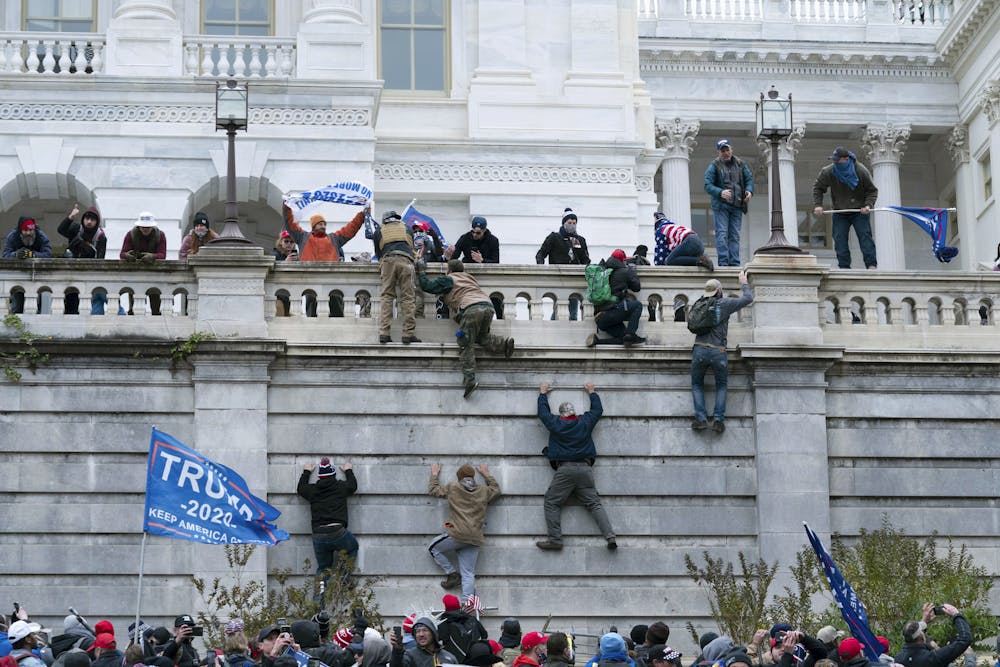
When a mob attacked the U.S. Capitol on Jan. 6 and stopped Congress from certifying Joe Biden as the nation’s next president, it was scary – and fatal for at least five people.
But it did not pose a serious threat to the nation’s democracy.
An attempt at an illegal power grab somehow keeping Donald Trump in the Oval Office was never likely to happen, let alone succeed. Trump always lacked the authority, and the mass support, required to steal an election he overwhelmingly lost. He didn’t control state election officials or have enough influence over the rest of the process to achieve that goal.
Nevertheless, over his term as president, he repeatedly violated democratic norms, like brazenly promoting his own business interests, interfering in the Justice Department, rejecting congressional oversight, insulting judges, harassing the media and failing to concede his election loss.
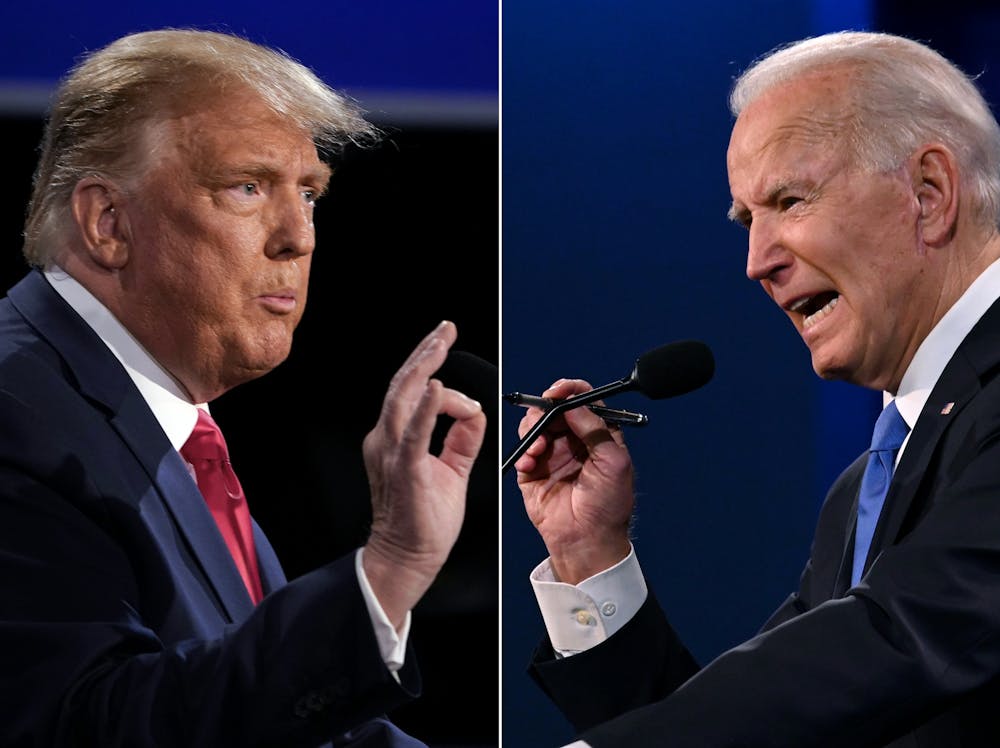
Just because he’s leaving office doesn’t mean Donald Trump will stop being a danger to democracy. Joe Biden will have to deal with Donald Trump’s legacy. Brendan Smialowski, Jim Watson/AFP via Getty Images
It wasn’t a coup
Trump never really threatened a coup, which is a swift and irregular transfer of power from one executive to another, where force or the threat of force installs a new leader with the support of the military. Coups are the typical manner in which one dictator succeeds another.
A coup displacing a legitimately elected government is quite rare; prominent examples from the past 100 years across the world include Spain in 1923, Iran in 1953, Guatemala in 1954, Brazil in 1964, Greece in 1967, Chile in 1973, Pakistan in 1999 and Thailand in 2006.
Even if Trump’s most ardent supporters believe he won, there aren’t enough of them to credibly threaten a civil war. Despite their ability to breach a thinly defended Capitol, a sustained insurrection would be easily quashed by law enforcement.
Trump couldn’t even stage an “auto-coup,” which happens when an elected executive declares a state of emergency and suspends the legislature and judiciary, or restricts civil liberties, to seize more power. There have also been very few of those perpetrated against democratically elected governments over the last 100 years. The most prominent examples are Hitler’s Germany in 1933, Bordaberry in Uruguay (1972), Fujimori in Peru (1992), Erdoğan in Turkey (2015), Maduro in Venezuela (2017), Morales in Bolivia (2019) and Orbán in Hungary (2020).
A U.S. president can’t dismiss the legislative or judicial branches, and elections are not under his control: The Constitution declares that they are run by the states. And the declaration of election results is also well outside the power of the president (or vice president). It doesn’t matter whether the losing side formally concedes; the new president’s term begins at noon on Jan. 20.
The attack on the Capitol may have threatened the lives of federal legislators and Capitol police officers, but the most it achieved was to interrupt, briefly, a ministerial procedure. Within hours, both the House and Senate were back in session in the Capitol, carrying on their certification of the electoral votes cast in 2020.
By objecting to the outcome of the election, Trump highlighted aspects of the process that many Americans were previously unaware of, ironically ensuring the public is better informed about the mechanics and details of American elections. In that way, he may have, paradoxically, made American democracy stronger.
But beyond elections, Trump has threatened America’s other bedrock political institutions. While there are many seemingly disparate examples of his disregard for the Constitution, what unites them is impunity and contempt for the rule of law. He has committed numerous impeachable acts – including potentially the incitement-to-riot on Jan. 6. He is facing a criminal investigation in New York state, and may be looking at federal inquiries both about possible misdeeds he committed in office and from before he became president.
The framers of the Constitution feared many things they designed the U.S. government to defend against, but perhaps one anxiety eclipsed all others: a lawless president who never faces justice, and was never held accountable during or even after leaving office. As Alexander Hamilton wrote, “if the federal government should overpass the just bounds of its authority and make a tyrannical use of its powers, the people, whose creature it is, must appeal to the standard they have formed, and take such measures to redress the injury done to the Constitution.”
There’s very little time left to hold Trump to account during his term. After the events of Jan. 6, he now faces public backlash from longtime congressional allies and resignations from his Cabinet. He has also been locked out of Facebook and Twitter.
But the question of real, lasting – and legal – accountability will fall to Biden, and his nominee for attorney general, Merrick Garland. They will decide whether to continue existing investigations and potentially start new ones. State attorneys general and local prosecutors will have similar powers for the laws they enforce.
The aftermath
Newly elected leaders can often face strong incentives – and encouragement – to prosecute their predecessors, as Biden does now. But that approach, often called restorative justice, can also destabilize democracy’s prospects if lame-duck executives anticipate this and decide to hunker down and fight instead of conceding defeat. Consider Libya’s Moammar Gadhafi, toppled by Western military intervention and killed by his people in 2011. He refused to flee or seek asylum for fear that both foreign governments and his own successors would prosecute him for human rights violations.
Perhaps counterintuitively, it is when outgoing presidents in transitioning democracies enshrine protections against their prosecution directly before leaving office that the democratic system is more likely to endure. This was the case in Chile with dictator Augusto Pinochet, who left power in 1989 under the aegis of a constitution he foisted on the country on his way out.
By contrast, after-the-fact pardoning of crimes – as Gerald Ford did of Richard Nixon – runs the risk of creating a larger threat to democracy: the idea that rogue leaders and their henchmen are above the law. If Trump finds a way to pardon himself, he may reduce his legal vulnerability, but he can’t erase it entirely.
If prosecutors or Congress let Trump off the hook, they may be the ones breaking new and dangerous ground, truly shattering the rule of law that underpins American democracy.
================================================================
AMT, I would disagree with the statement that January 6 wasn’t a coup. I believe it was, albeit a failed one, and wiser people than I (for example, Robert Reich) say the same. But that is not really what’s important. What’s is important is preventing it from happening again.
There is a documentary by Rick Steves available on Passport – for those who are meb=mbers of their local PBS station (if you are but have not ever used it, you may need to contact the station and tell them you want it) – called “The Rise of fasciam in Europe.” Very illuminating. I think it may underplay the role of racism – or maybe we are just more racist as a nation than any other – that’s certainly possible.
Now This News – As a Bernie Sanders lover who is also a knitter, I could not resist this.
“Insurrection-y Street” – a child could understand it.
This may not be the timing I would have employed to play this, but it was a request video. It is 6 minutes 43 seconds – and don’t start it if you can’t finish it – because it needs to be seen in full.
I apologize for another canned post, but it’s extremely important – as anyone who was paying attention to the 2020 elections already knows – and it is not going to just go away, it needs work. And Jeremy Mohler does a much better job of explaining it than I could. (I also had better luck with mail this holiday season than he did – or maybe I was just more patient, and mailed less.) This is from his email, sent to the world on behalf of In The Public Interest, so there’s no copyright issue.
If I had a nickel for every time a neighbor has complained on Facebook recently about our local post office, I’d bail out the entire U.S. Postal Service, which is $14 billion in debt.
See, that’s just the problem. The Postal Service has been struggling financially for years. Throw in a pandemic and record-breaking holiday shipping season (during which FedEx and UPS turned away customers as volume grew), and America’s most popular federal agency is woefully behind on deliveries.
But before you jump to conclusions about why, check out this new report from the Economic Policy Institute on what they call “the war against Postal Service.”
Here’s what they conclude:
The Postal Service is a valuable public service. It connects family and friends, even in far flung places. It promotes democracy. It’s crucial to our emergency and national security infrastructure. And it provides good jobs, especially for Black workers and veterans.
Most of its challenges were intentionally created. A 2006 law passed by Congress (then dominated by Republicans) sent the agency into a financial tailspin. The Postal Service was forced to slash labor costs and limited in how it can increase revenue.
Privatization is not the answer. Selling the agency to FedEx, UPS, or Amazon would harm the consumers, workers, and small business owners who rely on universal service, especially those in rural areas. But that hasn’t kept billionaires like Charles Koch from pushing privatization.
If anything, the Postal Service should be unleashed to truly innovate for the 21st century.
Postal banking. Free WiFi. Community gardens. Affordable housing. Think about what we could do with the agency’s vast network of real estate. Nearly 99 percent of the U.S. population lives within ten miles of their nearest post office.
Those buildings are public. They’re ours.
I’m just as angry as my neighbors. My mom’s Christmas gift, which I ordered way back on December 7, still hasn’t arrived.
And that’s just a gift. Other people’s prescriptions aren’t showing up on time. Bills are going unpaid.
“I mailed five checks on the same day and nothing has cleared,” one of my city’s residents told the local news. “I feel so sorry for the postal workers because they are overwhelmed. And nobody yet has any answers as to how long this will take and when the bottom line comes down how do I even trust the United States Postal Service.” We can fix the Postal Service if we allow it to innovate and give it the resources it needs.
If you agree, let’s make some noise about the value of a public Postal Service.
Talk to your neighbors (masked, of course). Support postal workers. Post on social media. Forward this email to friends. Sign this petition demanding incoming President Biden save the Postal Service.
I know there’s a lot going on in the world right now. But we need to do something before it’s too late.
I can’t use a yellow highlighter here, but I have put one paragraph in large red letters instead. That paragraph gives the crux of all the USPS’s problems (Jeremy says most, but I honestly don’t think there’s a thing that couldn’t be fixed if that were fixed.) And that’s the thing that nobody knows. You had to be paying pretty close attention to notice it when it passed – I admit I didn’t, but learned later. That act is what requires the USPS to fund employee pensions for 75 years into the future – which includes employees who aren’t even born yet. No other entity – no government entity, no for-profit corporation, no non-profit – has that kind of crippling requirement. If you or I had to put away money like that and could not touch it, we would not be eating, and would probably be homeless.
If you could just get that into the heads of other people, it would make a huge difference. And even more of a difference if they passed it on.
And all the machinery stolen and destroyed by Louis DeJoy didn’t help either.