Joanne Dixon

Everyday Erinyes #218

 Posted by at 10:00 am  Politics
Jun 062020
 

Experts in autocracies have pointed out that it is, unfortunately, easy to slip into normalizing the tyrant, hence it is important to hang on to outrage. These incidents which seem to call for the efforts of the Greek Furies (Erinyes) to come and deal with them will, I hope, help with that. As a reminder, though no one really knows how many there were supposed to be, the three names we have are Alecto, Megaera, and Tisiphone. These roughly translate as “unceasing,” “grudging,” and “vengeful destruction.”

The 1925 Geneva Protocol forbids the use of any asphyxiating gas or agent in warfare. Most of the world has signed it. The United States and Japan have not – one more step leading to what we now see: the use of tear gas in America against American Citizens. This is happening at a time when a pandemic is in full swing against the United States – a pandemic of a disease which most obviously affects respiration.

As an officer candidate I was exposed to tear gas in a controlled environment as part of my training. I was healthy then – for a smoker – but it certainly was no walk in the park. But, as someone said recently somewhere, “‘For example’ is not proof.”
================================================================

Tear Gas Is Way More Dangerous Than Police Let On — Especially During the Coronavirus Pandemic

ProPublica is a Pulitzer Prize-winning investigative newsroom. Sign up for The Big Story newsletter to receive stories like this one in your inbox.

When Amira Chowdhury joined a protest in Philadelphia against police violence on Monday, she wore a mask to protect herself and others against the coronavirus. But when officers launched tear gas into the crowd, Chowdhury pulled off her mask as she gasped for air. “I couldn’t breathe,” she said. “I felt like I was choking to death.”

Chowdhury was on a part of the Vine Street Expressway that ran underground. Everyone panicked as gas drifted into the dark, semi-enclosed space, she said. People stomped over her as they scrambled away. Bruised, she scaled a fence to escape. But the tear gas found her later that evening, inside her own house; as police unleashed it on protesters in her predominantly black neighborhood in West Philadelphia, it seeped in.

“I can’t even be in my own house without escaping the violence of the state,” said Chowdhury, a rising senior at the University of Pennsylvania. On Wednesday, she said her throat still felt dry, like it was clogged with ash.

The Philadelphia protest was one of many instances in recent days in which police launched tear gas — a toxic substance that can cause lung damage — into crowds. In a statement, Police Commissioner Danielle Outlaw said that officers had no choice but to release it after protesters threw rocks at them and refused to disperse, and that officers also used nonchemical white smoke to minimize the amount of the irritant “while maintaining a deterrent visual effect.” She called it “a means to safely [defuse] a volatile and dangerous situation.”

But tear gas is not safe, according to a number of experts interviewed by ProPublica. It has been found to cause long-term health consequences and can hurt those who aren’t the intended targets, including people inside their homes.

This would be enough of a problem in normal times, but now, experts say, the widespread, sometimes indiscriminate use of tear gas on American civilians in the midst of a respiratory pandemic threatens to worsen the coronavirus, along with racial disparities in its spread and who dies from it.

“As an immunologist, it scares me,” said Dr. Purvi Parikh, an allergy and immunology doctor at NYU Langone Health. “We just got through a brutal two months, and I’m really scared this will bring a second wave [of COVID-19] sooner.”

It puts black communities in an impossible situation, said Dr. Joseph Nwadiuko, an internist and researcher at the University of Pennsylvania Perelman School of Medicine. Thirteen of the 15 coronavirus patients in the intensive care unit where he works are black, he said. “I worry that one of the compounding effects of structural racism is you’ll see a second wave of black patients, including those who were out there defending their lives.”

On Tuesday, an open letter signed by nearly 1,300 medical and public health professionals urged the police to stop using “tear gas, smoke, or other respiratory irritants, which could increase risk for COVID-19 by making the respiratory tract more susceptible to infection, exacerbating existing inflammation, and inducing coughing.”

Here’s what you need to know about tear gas and how it’s being used by law enforcement in recent days.

Tear gas can cause long-term harm, by making people more susceptible to contracting influenza, pneumonia and other illnesses.

Tear gas is the generic term for a class of compounds that cause a burning sensation. Most law enforcement agencies in the U.S., including the Philadelphia Police Department this week, use a chemical called CS, short for 2-chlorobenzalmalononitrile.

CS activates a specific pain receptor, one that’s also triggered by eating wasabi, said Sven-Eric Jordt, a professor of anesthesiology at Duke University. But CS is much more powerful, up to 100,000 times stronger than the sting from wasabi, he said.

“They are really pain nerve gases. They are designed to induce pain.”

CS is particularly painful when it gets on your skin or in your eyes. (Doctors have advised protesters not to wear contact lenses.) When inhaled, the pain induces people to cough. The compound degrades the mucus membranes in your eyes, nose, mouth and lungs — the layers of cells that help protect people from viruses and bacteria.

Scientists know little about how CS affects the general public. The most comprehensive studies were conducted by the U.S. military on thousands of recruits who were exposed to tear gas during training exercises. Afterward, it left them at higher risk for contracting influenza, pneumonia, bronchitis and other respiratory illnesses.

The soldiers were generally healthier than the average person, with fewer underlying conditions like asthma or heart disease. Studies of civilians in Turkey found that people who are repeatedly exposed to tear gas are more likely to have chronic bronchitis or chest pains and coughing that can last for weeks. It may also be linked to miscarriages.

The effects worsen as people are repeatedly exposed to higher doses, Jordt said, but it’s hard to measure the concentrations of tear gas during chaotic protests, and many who are affected will be reluctant or afraid to seek medical help.

Parikh, the Langone Health doctor, is particularly worried about children at the protests. Their lungs and immune system are still developing, and tear gas could lead to neurological problems or permanent skin or eye damage if it’s not washed off quickly.

According to the Centers for Disease Control and Prevention, severe tear gas poisoning, particularly if the gas was released in an enclosed space — can blind or kill people through chemical burns and respiratory failure. Prisoners with respiratory conditions have died after inhaling tear gas in poorly ventilated areas. On Wednesday, an inmate at the Metropolitan Detention Center in Brooklyn died after guards sprayed him with pepper spray, another kind of tear gas that causes similar health effects as CS.

In a statement, the U.S. Department of Justice’s Bureau of Prisons said the inmate, Jamel Floyd, was caught “breaking the cell door window with a metal object” and “became increasingly disruptive and potentially harmful to himself and others.” Medical staff “immediately responded to assess the inmate, found Mr. Floyd to be unresponsive, and instantly initiated life-saving measures.” An investigation is underway.

Tear gas can increase the spread of the coronavirus and might make some people more vulnerable to catching it.

It’s too early to know exactly how tear gas affects coronavirus patients. But Parikh said they both cause lung inflammation. “Anything that’s an irritant can cause that same inflammatory response,” she said. “Your lungs can fill with mucus and it can be very difficult to breathe. The muscles narrow; it’s almost like breathing through a straw.”

People with asthma and other respiratory illnesses already have higher baseline inflammation that makes them more susceptible to catching infections like the flu or the common cold, Parikh said, so tear gas could trigger an asthma attack or weaken the body’s ability to stave off COVID-19.

“If your lungs are already wheezing and coughing, working hard to expel this tear gas or this irritant, it’s unable to have that reserve to fight off any infection, whether a virus or bacteria,” she said.

Talia Smith, a graduate student at the University of Nebraska, said it only took a whiff of tear gas to trigger an asthma attack when she was protesting in Omaha last Friday. She could barely feel it in her eyes, but her throat “just immediately started closing,” she said. Smith had brought her inhaler, but the medication inside was running low. She’d only had one asthma attack in her life before this. Smith had a burning feeling in her chest for days afterward, and she went to get tested for the coronavirus; the results are pending. She worries that if she catches the virus while still feeling the effects of the gas, she’d be fighting off the disease while her lungs aren’t at full capacity.

Parikh said there’s not enough data on asthma and the coronavirus in general. While asthmatics are at higher risk for all respiratory infections, asthma isn’t among the top chronic conditions for the most severe coronavirus patients. “We are still seeing many asthmatics get it,” so it’s too soon to say there’s no risk at all, she said.

Tear gas weakens the demonstrators’ protections against the coronavirus, said Dr. Abraar Karan, a physician at Harvard Medical School who’s working on the coronavirus response. Infections increase when people cough or talk loudly, he said, and even if someone is wearing a mask, when they’re hit with tear gas, they’ll take off the mask as they’re coughing. “Not only are you vigorously coughing, you’re vigorously inhaling to try and get more air in.” Panic can cause a stampede, forcing people into close proximity as they’re expelling large droplets from their mouths, he said, perfectly describing the situation that Chowdhury experienced on Monday.

Karan said he’s worried that protests could turn into superspreading events, yet he also understands why people feel they must be there. “At the same time, I’m worried about my patients who’ve been destroyed by systemic racism. So racism is killing them as much as a pandemic is.”

It will take at least another week before researchers can study whether the protests led to outbreaks. Even then, it will be hard to tell whether the infections were caused solely by the large gatherings or whether tear gas contributed to the increase.

Protesters aren’t the only people at risk. Tear gas is entering homes and businesses.

Jordt said he was surprised by the sheer quantity of tear gas used by police in recent days, based on what he’s seen in online videos and news clips. Instead of reserving it for the most extreme situations, “it’s more like fumigating and flushing people out,” he said. “Tear gas has become a 1st line response, not a last resort,” he added in an email.

Because many protests are occurring in residential neighborhoods, tear gas is now seeping into homes. Parikh compared it to secondhand smoke. “It’s a terrible situation,” she said. “To be honest there’s not much you can do.”

Chowdhury, the UPenn student who participated in the Philadelphia protest, said she couldn’t keep out the gas, even when she stuffed T-shirts and towels under the doors and windows. She could still smell it the next morning.

If the gas gets indoors, people should wipe down their countertops and other surfaces with large amounts of water and soap, Jordt said. Any food that wasn’t in a closed container could be contaminated and should be thrown out, and in extreme cases with large amounts of tear gas, residents and business owners may need to contact fire departments for recommendations of professional cleaning services, he added.

Companies like Aftermath offer services for biohazard and infection control. Its website’s section on “tear gas removal” says the chemical “leaves behind residue that can present serious health hazards if not properly treated. … Tear gas residue can seep into porous materials like furniture, mattresses, clothing, carpet and even hardwood floors, and continue to irritate the mucous membranes of anyone residing in or visiting the property long after the incident.”

Police tactics and tools can make matters worse.

There are many different forms of tear gas and many ways to use it, said Anna Feigenbaum, the author of a recent book on the history of tear gas and an associate professor of communication and digital media at Bournemouth University in England.

Police can spray it from cans, shoot canisters or throw grenades. Manufacturers sell grenades that produce light and noise as they expel tear gas and “triple-chaser” canisters that break into multiple pieces when they land so the gas can cover a larger area.

The technology for deploying tear gas is advancing far more quickly than scientists’ understanding of the impacts, Jordt said. “While use of these [compounds] is escalating, there is a vacuum of research to back up the safety of high-level use.”

Feigenbaum said the current situation is dangerous because law enforcement has used tear gas “at close range, in enclosed spaces, in large quantities, fired directly at people, used [it] offensively as a weapon and in conjunction with rubber-coated bullets as a force multiplier.”

Last weekend, a college student in Indiana lost his eye when a tear gas canister hit his face.

Tear gas is banned in international warfare, but it is classified as a “riot control agent” that law enforcement can use for crowd control. Yet instead of calming the situation, tear gas can sometimes “cause counter aggression,” Jordt said. “It just doesn’t work well, and it hits the weakest people the most, and causes the most complications in them.”

One of the most controversial events occurred on Monday, when law enforcement in Washington, D.C., used tear gas on peaceful demonstrators to clear the way so President Donald Trump could walk to a nearby church for a photo op. A statement from the U.S. Park Police said they used “pepper balls” with an unspecified irritant powder and “smoke canisters.” (A reporter with WUSA9 tweeted photos on Thursday of CS containers that he and his team said they found at the site.) The CDC uses “tear gas” as the catch-all term for many “riot control” compounds with similar effects.

Monica Sanders, who lives across the river in Alexandria, Virginia, said she could see the smoke from her house, like something from a “dystopian reality.”

A University of Delaware professor who specializes in disaster management, Sanders said she’d thought about attending that protest but decided against it because her lungs were still weak from an earlier infection that might have been the coronavirus. Although she never got tested, Sanders said she came down with a respiratory illness in mid-February that almost sent her to the emergency room. She is a triathlete with no history of asthma. Last October, she swam a 5K race. Today, she can’t even swim a mile.

She said, “There are other ways to do crowd control that don’t involve creating respiratory ailments during a pandemic, in a city that doesn’t have enough [medical] supplies.”

Maya Eliahou and Caroline Chen contributed reporting.

Filed under:

/>================================================================
Alecto, Megaera, and Tisiphone, I might say we should have seen this coming, in 1925, and in every year thereafter that the United States dragged its feet on signing the Protocol, under Presidents and Congresses of both parties. But it fell through the cracks. If and when – I hope when, and I hope soon – we again have a Democratic President and a Democratic Congress, please do not let us forget that this needs to be rectified.  Andits use in “riot control” also needs to be drastically reevaluated.

The Furies and I will be back.
================================================================

Share

Bill Maher from 6/5/20

 Posted by at 9:00 am  Politics
Jun 062020
 

Here are four clips from Bill Maher’s Real Time last night, and I’m going to say four great clips this time. I looked around quite a bit and hope I didn’t miss any.

Monologue – Zing! Many zingers mixed with the truth

Killer Mike – I like him a LOT better in this interview than I did earlier in the week.

Blood In the Streets – I agree with Soledad that he doesn’t have support from the military like he thinks he has. I’m beginning to think he doesn’t have it from police either as a whole like he thinks he has. Now bikers, I don’t know. I’ve known one or two groups I’m fairly confident he does not have support from.

New Rule – Bill is thrilled at the same things that are thrilling me. And he has a damn fine collection of them. And takes it to the logical conclusion. I don’t think I have ever agreed with him more.

Share

Emails About George Floyd

 Posted by at 12:44 pm  Politics
May 312020
 

It being a slow newsday, I thought I’d share a couple of emails which I received, written and sent as responses to the death of George Floyd. Neither one is easy reading – too much truth. Both are moving.

First is this one from Mike Baillie at Avaaz. He didn’t write most of it, and I’m not sure who transcribed it. It is – well, you’ll see.

These are the last words of George Floyd, a 46-year-old man who died as a US police officer pinned him down, kneeling on his neck for seven minutes, until he suffocated:

“It’s my face man
I didn’t do nothing serious man
please
please
please I can’t breathe
please man
please somebody
please man
I can’t breathe
I can’t breathe
please
(inaudible)
man can’t breathe, my face
just get up
I can’t breathe
please (inaudible)
I can’t breathe sh*t
I will
I can’t move
mama
mama
I can’t
my knee
my nuts
I’m through
I’m through
I’m claustrophobic
my stomach hurt
my neck hurts
everything hurts
some water or something
please
please
I can’t breathe officer
don’t kill me
they gon’ kill me man
come on man
I cannot breathe
I cannot breathe
they gon’ kill me
they gon’ kill me
I can’t breathe
I can’t breathe
please sir
please
please
please I can’t breathe”

Then his eyes shut and the pleas stop. George Floyd was pronounced dead shortly after.

Some of you may be familiar with the name Heather Mizeur. She was a “delegate” (State Representative) in Maryland for about 8 years, could not run for both reelection and governor, so lost the seat when she lost the Democratic primary. Since the election of 45*, she has founded a nonprofit (Soul Force Politics) and has been making podcasts. She sent this heartfelt letter:

I spent all of last night writing to get this off my chest. Let’s get to work.

George Floyd. Amaud Arbery. Breonna Taylor. Bothem Jean. Atatiana Jefferson. Elijah Al-Amin. Philandro Castro. Alton Sterling. Jordan Davis. Eric Garner. Michael Brown. Trayvon Martin. Tamir Rice. Sandra Bland. Freddie Gray.

These are only the names I can remember.

I can barely contain the rage at there being too many to name them all.
Innocent, unarmed, beautiful black people are being murdered by white people because they deign to run in our neighborhoods, wear hoodies, listen to rap music “too loud,” play with toy guns, or resist arrest from police they cannot trust to protect them.

Quick to see and easy to condemn, this illness of overt racism.

Meanwhile, its more invisible sibling, white supremacy, is fed, harbored, and allowed to metastasize all around us.

We must dismantle all of it.

It starts in the naming of uncomfortable truths.

White-bodied people must look racism in the eye and not avert our gaze when we see our own reflection in the shadows. Racists are not some “other” version of white people. It is all of us. We disarm it by owning it.

Our historic resistance to admitting to and healing from our nation’s original sin of slavery has left a core wound to fester. These incidences of violence against black people are not suddenly surging in the Trump era. We just finally have the technology in every hand to bear witness to it.

Black people cannot fix this. This is the work of white people. When we go there, the door to healing that we open is not just our own; it’s a collective consciousness that emerges renewed.

Walk through this door with me. Step out of whiteness. Commit to more than just posting your anger and regrets on social media at the next gruesome video.

Change. Your. Behavior.

Very few harbor intentional ill-will and active prejudices against people of color. However, most of us are untrained to see how racism seeps into every corner of our lives.
Let’s be clear that saying “I’m a racist” doesn’t mean what you think it does. You aren’t hosing people down with water and unleashing attack dogs, burning crosses in lawns, or administering choke holds. You are not denying someone a job or scholarship because you are prejudice against their color.

For a long time, the absence of those overt behaviors was evidence enough of innocence.
The truth knows a deeper subtlety. Racism is also a collection of unearned benefits white-bodied people have received but have not earned – merely for being perceived as white. Bank loans with favorable interest rates, better schools, nicer neighborhoods, jobs with upward mobility and the gift of constantly being given the benefit of the doubt and presumed innocence.

Some will say we have earned everything through hard work. But we have been competing within a system that has rigged all the rules in our favor.

In acknowledging this, we allow space to come forward that helps us see more clearly how people of color have had a boot in their face every time they try to climb the ladder of the “American Dream.”

This dream never included them from the beginning. But we can change this now. Through our desire to give up unearned privileges and taking on the hard work of discussing reparations, we can begin to truly dismantle the legacy of racism.

You ask, “But what if I am one of the ‘good ones’ who goes to trainings and reads the right books – you’re not including me in this, right?” Yes, my friend, I am. We call ourselves anti-racist racists.

All white people have a place deep within that is inviting each of us to be brave, face our fears of this difficult topic, and embrace an opportunity to heal what is broken in all of us.

My favorite anti-racism teacher, the Reverend angel Kyodo williams, reminds us that whites were seduced, induced, or reduced into participation with white supremacy systems. Some of our ancestors were seduced by the financial gains of enslaving black people. Others were immigrants eager to trade their status for the privilege of being seen as white. Some were induced through not-so-veiled threats that either you do this or it will be your family we come for – cleaving divisions of people, fighting among themselves for status and protection.

Most of us have no idea how the nets of seduction and induction entangled our ancestors. But we do know that we have all been reduced by this. Shame, guilt, and self-hatred is the white inheritance of complicity with this unspeakable history. Our collective lineage has passed on to us a hidden trauma of whiteness that continues to inflict so much injury.

We hate ourselves, so we take it out on you.

White fragility is a thing. And we have to get over ourselves.

The work of undoing racism is upon us. This is the calling of our generation.

Truth liberates us. And when we step into our power to shift the dynamic of racism in our lives, we heal in multiple directions – ourselves, our ancestors, and the children yet unborn.

See the ugly truth of white supremacy all around you — not just the obvious racists pulling guns on innocent black people — see the legal system that gives disproportionate sentencing based on skin color. See the mothers and babies that receive inadequate health care compared to their white peers. Notice the toll that the Coronavirus is taking on black and brown communities. Call out corporations that dump their toxic waste in black and brown neighborhoods and governments that refuse to provide clean drinking water in Flint, MI. Pay attention that you do not have to pay attention to anything when the police pull you over for a routine stop. See the weaponized fear that the “Karens” and “Beckys” use to their advantage to put black people back in their place. Condemn police brutality. Notice the not-so-subtle jabs and jokes whispered in hushed tones in the comfort of other white people.

And vow to disrupt it.

Agitate for law changes and vote in political representatives who will champion them.
In mixed spaces, shut your mouth and open your heart. Whiteness often has us speaking first, looking for applause. We do not always have to get it right. We do not have to possess the best, fastest, rightest answers. Performance does not prove who we are. We must unlearn the ways that we have been taught to take measure. Let other people shine.

Give up some of that power which has been unfairly bestowed upon you and share more of the resources that we have horded to protect our status.

Racism is embedded in our system of existence. Commit yourself to overturning it. Embody your awareness. Teach your children a different way. For these pervasive daily injustices are just as lethal as the life-ending ones.

Start speaking up against racism in white spaces. It gets easier with each step, with each word. Use your voice of privilege. Let your heart lead you.

Love is the pathway to liberation. Radical love is our partner in undoing racism.

With all my love,

Heather

Heather R. Mizeur, CEO + Founder | Soul Force Politics

And I – have no words.

Share

Everyday Erinyes #217

 Posted by at 9:00 am  Politics
May 302020
 

Experts in autocracies have pointed out that it is, unfortunately, easy to slip into normalizing the tyrant, hence it is important to hang on to outrage. These incidents which seem to call for the efforts of the Greek Furies (Erinyes) to come and deal with them will, I hope, help with that. As a reminder, though no one really knows how many there were supposed to be, the three names we have are Alecto, Megaera, and Tisiphone. These roughly translate as “unceasing,” “grudging,” and “vengeful destruction.”

Living next door to New Mexico, I have an interest in what is going on there, so I subscribe to a New Mexico Daily Political Report. A story I saw there made me want to share it – which is generally OK with them – but this one wasn’t their original work. Tracking it down wasn’t hard. Following all the rules was a challenge. But I am finally there. Sorry it took so long.

The article is shared under s Creative Commons license Attribution-NonCommercial-NoDerivs 3.0 United States (CC BY-NC-ND 3.0 US)

New Mexico and Colorado are not the only states, nor is the US the only country in the world, where there are fire seasons. Many of us live where there are fire seasons, and some of those seasons are coming right up, while CoViD-19 is still an issue. In 2017 New Mexico found itself fighting fires and an outbreak of strep throat at the same time. Much was learned. If you live in a fire season zone, especially if you work or volunteer in firefighting, or have family, or friend, in fire season zones and maybe working to fight fires – you’ll want to know this.
================================================================


COVID-19 pandemic complicates 2020 wildfire season

By Elizabeth Miller, New Mexico In Depth | May 12, 2020

The BLM Gila District’s Safford Hand Crew works a burnout operation during the 2017 Frye Fire, Coronado National Forest, AZ. BLM/Kress Sanders.

||=======================================||
||This story was originally published by New Mexico In Depth ||
||=======================================||

One morning in June 2017, while fighting the Frye Fire in southern Arizona, firefighters began visiting the on-site paramedic complaining of body aches, sore throats, fever, and fatigue. The paramedic diagnosed them with strep throat, a bacterial infection that can pass person to person or through food or water, and sent them to the regional medical center.

Then another crew showed up with the same symptoms. And then, a third.

Medical staff estimated nearly 300 people might have been exposed. They risked overwhelming the local hospital and spreading the infection into town.

Instead, sick crews were isolated, and a doctor and antibiotics brought to them. Other staff disinfected gear, dumped water, and tossed out catered food. People were told to stop shaking hands and use hand sanitizer. They considered these measures a success: Only 63 people were diagnosed with strep throat.

The incident and other infectious disease reports shared through the Wildfire Lessons Learned Center, a federally funded database that works to increase wildland firefighter safety, illustrates how infectious diseases can rapidly spread through fire camps — where large numbers of firefighters live for weeks, or months, when fighting fires.

With the looming fire season ripe for starting blazes in the Southwest, state and federal officials face the prospect of the new coronavirus, COVID-19, spreading through fire camps and potentially jumping to nearby towns, or returning home with firefighters. Crews commonly cross state lines, moving from one fire to the next.

“We do transfer these folks around the country as fires spread and as one state needs these folks less and another state needs them more,” said Luke Montrose, an environmental toxicologist and assistant professor at Boise State University. “In an instance where you’re trying to deal with a pandemic virus, this may be the exact type of activity that ends up spreading this around the country.”

To counter the threat, authorities are changing how wildland firefighters live and work as well as how fires will be managed this summer.

In New Mexico, these measures are already being tested in the field. Wildfires started in early May near Carlsbad, Lumberton, Mountainair and Reserve. Forest Service and local crews quickly extinguished or worked to contain all of them.

But the potential for large fires will increase through May, according to National Interagency Fire Center predictions. This month, the Southwest’s fire risk rises from moderate to high. Already, temperatures have run three to five degrees above normal in the northern mountains. The Southwest Coordination Center forecasts an above-average fire year, which often comes to a close when the monsoon arrives in July.

Firefighters working the 2012 Whitewater-Baldy Fire, New Mexico. USFS Gila National Forest.

Fire tactics will shift

Wildfire managers in New Mexico have decided to quickly put out all wildfires this season, rather than letting some burn as they normally would. And the Forest Service intends to call for early aviation support. Fast suppression offers the best chance to keep fires small and, with that, fire camps smaller.

“There’s an emphasis on the initial attack and trying to catch fires before they get big,” Larry (Kaili) McCray, chair of the National Wildfire Coordinating Group (NWCG) Emergency Medical Committee established in response to COVID-19. The NWCG helps organize response to wildfire across the country, moving resources, including personnel, around so no single agency must fight a massive fire alone.

The Forest Service and New Mexico State Forestry Division also canceled prescribed burns, normally run to each year to clear undergrowth that fuels large fires, to spare adjacent communities their smoke. Research from Harvard suggests a link between breathing fine particulate matter, like that in smoke, with worsened outcomes from COVID-19. An animal study showed habitually breathing woodsmoke decreases the lungs’ abilities to clear out pathogens.

But some worry those changes—made to protect public health—might pass those troubles on to firefighters.

Extinguishing every wildfire could add up to a longer fire season and one that subjects firefighters to more smoke, said Montrose, with Boise State University, who began studying the health effects of wildland firefighting a decade ago.

“Fires that firefighters otherwise wouldn’t have been suppressing, now they are going to be, so they may be more heavily, more chronically exposed,” he said.

The National Multi-Agency Coordinating Group’s (NMAC) Southwest regional COVID-19 plan briefly states that, while research hasn’t specifically studied wildland firefighters, exposure to wildfire smoke may lead to increased susceptibility to the virus. The Fire Management Board’s advice agrees and suggests fire managers adjust tactics and objectives with that in mind.

How well firefighters come through the season will be determined in part by how well equipped they are with handwashing stations, mobile shower units, and places to isolate sick firefighters, Montrose said.

With governments already straining under expenses, he worries about shortfalls. More fires will stretch those resources thin, as would a COVID-19 outbreak among firefighters. Much hinges on when and where fires start this season.

Tents at a Las Conchas Fire Camp, New Mexico, 2011.

Overhauling ‘standard operating procedures’ for a pandemic

One of the chief concerns for firefighter health is where they live when they’re on the job: in fire camps. The NWCG describes fire camps as ideal environments for outbreaks of infectious diseases, with their “high-density living and working conditions, lack of access to and use of soap and sanitizers, and a transient workforce.”

Already, wildland firefighters are familiar with “camp crud,” an upper and lower respiratory tract infection accompanied by fatigue and a cough that recurs among firefighters. Incidences often peak toward the season’s end among rundown immune systems. NWCG documents recommend ramped-up sanitation practices to reduce its spread.

“It’s great that they recognize that, but it may not bode well for COVID-19,” said Montrose. “In addition to recognizing that it can spread through a camp, they had recognized and documented incidences where [camp crud] had spread from camp to camp.”

Both New Mexico and federal wildland fire managers say they’re preparing plans to limit the spread of COVID-19.

“We expect that we’re going to have to fight fire,” said McCray. “And in all of the models that we’ve been discussing, we planned for the worst-case scenario.”

Firefighters travel in crew buggies that carry 10 to 15 people at a time and cluster by the hundreds in fire camps, staying for weeks in the woods with little access to running water. These practical realities make it harder for them to abide by Centers for Disease Control and Prevention advice, like keeping distance from others and washing hands frequently.

Still, fire coordination groups have encouraged those practices and instituted daily verbal screenings* that check personnel for signs of COVID-19. Tents will be more spaced out and overall camp sizes kept small. Some support positions — people who manage finances or provide firefighters with maps, for example — will move out of fire camps. Crews will maintain physical distance from one another during briefings, or may do them by radio.

“Fire camp is going to look different this year,” McCray said.

Any new hires will be asked to self-isolate for two weeks, if possible, and monitored to ensure they’re symptom-free. Members of 20-person crews are advised to avoid contact with other crews, outside personnel, and the general public. Camps will be set up so crews can keep to themselves.

These new approaches to outside contact should mitigate concerns within a crew, McCray said, so that when firefighters line up for lengthy hikes, they don’t worry that the person in front of them is exhaling something they don’t want to breathe in.

This season, rapid-containment efforts will strive to keep fires small in part to limit the number of people involved in fighting them. If a fire does grow, Forest Service staff say their goal will be to balance having necessary resources on hand to protect lives and property with minimizing COVID-19’s transmission among both first responders and communities.

If a firefighter does turn up with a temperature above 100.4, that person will be isolated and sent for testing at local health facilities.

The Southwest regional COVID-19 plan says to treat a fever that high as confirmation of a coronavirus infection even if a test is unavailable.

In New Mexico, the state’s Forestry Division is adapting much like its national counterpart. The Forestry Division, which manages 43 million acres, worked with local and tribal partners to create new guidelines for their staff, said Vernon Muller, resource protection bureau chief with the New Mexico Department of Natural Resources.

Those include self-screenings at the start, middle, and end of every shift, even while on active fire assignments, for any signs of sickness. Only two individuals will ride in an engine while a string of chase vehicles transports the rest of the crew.

Crew buggies will carry a fraction of their capacity. Temperature tests will be taken. Meals will be packaged individually instead of served buffet-style. Already, Muller said, two individuals declined an assignment after their self-assessment questionnaire found they or their family members may have been exposed to coronavirus.

But these choices create tradeoffs. Some say it’s still not possible to keep six feet apart, and crowding the roads with almost twice as many vehicles creates a hazard of its own and doubles the workload when it’s time to sanitize trucks and equipment.

And because firefighters are paid only when on-assignment, passing on an assignment because they suspect exposure to COVID-19 cuts into their paycheck.

“That’s a tough one to override in all sorts of employment,” said Travis Dotson, an analyst with the Wildfire Lessons Learned Center. “There’s people that will go to work sick because they need to work, and we will face that as well in fire.”

There’s a cultural challenge, too. Firefighters are accustomed to working long hours, through fatigue, discomfort, and dirt, in the heat, and while shouldering packs of more than 45 pounds.

“‘Gut it out’ culture allows us to be able to do that work, and like so many things, that same culture can promote almost the thing that is going to cause harm, like not reporting an illness,” Dotson said.

He’s seen some change: social media posts of firefighters training while six feet apart from one another and wearing masks.

Some people, Dotson noted, are excited about large fire camps becoming a thing of the past. They’re noisy and crowded, a tough place to stay well and get rest even in good circumstances. A more dispersed model might suit a lot of firefighters, Dotson said, even if it spurs logistical nightmares.

What’ll work best to change behavior, he said, is buy-in at the boots-on-the-ground level.

Firefighter crew meeting during the Las Conchas Fire, New Mexico, 2011.

Learn by doing

As reports about how guidelines are working come in, the Wildfire Lessons Learned Center shares them on a mass email list, through social media, and with regional safety specialists. People also use an online forum to ask questions or share ideas.

One “rapid lesson sharing” report posted on wildfirelessons.net from an April grassfire in Montana said firefighters wore masks during their 90-minute drive to the fire — but found them “hot, distracting, and uncomfortable.”

The supervisor noticed people, including drivers, feeling lethargic as a result and, to avoid touching their faces, not eating or drinking water although both are important components of an “alert and functioning firefighter.” More vehicles meant more drivers, he added, requiring someone who just spent 16 hours sawing trees to drive back to camp — “Is this what we want? I don’t.”

Everything needed to be reconsidered: cleaning bathrooms before and after use. Dodging handshakes from crews reluctant to drop that practice. Not taking back a pen someone had asked to use.

In the future, he noted, they will pack extra bottled water and soap so they’re not applying sanitizer to grit-covered hands, and a bottle of bleach for field cleaning. They received sack lunches, but the calorie content came up short, and because firefighters weren’t allowed in stores when they stopped for fuel, they just went hungry — and concerned about whether the person preparing their food wore personal protective equipment.

In that report, the hotshot crew superintendent wrote that while they had talked about and trained with social distance in mind, “It is damn tough to take these practices to the fireline.”

The supervisor said his assistant summed it up best: the agency can’t manage COVID. It’ll need to be managed within individual crews. “We need to limit the spread from unit to unit,” he said. “This is what will cripple us collectively.”

  • original link broken

================================================================
Alecto, Megaera, and Tisiphone, I just learned that there have already been two tropical storms/depressions off the United States east and in the Gulf of Mexico which were substantial enough to be given names, and there’s another one out there which may get one – all before the first of June. This is unprecedented. But it’s not entirely unexpected. And more events which are unprecedented are expected, and the cavalier attitude of the U.S. Government is, to say the least, not helping. It would be great if you could persuade the gods, even some of them, to have mercy on us. But I will not be surprised if they are not interested. After all – we did this to ourselves.

The Furies and I will be back.

Share

Everyday Erinyes #216

 Posted by at 10:23 am  Politics
May 232020
 

Experts in autocracies have pointed out that it is, unfortunately, easy to slip into normalizing the tyrant, hence it is important to hang on to outrage. These incidents which seem to call for the efforts of the Greek Furies (Erinyes) to come and deal with them will, I hope, help with that. As a reminder, though no one really knows how many there were supposed to be, the three names we have are Alecto, Megaera, and Tisiphone. These roughly translate as “unceasing,” “grudging,” and “vengeful destruction.”

Another week, another postponement. But I do think this article is important, and has implications far beyond its immediate subject – which I see as being “What good does it do to have an official in place to oversee government activity when the very person they are investigating has the power to fire them?” That is certainly an important question.

But an even bigger question with wider application, in my opinion, is this: There is no guarantee that an elected official will have integrity. Many people who lack it manage to coax enough votes from the electorate to get into office. There is also no guarantee that an appointed official will have integrity. Officials appointed by someone who lacks integrity will probably lack it also. Even a confirmation process – as we have seen – will not guarantee integrity on the part of officials appointed by someone who has none. How, then, should we design our processes to ensure the maximum possible integrity in officials?

There is an ongoing debate in America as to whether judges should be elected, or appointed – federal judges by the president, state ones by the governor. And, once appointed, to whom should they be accountable? Our different states and the federal government have come up with various answers, none of which is even close to perfect.

Then there is the matter of decennial redistricting after each census. Different states have different answers to this too – but it’s a similar problem. A redistricting should have integrity, just as an official should. Some states’ solutions work better than others. Perhaps looking at how states handle redistricting would give us some ideas, if not firm answers.

Perhaps if we can manage somehow to answer this question with regards to inspectors general, the answer may provide some assistance in answering it with regard to judges as well. I hope so.
================================================================

Congress may not like it when Trump fires an inspector general – but it can’t do anything to stop him

President Trump has fired four inspectors general. Getty/Drew Angerer

Stanley M. Brand, Pennsylvania State University

President Donald Trump’s late-night firing of the State Department inspector general is only the latest in his purge of – and resistance to – these independent and nonpolitical law enforcement officers.

Trump isn’t the only president to get rid of inspectors general.

President Ronald Reagan attempted to fire and replace all currently serving inspectors general upon his assuming office in 1981. But he backed off and ultimately allowed many of them to continue in office.

President Barack Obama removed the inspector general of the Corporation for National and Community Service in 2009 without significant opposition.

But Trump had already discharged three inspectors general before the latest firing, which goes beyond previous presidents’ attempts to rein in these officials. And he has couched his actions in language that reflects his longstanding resistance to oversight by Congress of his administration and the executive branch.

And it appears Congress can do little about these firings.

Resisting oversight

Among the others fired by Trump are the Intelligence Community inspector general, whose release of a CIA employee’s whistleblower complaint prompted impeachment proceedings.

He got rid of long-serving acting Department of Defense Inspector General Glenn Fine. Fine was slated to lead the new Pandemic Response Accountability Committee created by the CARES Act, the coronavirus relief bill.

Trump also pushed out Christi Grimm, the acting inspector general at the Department of Health and Human Resources. She was fired after issuing a report critical of the administration’s handling of pandemic testing.

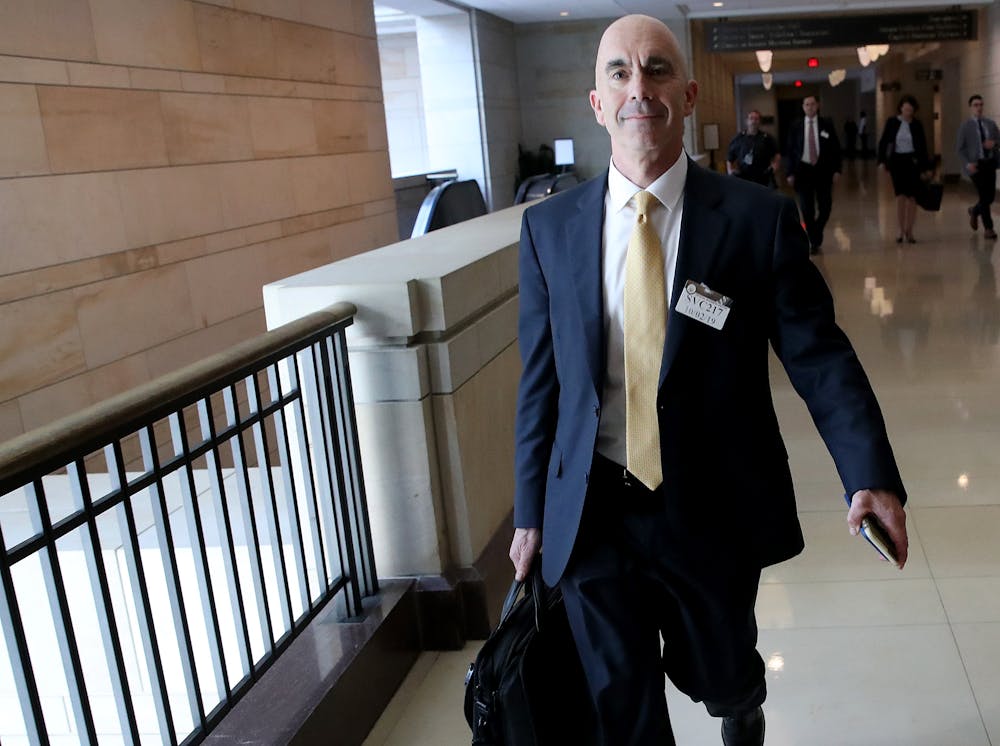
Fired State Department Inspector General Steve Linick in the U.S. Capitol, Oct. 2, 2019. Getty/Win McNamee

In a related attempt to place loyalists in these oversight positions, Trump replaced Fine with a former White House counsel who had participated in his impeachment defense.

Trump has resisted Congress’ attempt to hold his administration accountable in spending the pandemic recovery money, challenging the inspector general’s ability to directly communicate with Congress. He claims that for the inspector general to do so without his permission would violate the Constitution.

Executive departments and agencies – like the Departments of State or Defense – often butt heads with inspectors general over access to documents or investigation of high-ranking appointees. But Trump’s challenge is the broadest and the first to ground dismissals in response to investigations into his own conduct or the conduct of his administration.

Saving taxpayer money

The Inspector General Act of 1978 was one of the many post-Watergate government reforms. It aimed to increase government accountability and prevent waste, fraud and abuse in agencies and programs.

President Jimmy Carter called the Inspector General Act “perhaps the most important new tool in the fight against fraud.”

Whether ferreting out fraud in defense contracts, investigating Medicare scams or identifying government employees who submitted false expenses, inspectors general have played a major law enforcement role.

The inspectors general are appointed by the president and confirmed by the Senate. The law states that inspectors general are to be appointed “without regard to political affiliation” and solely on the basis of integrity and demonstrated ability in accounting, auditing, law, financial analysis or investigations.

There are now 73 inspectors general with 14,000 employees who monitor federal agencies from the Department of Defense and Energy to Amtrak, the Postal Service and the Library of Congress.

Since 1978, they have audited thousands of programs, referred hundreds of cases for criminal prosecution and recovered billions in taxpayer dollars.

‘Loss of confidence’

The president appoints the inspectors general and may remove them, as he may remove most executive branch appointees.

Beyond that power wielded by the president, inspectors general are independent. While they are under the “general supervision” of the head of the department or agency where they work, they do not report to and are not subject to supervision by any other officer in the government or agency.

In fact, the law says that “Neither the head of the establishment nor the officer next in rank below such head shall prevent or prohibit the Inspector General from initiating, carrying out, or completing any audit or investigation, or from issuing any subpoena.”

The president must communicate in writing the reasons for removal of any inspector general. In the removal of the State Department inspector general, President Trump sent a terse letter to Congress, saying that he his reason for firing Linick was that he “no longer” had the “fullest confidence” in him.

Republican Sen. Chuck Grassley of Iowa, a decades-long champion of the role of inspectors general, stated that a “general lack of confidence simply is not sufficient detail to satisfy Congress.”

Despite congressional uproar over these dismissals from Democrats and some Republicans, there is serious doubt about what conditions or limits Congress could place on the president’s power to remove the inspectors general.

Under Supreme Court precedents related to the principles of separation of power, Congress – one branch of government – cannot remove an official in the executive branch – another branch of government – except by impeachment. That has been interpreted to mean, by inference, that Congress has no power over the president’s ability to fire an executive branch official, including inspectors general.

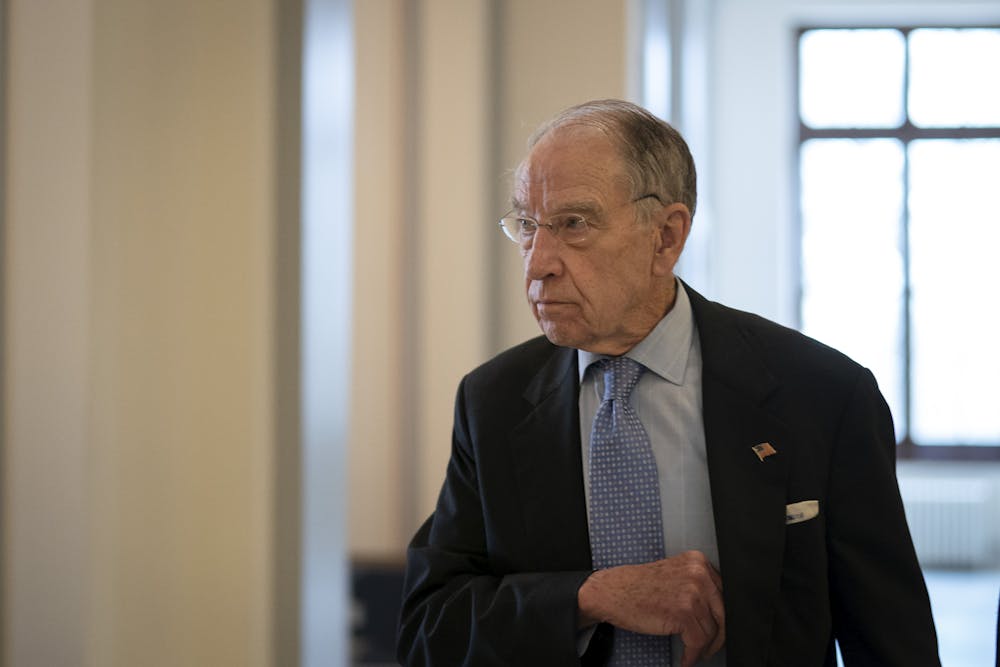
Sen. Chuck Grassley, Republican from Iowa, criticized the reason Trump offered for firing Linick. Getty/Drew Angerer

Echoes of previous Trump claims

Where Congress has attempted to exert some control over inspectors general is through requiring that they provide information to Congress to assist in its oversight function.

For example, the law that created the position of inspectors general requires them to report immediately to their agency head when they become aware of particularly serious or flagrant problems, abuses or deficiencies in agency programs.

That information, in turn, must be transmitted to Congress within seven days.

A separate provision states that nothing in the law shall be construed to authorize withholding information from the Congress.

But disputes have arisen between Congress and the executive branch over the interpretation of these provisions.

Indeed, part of President Trump’s reason for dismissing the Intelligence Community’s inspector general was based on that inspector general’s release to congressional committees of the whistleblower complaint that kicked off the Ukraine impeachment inquiry. The president has asserted that inspectors general have no constitutional right to investigate him, the chief executive of the nation.

No president until Trump had asserted that by reporting findings to Congress, inspectors general were making unconstitutional intrusions into presidential and executive branch prerogative.

The president’s signing statement accompanying the CARES Act was dominated by objections that the legislation “violates the separation of powers by intruding upon the President’s power and duty to supervise the staffing of the executive branch.” Trump argued that he would not heed the CARES Act requirement that an inspector general report directly to Congress on the law’s administration. They would only do so, he wrote, under “presidential supervision.”

This argument – that as president, he is beyond accountability – echoes the claims Trump has raised as he fights congressional subpoenas for his tax returns and private records from his businesses in two cases argued before the Supreme Court recently.

Whatever answer the court delivers in those cases, it’s not likely to stop the president from firing another inspector general. And it doesn’t look like Congress has the power to stop him.

[You’re smart and curious about the world. So are The Conversation’s authors and editors. You can get our highlights each weekend.]The Conversation

Stanley M. Brand, Distinguished Fellow in Law and Government, Pennsylvania State University

This article is republished from The Conversation under a Creative Commons license. Read the original article.

================================================================
Alecto, Megaera, and Tisiphone, it is probably impossible to design a system which excludes all candidates (and systems) who lack integrity from public office. But surely we can do better than we have so far. If anyone knows integrity, dear Furies, it’s you. Please help us.

The Furies and I will be back.

Share

Bill Maher from 5/22/2020

 Posted by at 10:00 am  Politics
May 232020
 

Since TC only promised a Personal Update, I got this prepared – and then he asked for it. Great Minds. There are four videos available this week.

Monologue – Not that Bill isn’t witty, but whoever put together his virtual (and visual) laugh track deserves an Emmy.

Friedman – Friedman is the expert on how tightly connected we all are globally – and ties together several events with global effects, and addresses information overload. (This clip wouldn’t give me CC.)

Moore – It surprised me that the possible need to drag Trump* out of the White House didn’t come up, since both are keen on that idea (not without reason.) But the things that did come up are probably more likely,\.

New Rule – Bill is correct, of course. Well, except his implication that liberals don’t notice. A lot of us do. If he knows how to get legislation past #MoscowMotch, that would be constructive! I do think he estimate the complexity of the situation, though. For one thing, I have shopped exclusively on line for years, and maybe my needs are different, but it’s very rare that I can’t avoid Amazon. For another, much of what one can buy at amazon, one is actually buying from small businesses through Amazon. What are the economic implications of that? I am old enough (as is Liz, and probably Bill) to remember when Ma Bell was broken up. That was challenging enough – and at that time they were only selling one service.  Now – now that all the companies have merged and need to be broken up again, and bundling is a thing – I shudder.

Share

Proxy Update 5/22/2020

 Posted by at 11:34 am  Politics
May 222020
 

I haven’t found much news, and what little I have found is petty. Ted Cruz had a hissy fit. Tara Reade’s attorney dumped her. Another youth pastor has been caught soliciting a male sex worker. Ho hum. But it’s Friday. Someone with a modicum of integrity will probably get fired tonight. Meanwhile, here’s an article to hang comments on.

Never-before-seen Trump photo. No one can safely get a haircut in a salon right now, including the president. Here’s proof, a photo of his overgrown pandemic hair, sent to me by a White House official and verified by a second administration source. “The hair is his real hair from quarantining and not being able to get a haircut,” the first official tells me.


There’s a new ad out, not from the Lincoln Project, but from a PAC called “Lindsey Must Go”

I don’t generally impose information about operas I’m watching on people here, and I”’ try to keep this relevant, but the Opera I watched Wednesday night left me a little unsettled. and made me realize something I’d never thought about. It wasn’t the music, or the cast, or the sets and costumes – all were brilliant. Yet it was painful to watch. It was like watching an asteroid come in headed straight for you. Impending doom and no way to avoid it. But here’s the thing. I cannot think of another opera, or another play, or another book, story, ballet, any narrative form, in which ALL the characters were trying so terribly hard to do the right thing. Hate comes into it but no one who has it is a hateful person. They’re not motivated by greed, or cruelty, but for justice as they see it. And – as a result – there is no one to blame. No one for the viewer to be angry with. It was a revelation to me to realize how much focus – how much closure – I lost by not having that. It’s no excuse, but it may give me a little insight into where some (not all) Trump* supporters are coming from … it’s true they were unfair to pick people to blame who were in no way at fault, and also true that they were – let’s say misguided – to seize on people to blame that Trump* handed to them. But I certainly can understand the craving.


Share

Proxy Update 5/21/2020

 Posted by at 11:43 am  Politics
May 212020
 

Hi and good afternoon all.  I don’t have anything new.   As Lona pointed out, it’s likey TC doesn’t have his laptop, so we aren’t likely to get any news.  But I can still put up a post to give us a plae to hang our comments, thoughts, TJIs, and whatever we want to share.

The Neko Neko Shokupan bakery, at the All Hearts Mall (wherever that is) in Japan, bakes bread in the shape of a cat head. It comes in plain, cheese, sweet red bean, or chocolate. They have an online store, but you’ll need a translator, and I suspect shipping would be pretty pricey.


Look what a librarian (it would have to be a librarian, wouldn’t it) came up with –


Cartoon – 


Mrs. Betty Bowers strikes again.

Share