Joanne Dixon

Everyday Erinyes #223

 Posted by at 9:00 am  Politics
Jul 112020
 

Experts in autocracies have pointed out that it is, unfortunately, easy to slip into normalizing the tyrant, hence it is important to hang on to outrage. These incidents which seem to call for the efforts of the Greek Furies (Erinyes) to come and deal with them will, I hope, help with that. As a reminder, though no one really knows how many there were supposed to be, the three names we have are Alecto, Megaera, and Tisiphone. These roughly translate as “unceasing,” “grudging,” and “vengeful destruction.”

This story has not been getting a lot of attention, and I can see why. It’s about one state, not a terribly populous one, and, within that state, a very small and quite specialized population, one which most people frankly don’t care about. I’ve been following liberal sites, blogs, and comments in particular to get a pretty good idea that even among liberals, maybe especially among liberals, these are not people high on our list for fighting injustice.

But exactly for that reason – this story is the point at which push comes to shove. A moment of truth. This when we find out whether we truly have compassion for every human being, or just for some human beings.

No one said it would be easy.
================================================================

Massive COVID-19 outbreak at a southern NM prison hits just one type of inmates — sex offenders. That’s by design.


By Jeff Proctor, New Mexico In Depth | June 27, 2020

As the coronavirus established a foothold in southern New Mexico’s Otero County Prison Facility in mid-May, state officials quietly moved 39 inmates out of the massive complex near the Texas border to another prison near Santa Fe.

The inmates shared something in common: None was a sex offender.

In the days before the 39 departed the massive correctional complex where New Mexico’s only sex offender treatment program is housed, officials were still transferring sex offenders from other state prisons into Otero. It was a routine practice they had yet to stop, even though more than a dozen COVID-19 cases had already emerged elsewhere in the prison.

Six weeks later, 434 inmates — or 80% — have the virus, within a prison population that’s now entirely composed of people who, at one time or another, were convicted of a state sex offense.

Three have died. Eight more lie ill at University Hospital in El Paso.

One of New Mexico’s most crowded prisons, Otero is the only state lockup with more than one COVID-19 case. And yet no prisoner from the facility has been released early under an executive order issued by Gov. Michelle Lujan Grisham on April 6 because sex offenders are not eligible.

Prisoners from the state’s 10 other facilities have gotten out, however, documents New Mexico In Depth obtained through a public records request show.

The revelations come through more than a week of reporting by New Mexico In Depth, and confirmation from Corrections Department spokesman Eric Harrison.

The timeline of inmate transfers as the virus crept into the prison is “really concerning,” said Lalita Moskowitz, staff attorney with the American Civil Liberties Union of New Mexico.

“It indicates that Corrections knew that there was likely to be an outbreak or that there was some danger or risk to people housed in that facility,” Moskowitz said. “And they made a very clear decision about who in that facility was worth saving during a pandemic, and did so earlier than they were showing any sort of concern to the public.”

State officials didn’t seek to create a sex-offender-only prison purposely by sending the 39 inmates to Santa Fe, Harrison said. Rather, they did it “for COVID reasons,” he said, adding that they had been housed in a separate area of the Otero prison, away from the sex offenders.

“It wasn’t a specific policy change or big decision to make Otero the only sex-offender-only prison,” he said. “After that first inmate tested positive, we needed space to create a quarantine unit.”

As of Thursday, there had been no discussion in the Lujan Grisham administration about revisiting the criteria in the executive order on early release, including the provision excluding sex offenders, Harrison told NMID.

That’s despite the outbreak in Otero County.

“As the state continues to battle COVID, I’m sure that will be something that comes up,” Harrison added.

In the other wing of the Otero County Prison Facility, where federal inmates are detained by agencies including the U.S. Marshals Service and the Department of Homeland Security, 275 prisoners have contracted the virus.

Most are locked up on drug-related charges, officials revealed this week.

Next door at the Otero County Processing Center, where Immigrations and Customs Enforcement detains hundreds of migrants, 146 people have tested positive for the potentially deadly virus.

It is not clear what percentage of the federal prison populations at the Otero facilities are infected because the total number of inmates locked up at the processing center and the federal wing of the prison facility are unknown. Management and Training Corp. (MTC), a private prison company, operates both prisons under contracts with the state and the feds.

Neither MTC nor federal agencies would disclose the total numbers of their detainees in either prison or processing center.

But as of Friday the state held 539 people in its half of the prison facility, when New Mexico officials reported that 434 of them had contracted the virus.

Driving the numbers

For now, grim numbers from Otero roll in each afternoon from the governor’s office, driving not just the rate of infection for incarcerated people, but the state as a whole.

June 5: 129 positive test results for inmates at the Otero County prisons. That was 39% of the state’s 331 new infections announced that day.

June 20: 37% of new virus cases announced were behind the walls near the Texas border.

June 21: 41 more incarcerated people in Otero County had the virus — 30% of the day’s new total.

Already held up in the national press as a state whose approach has saved lives and kept infections relatively low, New Mexico might look even better nationally were it not for the Otero County Processing Center and the Otero County Prison Facility.

At the end of the week 855 people locked up in the two prisons have tested positive for the potentially deadly virus since early May, officials say — nearly 8% of New Mexico’s overall total stretching back to March 11.

An experimental prison

It’s by design that Otero is home to such a large number of incarcerated sex offenders. Sidebar

New Mexico Corrections Department officials first contracted with MTC to manage a wing of the Otero County Prison Facility in 2013, under then-Gov. Susana Martinez. The plan was to create a sex-offender-only prison and offer treatment to an initial group of inmates, then constantly reevaluate.

Sex offenses, under New Mexico law, range from violent rapes to child exploitation to aggravated indecent exposure.

“There’s a sort of perception that we have in society about who’s a sex offender,” Moskowitz of the ACLU said. “Of course, there are the really serious, violent and child abuse cases. But a lot of people get labeled as a sex offender and required to register who we wouldn’t think of in that way.”

The Otero experiment has produced mixed results and reviews through the years, though corrections officials have continued to feature it as the state’s only prison where the Sex Offender Treatment Program (SOTP) is available.

Steadily, the population has grown to over 500, partly as corrections officials have identified sex offenders in other New Mexico prisons as candidates for the SOTP.

Transfers from around the state to Otero have been a regular feature for years, Harrison, the corrections spokesman, said. They slowed as the pandemic landed in New Mexico in early March, but continued after the outbreak began on the federal side of the building.

“In March, across the board, we really looked at all the facilities and said, ‘Let’s limit inter-facility transfers unless it’s really an as-need basis,” he said. “Once we got that first inmate positive on the state side … once that outbreak hit, that’s when it really came to a halt there at Otero.”

Corrections officials have maintained that there’s a bright line between the state and federal wings of the Otero prison.

“There is never a time where inmates or staff from the state and federal side will cross paths or use shared spaces,” Harrison wrote to NMID in May. “That was not practice previously, and is not practice now.”

Harrison did not say how many inmates had been transferred into Otero in the week between when cases emerged in the federal and state wings of the prison.

It is not at all clear when the COVID-19 outbreak actually began in Otero County — because MTC and the feds have remained tight-lipped about their testing regimens, and state officials did not begin scouring for the virus until at least two months after the pandemic reached New Mexico.

Since 2013, the Corrections Department has maintained a little-known, seldom-discussed 44-bed section for non-sex offenders in the prison.

It sits apart from the main area, but the two sections are laid out the same: “dormitory-style,” with cots for sleeping spaced no more than three feet apart.

State corrections and health officials on Wednesday acknowledged that the close proximity has made containing virus spread in the prison nearly impossible.

Although the 39 non-sex offenders are no longer in that area in Otero, these days the 44-bed unit is being used to quarantine inmates.

The Central New Mexico Correctional Facility in Valencia County features a similar design. But there are some differences in the two prisons: Fourteen inmates have been released early from Central, which is at about 69% of its design capacity and has reported one COVID-19 case for an inmate.

Otero, where no inmates have been released early, was 83% full as of Thursday with 434 infections. (That’s also higher than the current statewide population, which is at about 80% overall capacity.)

*The person is not a sex offender’

On Wednesday during a virtual news conference, state Corrections and Health department officials addressed the Otero outbreak and acknowledged the transfer of the 39 inmates. They did not elaborate.

Harrison, however, confirmed that the 39 inmates transferred out of Otero last month had been tested before leaving, again once they arrived at the Penitentiary of Santa Fe and again after a 14-day quarantine in Santa Fe. All have tested negative.

The Penitentiary has recorded one COVID-19 case.

Another issue that did not come up at the news conference: No inmates have been released from Otero prior to the end of their sentence under Lujan Grisham’s April 6 executive order, which acknowledges that “social distancing measures” are “the most effective way to prevent the spread of COVID 19.”

The order continues: “The early release of incarcerated individuals who are near their release date and meet certain criteria will help to protect public health without a concomitant risk to public safety.”

To date, 71 of roughly 6,200 inmates have been released under the order statewide — a miniscule figure compared to other states that have sought to reduce prison populations. The low figure has drawn heavy criticism from justice system reformers and civil rights advocates.

The order is far more restrictive than what’s allowed for early release under state law, as New Mexico In Depth has reported previously.

Inmates have been released from each of the state’s other 10 prisons except Otero, the records obtained by NMID show.

Just three of those prisons — in Cibola, Santa Fe and Valencia counties — have seen coronavirus infections, with one case at each of those prisons.

Corrections officials have continued to scan their prison population for people who can be released early, as required by the executive order, Harrison said.

“Every inmate goes through the same review process, and we are conducting those reviews to identify eligible inmates on a regular basis,” he said. “We have released everyone who has been identified. Sex offenders obviously are ineligible.”

The order lists seven criteria for early release: that inmates be within 30 days of the end of their sentence; they must have a parole plan in place; and they must not be serving sentences for domestic abuse, felony DWI, assaulting a police officer or any crime with an added firearm enhancement; and that “the person is not a sex offender.”

There’s a key difference for sex offenders: Anyone who has one of those convictions on their record — even if they’re serving time now for a completely different crime — is excluded from early release under the order.

“It’s interesting to exempt an entire classification of people, not based on the sentence they’re currently serving, but based on a designation that lives with people their whole lives,” Moskowitz of the ACLU said. “It indicates all of the perceptions and ideas and stigmas are carrying into this action that the governor is taking with the idea of saving people’s health and lives.”

Harrison acknowledged that there are inmates at Otero who have past sex offenses, but are incarcerated for something else now.

“Whatever we have decided as a society to do to punish people, regardless of whether we think all of those things are justified or make sense, we as a society have not sentenced people to suffer in a disease-ridden cage,” Moskowitz said.
================================================================
Alecto, Megaera, and Tisiphone, I understand the need to handle sex offenders in ways which protect the public. I understand that sex offenders are wired differently than most other kinds of offenders. I have no problem with mandatory registration, including life long. But that does not mean that sex offenders are not human beings. It does not excuse society, including corrections facilities, from treating them as human beings. Considering the number of current active cases, it would appear that that damage has been done. It should not have been done, and it should not ever be done again.

The Furies and I will be back.

Share

Everyday Erinyes #222

 Posted by at 9:00 am  Politics
Jul 042020
 

Experts in autocracies have pointed out that it is, unfortunately, easy to slip into normalizing the tyrant, hence it is important to hang on to outrage. These incidents which seem to call for the efforts of the Greek Furies (Erinyes) to come and deal with them will, I hope, help with that. As a reminder, though no one really knows how many there were supposed to be, the three names we have are Alecto, Megaera, and Tisiphone. These roughly translate as “unceasing,” “grudging,” and “vengeful destruction.”

As perils go, this is not one that should cause immediate panic, and that’s in large part because it’s being addressed so early. But, in combination with CoViD-19 and climate change, it’s definitely food for thought.
================================================================


Alert but not alarmed: what to make of new H1N1 swine flu with ‘pandemic potential’ found in China

Shutterstock

Ian M. Mackay, The University of Queensland

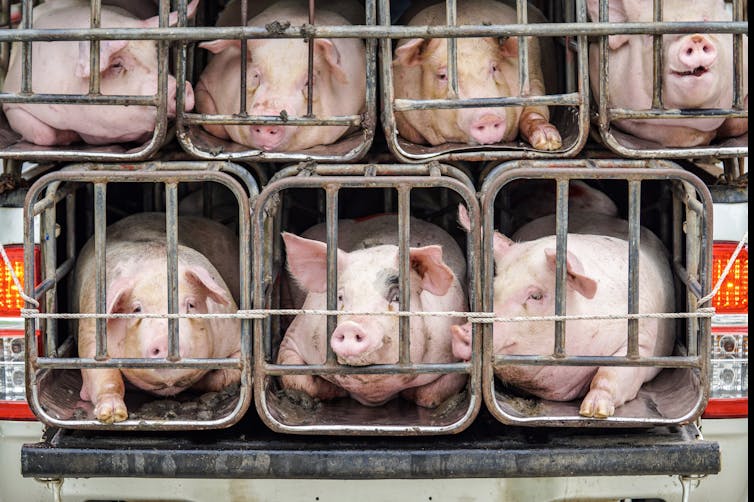
Researchers have found a new strain of flu virus with “pandemic potential” in China that can jump from pigs to humans, triggering a suite of worrying headlines.

It’s excellent this virus has been found early, and raising the alarm quickly allows virologists to swing into action developing new specific tests for this particular flu virus.

But it’s important to understand that, as yet, there is no evidence of human-to-human transmission of this particular virus. And while antibody tests found swine workers in China have had it in the past, there’s no evidence yet that it’s particularly deadly.


Read more: Victoria is on the precipice of an uncontrolled coronavirus outbreak. Will the new measures work?


What we know so far

China has a wonderful influenza surveillance system across all its provinces. They keep track of bird, human and swine flus because, as the researchers note in their paper, “systematic surveillance of influenza viruses in pigs is essential for early warning and preparedness for the next potential pandemic.”

In their influenza virus surveillance of pigs from 2011 to 2018, the researchers found what they called “a recently emerged genotype 4 (G4) reassortant Eurasian avian-like (EA) H1N1 virus.” In their paper, they call the virus G4 EA H1N1. It has been ticking over since 2013 and became the majority swine H1N1 virus in China in 2018.

In plain English, they discovered a new flu that’s a mix of our human H1N1 flu and an avian-based flu.

What’s interesting is antibody tests picked up that workers handling swine in these areas have been infected. Among those workers they tested, about 10% (35 people out of 338 tested) showed signs of having had the new G4 EA H1N1 virus in the past. People aged between 18 to 35 years old seemed more likely to have had it.

Of note, though, was that a small percentage of general household blood samples from people who were expected to have had little pig contact were also antibody positive (meaning they had the virus in the past).

Importantly, the researchers found no evidence yet of human-to-human transmission. They did find “efficient infectivity and aerosol transmission in ferrets” – meaning there’s evidence the new virus can spread by aerosol droplets from ferret to ferret (which we often use as surrogates for humans in flu studies). G4-infected ferrets became sick, lost weight and acquired lung damage, just like those infected with one of our seasonal human H1N1 flu strains.

They also found the virus can infect human airway cells. Most humans don’t already have antibodies to the G4 viruses meaning most people’s immune systems don’t have the necessary tools to prevent disease if they get infected by a G4 virus.

In summary, this virus has been around a few years, we know it can jump from pigs to humans and it ticks all the boxes to be what infectious disease scholars call a PPP — a potential pandemic pathogen.

If a human does get this new G4 EA H1N1 virus, how severe is it?

We don’t have much evidence to work with yet but it’s likely people who got these infections in the past didn’t find it too memorable. There’s not a huge amount of detail in the new paper but of the people the researchers sampled, none died from this virus.

There’s no sign this new virus has taken off or spread in the regions of China where it was found. China has excellent virus surveillance systems and right now we don’t need to panic.

The World Health Organisation has said it is keeping a close eye on these developments and “it also highlights that we cannot let down our guard on influenza”.


Read more: 4 unusual things we’ve learned about the coronavirus since the start of the pandemic


What’s next?

People in my field — infectious disease research — are alert but not alarmed. New strains of flu do pop up from time to time and we need to be ready to respond when they do, watching carefully for signs of human-to-human transmission.

As far as I can tell, the specific tests we use for influenza in humans won’t identify this new G4 EA H1N1 virus, so we should design new tests and have them ready. Our general flu A screening test should work though.

In other words, we can tell if someone has what’s called “Influenza A” (one kind of flu virus we usually see in flu season) but that’s a catch-all term, and there are many strains of flu within that category. We don’t yet have a customised test to detect this new particular strain of flu identified in China. But we can make one quickly.

Being prepared at the laboratory level if we see strange upticks in influenza is essential and underscores the importance of pandemic planning, ongoing virus surveillance and comprehensive public health policies.

And as with all flus, our best defences are meticulous hand washing and keeping physical distance from others if you, or they, are at all unwell.The Conversation

Ian M. Mackay, Adjunct assistant professor, The University of Queensland

This article is republished from The Conversation under a Creative Commons license. Read the original article.

================================================================
Alecto, Megaera, and Tisiphone, as badly as the United States is handling – or perhaps we should say not handling – both climate change and CoViD-19, if we continue to fail as spectacularly, this could become a real danger. Plus, this particular virus is just another new virus. We have not yet had to begin to think about old viruses lying in wait under the permafrost with the potential to leap out and bite us. These things are real, and, sadly, so is willful ignorance, which is the main thing standing in the way of our being able to deal with them. I wish there were a way you could just eliminate willful ignorance, but I am not holding my breath.

The Furies and I will be back.

Share
Jul 022020
 

Here are five clips from Sam’s show (one very short.)

Free Press I – I can be appalled, but I cannot be surprised. Who did not see this coming as early as 11/9/16? What’s worse is the number of people who don’t see anything wrong with this! They have always been around, but there used to be enough people in office who understood the Constitution that it was possible to keep First Amendment rights going. Now, not so much.

Free Press II – Even if we manage to get to November without World War III starting, and actually get him out by January, he could still go down in history as the man who started World War III with his infectious war on the free press – and truth.

Mike Brown – If you already know that this is the way things happen (and I hope you do), you may be appalled at how many “wypipo” buy into the propaganda. It doesn’t seem to matter whether black people are not a large population segment, and therefore other and unknown, and therefore not trusted, or whether black people are a large segment of the population, and therefore other and feared, and therefore not trusted – some white people, too many, will always believe the worst about black people. Truth has nothing to do with it. Dr. Barber nails it.
“Some people think peace is the absence of noise, not the presence of justice.”

Postal Service – I don’t think any of us is active on Twitter, but I picked this up anyway – exposure can’t hurt.

Live from Sam’s Shed – Silversun Pickups – Another of Sam’s favorite groups.

Share

Everyday Erinyes #221

 Posted by at 10:35 am  Politics
Jun 272020
 

Experts in autocracies have pointed out that it is, unfortunately, easy to slip into normalizing the tyrant, hence it is important to hang on to outrage. These incidents which seem to call for the efforts of the Greek Furies (Erinyes) to come and deal with them will, I hope, help with that. As a reminder, though no one really knows how many there were supposed to be, the three names we have are Alecto, Megaera, and Tisiphone. These roughly translate as “unceasing,” “grudging,” and “vengeful destruction.”

I am very tired today and am not up for much thinking. So when I came across an article whose title is the song I have been singing since quite literally 1992. So I thoguht I would just share it.
================================================================

To achieve a new New Deal, Democrats must learn from the old one

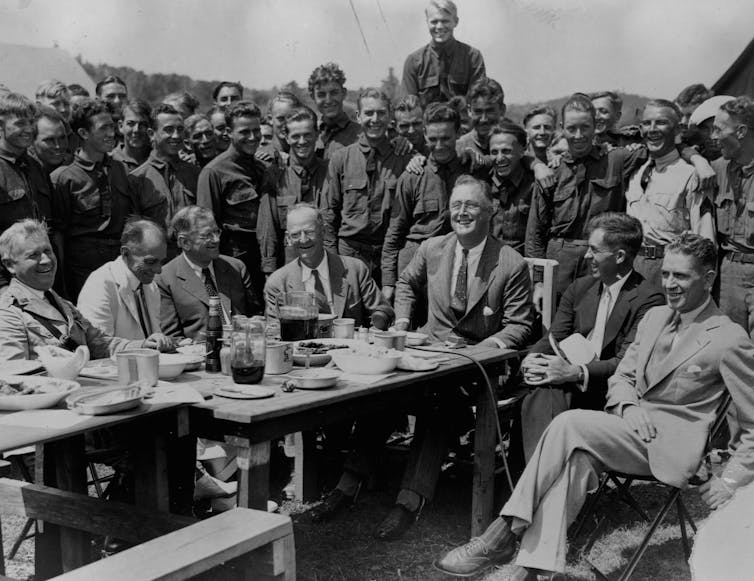
Franklin Roosevelt and other administration officials visit a Civilian Conservation Corps Camp during the New Deal. Library of Congress/Corbis/VCG via Getty Images

Edwin Amenta, University of California, Irvine

As the United States reels from the COVID-19 pandemic and nationwide anti-racism protests, pundits from both sides of the political aisle have speculated that a new New Deal is in the offing.

It could happen. Crises, after all, often produce social policy gains, and the similarities between the 1930s and today are hard to ignore.

Unemployment has reached levels not seen since the 1930s, widening gaps in the social safety net. The infirm have been forced to work absent paid sick leave. The laid off have lost health coverage. And one in 5 households with young children faces food shortages.

Similarly, when Franklin D. Roosevelt took office unemployment was at 25% and the poverty rate among elderly citizens hovered over 70%. In 1932 World War I veterans demanding bonus payments were forcibly removed from Washington, D.C., by U.S. troops.

But these conditions don’t automatically result in progressive social policy. Britain muddled through the Depression without social reform, and Germany turned fascist and militaristic, for example.

As a sociology professor who has written extensively about U.S. social policy, I think Roosevelt’s New Deal teaches us that several developments have to coincide to generate a long-term social safety net.

Polls favor Democrats

First, public opinion has to shift drastically. In the 1930s, Gallup polls revealed strong support for government pensions for the elderly. Today public opinion has grown in favor of several social policy initiatives. About two-thirds of voters support a US$15 minimum wage, which was a minority view six years ago. A majority of Americans favor a single-payer health plan. That, too, was a minority view just a decade ago.

The crisis also has to unfold under the watch of a regime opposed to expanded social policies. Herbert Hoover opposed public relief – for the agricultural sector, the unemployed or the welfare state, in general – during the Depression. Instead, he ineffectively relied on mobilizing private efforts.

The Trump administration, likewise, has waged war on Obamacare. It wants a payroll tax cut, which would slash into Social Security and Medicare. And the Republican Senate opposes funding increases for food stamps and federal aid for states facing depleted budgets as a result of the coronavirus pandemic.

The public must also blame the crisis on the party in power and reject that party at the polls. The Republicans lost their congressional majority in 1930, and Hoover suffered a crushing defeat in 1932, with Roosevelt carrying many congressional Democrats on his coattails.

American voters have yet to decide on Trump and the Republicans, but early signs point to rejection. Trump’s approval rating remains well under water, while the popularity of most governors has skyrocketed. Trump trails Joe Biden by double digits in many presidential polls. Congressional ballots strongly favor Democrats. And Republican senators in Colorado, Arizona, North Carolina and Maine are in trouble, while their counterparts in Montana, Georgia, Kansas and Iowa seem vulnerable.

Longstanding political control

But three other things had to happen in the 1930s before New Deal reforms were implemented.

The first was a long-term shift in political control. Congress did not pass the Social Security and National Labor Relations Acts until Roosevelt’s third year in office. And Congress did not approve the Fair Labor Standards Act, which created the minimum wage, until his sixth year in office.

Roosevelt’s first two years were devoted largely to saving banks, encouraging industries to stabilize prices and wages and providing short-term poverty relief. If the Democrats had lost congressional support in 1934, major social reforms would have never seen the light.

Compare Roosevelt’s – and the Democrats’ – hold on power to former President Barack Obama’s, and the prerequisites for extensive reform become clear. Yes, Obama helped pass the Affordable Care Act, but he spent much of his early first term seeking passage of the Recovery Act to counter the Great Recession. He had to abandon potential labor and environmental reforms after losing congressional control for good in 2010.

President Barack Obama signs the Affordable Health Care during a ceremony in the East Room of the White House, March 23, 2010 in Washington, D.C. Alex Wong/Getty Images

By contrast, the New Deal reform wave was possible only after congressional elections in 1934 gave Democrats an overwhelming majority, putting legislative control in the hands of liberals. Roosevelt won in a larger landslide in 1936, and congressional Democrats expanded their majority. The Social Security Act was amended twice, and the program we know today was established in 1950, after Democrats had won the presidency for the fifth consecutive time.

Mass mobilization

New Deal reforms also relied on the mobilization of activists. The 2-million-strong Townsend Plan – with 8,000 clubs across the country – placed intense pressure on Congress. This group demanded universal retirement benefits, about $3,700 per month in today’s dollars. Workers struck for the right to bargain collectively. The unemployed organized and demanded benefits, too. Together, these efforts kept major reforms high on the political agenda.

Though unionization has witnessed steady declines for decades, the labor movement has enjoyed a sporadic resurgence of sorts recently, with major work stoppages – by United Auto Workers, United Teachers of Los Angeles and United Food and Commercial Workers – in the last couple of years. To implement major social policy changes, labor would need to remain active. The activists of Black Lives Matter movement would have to build on their nationwide protests and redouble organized efforts to transform police departments. And social policy would benefit from other reform-minded groups mobilizing as well.

Winning lasting social policy reform also required skillful policy crafting. The Social Security Act included taxes on payrolls and over time made its insurance program universal. Benefits for survivors and the disabled were slipped into the program’s coverage in 1939.

However, other programs were mishandled. Roosevelt depleted considerable political capital on the Works Progress Administration, a program to provide temporary work to the unemployed, which was permanently “discharged” after a conservative Congress was elected in 1942. That political capital might have been spent on lasting reform.

If the Democrats win the presidency and control of Congress, they will need to adopt and improve universal programs with solid foundations, like Social Security. They also need to avoid squandering political capital on short-term fixes. Some easy first moves would be to lower the age for Medicare eligibility to 60, as Joe Biden proposes, and end the wage ceiling on Social Security taxes, while permanently boosting benefits by $200 per month.

Most of programs in Obama’s Recovery Act were funded for only a year or two. Under new Democratic rule, grassroots groups – focused on environmental change, racial justice and gun safety, for example – will need to redouble organizing efforts to keep political leaders’ feet to the fire, lending urgency to public opinion for reform.

The lessons from the old New Deal suggest that a new one is possible. But Democrats will need to control Congress, policymakers will need to look beyond the current crises, and activists will need to keep the pressure on to establish lasting structural change.

[Like what you’ve read? Want more? Sign up for The Conversation’s daily newsletter.]The Conversation

Edwin Amenta, Professor of Sociology, University of California, Irvine

This article is republished from The Conversation under a Creative Commons license. Read the original article.

================================================================
Alecto, Megaera, and Tisiphone, It’s encouraging the more and pore people, and especially scholars, are coming aroung to realize what has always seemed so obvious to me. It will be even more encouraging if we can elect people who can and will act on it.

The Furies and I will be back.

Share
Jun 202020
 

I hope I found everything  Here are four clips fram last night’s show  Enjoy.

Monologue – Cute. And he touched on just about everything.

Susan Rice – She certainly beats the bejaysus out of Condoleezza. (I’m not surprised to hear that DC’s population is larger than that of Wyoming. I already thought it probably was.)

Monumental Issue – I’m with Malcolm Nance. Andrew Sullivan, not so much.

New Rule – The kids are all right. I hope they stay all right, and I hope we keep all of them. I think Bill’s being reckless. There is just too much we don’t know about the CoViD-19.

Share

Everyday Erinyes #220

 Posted by at 10:15 am  Politics
Jun 202020
 

Experts in autocracies have pointed out that it is, unfortunately, easy to slip into normalizing the tyrant, hence it is important to hang on to outrage. These incidents which seem to call for the efforts of the Greek Furies (Erinyes) to come and deal with them will, I hope, help with that. As a reminder, though no one really knows how many there were supposed to be, the three names we have are Alecto, Megaera, and Tisiphone. These roughly translate as “unceasing,” “grudging,” and “vengeful destruction.”

I’m going to try to make this short today, since a lot is going on. Everyone who gets my weekly email is aware that I do my utmost to protect everyone’s privacy by using the “BCC” feature, so that no one who receives it can see anyone else’s email address except mine (just don’t “reply all,” please).

But, although I do try to clean up URLs before posting, I haven’t been quite as conscientious about that. Well, I will be from now on.

Here’s an example – please do not click on it or copy it in full, and I’ll explain why. It’s not even as cluttered as many URLs one sees, but it’s more cluttered than it needs to be.

https://www.metopera.org/season/on-demand/juneteenth?utm_source=OperaStreamsNewsletterW15&utm_medium=email&utm_campaign=2021_MISC& utm_content=version_A

If this were in a newsletter sent to you, and you clicked on the link, that isn’t what you’d see at the page. Instead, you’d see something like this:

Only when you click in the address bar to select it in order to copy it does the other stuff appear, like this (except there isn’t room for it all):

Now let me quote from a user at Democratic Underground:

 What’s all of the rest of that crap? It’s a lot of tracking info, info that lets God-knows-who discover all kinds of stuff, including things like who decided to share this link, and where that person originally found out about the linked article (from Facebook, from Twitter, from a particular friend, etc). While most of this info is in pretty cryptic, some of it is easier to guess at, like that somewhere along the line this link arrived via a newsletter. 

Bingo. I got this link from a newsletter – specifically the “OperaStreamsNewsletter”. I can’t translate the rest, except that it does say I received it through email. I’m confident it identifies the exact newsletter it was in. I don’t see in this one that it identifies me personally, but I don’t see why I should be expected even to identify, for free, that, when you go there, you got the address from a newsletter sent to me. Plus, as I mentioned, this is a short string. I have seen some that are more than three times as long as this string.

None of that tracking info is needed, however, if all you really want to do is share the article and nothing else.

Since I’m a software engineer, fixing this sort of thing comes naturally to me. For others, it might not be so obvious.

A good rule of thumb: Look for the first “?” in the link. Most of the time you can throw away everything starting from that question mark onward. 

TomCat taught me this technique some time ago, I don’t even remember how many years. But we never discussed why, other than for aesthetic reasons, the technique should virtually always be used. Now I know.

To make sure this works, paste your full link, copy just the first part of the link up to (but not including) the question mark, then paste the fragment you just copied into another browser tab or window. If that works, and takes you to the article you wanted to share with everyone, it’s safe to delete the tracking crap before you post. 

Occasionally this technique does not work, which is why it’s important to check it, at least until you are familiar with how sites work that you use frequently. My experience is that 99.9% of the time it doesn’t work, it’s a link to a petition, and the shortened URL only takes you as far as the home page of the sponsoring group. In that case one pretty well has to use the whole thing. I’ve sometimes tried leaving part of the stuff after the “?” but I’ve never gotten one to work, let alone come up with a rule.  But then, unlike my co-member of Democratic Underground, I’m NOT a software engineer.

Incidentally, if I use (as I normally do) the link tool in the comment box (see above) to tie the link to a word or phrase, I will be especially careful to truncate the URL to the minimum needed. Because, although you can’t see it, if it’s there, the site can see all the tracking information – and you won’t know it. So I’ll be particularly careful to make sure that doesn’t happen.

After all that, here’s the actual link (shortened, I promise, and set to open in a new window). It is a little Juneteenth celebration of African American voices in opera. It features more black singers than there are clips, all but one of whom I know of, most of whom I have heard, several of whom I have seen, one in person. I think I would have added in Ryan Speedo Green, but if you want to know about him, you can look here.   (And this also touches on Denyse Graves. It really is a never-ending story.)

Alecto, Megaera, and Tisiphone, thank you for allowing me to use your space for something a little different – for Juneteenth – and please help all our readers to be understanding and patient with me too. And at least, everyone can use the technical information.

[P. S.  – Just in case – the Leontyne Price one links to two tracks.  This was her very last performance at the Met.  The first track is 10+ minutes, but the last 3 minutes are nothing but applause.  A very beloved lady.  After the applause, it goes into a duet with African American bass-baritone Simon Estes.]

The Furies and I will be back.

Share

Bill Maher from 6/12/20

 Posted by at 11:16 am  Politics
Jun 132020
 

Bill – Here are three clips from Bill Maher’s Real Time last night.

I couldn’t find the Monologue.

Radley Balko – It certainly sounds like Camden, NJ got it right. It’s a good thing to have an example. (Notice how in explaining what happened in Camden, Balko mentions “union” twice – once that they dumped the old one. and once that they now have a new one with a different contract.)

Wilmore and Welch – Past dog whistling indeed. I said it before, and will probably say t again – this rally is like holding a rally at Auschwitz – during Passover. TC, you suggested “reorganize” instead of “defund” – I didn’t think that was powerful enough, but I could certainly go with “the Camden miracle.”

New Rule – Yes. Ugly, but accurate. Loyalty is a good thing. But distorting the use of a good thing is an evil thing. A d that’s why Democrats really shouldn’t be more like Republicans, in any way.


Share

Everyday Erinyes #219

 Posted by at 9:00 am  Politics
Jun 132020
 

Experts in autocracies have pointed out that it is, unfortunately, easy to slip into normalizing the tyrant, hence it is important to hang on to outrage. These incidents which seem to call for the efforts of the Greek Furies (Erinyes) to come and deal with them will, I hope, help with that. As a reminder, though no one really knows how many there were supposed to be, the three names we have are Alecto, Megaera, and Tisiphone. These roughly translate as “unceasing,” “grudging,” and “vengeful destruction.”

I’m sure it’s no surprise to anyone here that, since about forever, medical studies have limited their subjects to men – or that this has produced a disparity in the quality of medical treatment received by females as opposed to males. Some medical misconceptions about women are comparable to misconceptions about people of color – both groups are assumed (subconsciously – I am not accusing any doctors of doing this deliberately) to be exaggerating their pain. Any woman can tell you stories.

But one positive result of CoViD-19 may be that it has brought attention to a big sex difference in immunity. Roughly equal numbers of men and women get the virus (with symptoms) in every age group. But, in every age group, about twice the percentage of men die. This has immunologists (one of whom wrote this paper) looking hard for answers.
================================================================


COVID-19’s deadliness for men is revealing why researchers should have been studying immune system sex differences years ago

Reports show that the mortality rate among men with COVID-19 is higher than women. Marco Mantovani/Getty Images

Adam Moeser, Michigan State University

When it comes to surviving critical cases of COVID-19, it appears that men draw the short straw.

Initial reports from China revealed the early evidence of increased male mortality associated with COVID. According to the Global Health 50/50 research initiative, nearly every country is now reporting significantly higher COVID-19-related mortality rates in males than in females as of June 4. Yet, current data suggest similar infection rates for men and women. In other words, while men and women are being infected with COVID-19 at similar rates, a significantly higher proportion of men succumb to the disease than women, across groups of similar age. Why is it then that more men are dying from COVID-19? Or rather, should we be asking why are more women surviving?

I am an immunologist, and I explore how stress and biological sex can impact a person’s vulnerability to immune-mediated disease. I study a specific immune cell called the mast cell. Mast cells play a pivotal role in our immune systems as they act as first responders to pathogens and orchestrate immune responses that help clear the invading pathogens.

Our research shows that mast cells from females are able to initiate a more active immune response, which may help females fight off infectious diseases better than men. But the trade-off may be that women are at higher risk for allergic and inflammatory diseases. Recent evidence indicates that mast cells are activated by SARS-CoV-2 which causes COVID-19.

Some clues to why females have higher survival rates may be found in our current understanding of differences in the immune systems of men versus women.

Could sex differences in immune system play a role?

In general, females have a more robust immune response than men which may help females fight off infections better than males. This could be a result of genetic factors or sex hormones such as estrogen and testosterone.

Biological females have two copies of the X chromosome, which contains more immune genes. While the genes on one X chromosome are mostly inactive, some immune genes can escape this inactivation, leading to double the number of immune-related genes and thus double the quantity of certain immune proteins compared with biological men who have only one X chromosome.

Sex hormones such as estrogen and testosterone can also impact the immune response. In one study, researchers showed that activating the estrogen receptor in female mice provided them protection against SARS-CoV. And there is an approved clinical trial that will examine the effects of estrogen patches on the severity of COVID-19 symptoms.

It is, however, interesting that the current data showing that women have better survival rates than men applies to even men and women in the 80-plus age group, when hormone levels in both sexes equalize. This suggests that factors other than adult sex hormone levels are contributing to sex differences in COVID-19 mortality.

Androgens, a group of hormones – including testosterone – that are best known to stimulate the development of male characteristics and can cause hair loss, have also received recent attention as a risk factor for COVID-19 in males. In a study conducted in Italy, prostate cancer diagnosis increased the risk for COVID-19. However, prostate cancer patients who were receiving androgen-deprivation therapy (ADT), a treatment that suppresses the production of androgens which fuels prostate cancer cell growth, had a significantly lower risk for SARS-CoV-2 infection. This suggests that blocking androgens in men was protective against SARS-CoV-2 infection.

It is unknown how ADT works to reduce infection rates in men and whether this has been shown in other countries has yet to be determined. Testosterone, which is an androgen hormone has immune-suppressive effects so one explanation could be that ADT might boost the immune system to combat SARS-CoV-2 infection.

There is also evidence that males and females have different quantities of certain receptors that recognize pathogens or that serve as an invasion point for viruses like SARS-CoV-2. One example is the quantity of angiotensin converting enzyme 2 (ACE2) receptors, which SARS-CoV-2 binds to in order to infect cells. While there is currently no conclusive evidence for a role of ACE2 receptors impacting sex differences and the severity of COVID-19 disease, it remains a potential contributing factor.

Gender, sex and COVID-19 risk

A number of factors can interact with biological sex to increase or decrease one’s susceptibility to COVID-19. Another major factor is gender, which refers to social behaviors or cultural norms that society deems appropriate. Males may be at increased risk for severe disease, because in general, they tend to smoke and drink more, wash their hands less frequently and often delay seeking medical attention. All of these gender specific behaviors may put men at higher risk. While there is no current data yet on how gender plays a role in COVID-19, it will be a critically important factor to account for in order to understand sex differences in mortality.

Age, psychological stress level, coexisting conditions such as obesity, diabetes and cardiovascular disease can also interact with biological sex to increase disease.

While COVID-19 highlights the importance of biological sex in disease risk, sex biases in disease in general is not a new concept. COVID-19 is just another example of a disease that will be added to the growing list of diseases for which males or females are at increased risk.

A history of male-biased research

You might be wondering that if biological sex is so important, then why don’t we know what is causing disparities in disease prevalence between the sexes and why are there no sex-specific therapies?

One major reason is when it comes to being included in scientific research, it is mostly males who have been studied.

This disparity between biological sex differences in research has only recently been remedied. It has only been in the last five years that the National Institutes of Health has required sex difference data to be collected for all newly funded preclinical research grants.

While there may be several reasons for choosing one sex over the other in research, the huge disparity that now exists is likely a major reason why we still know relatively little about sex differences in immunity, including the current COVID-19 pandemic.

This has clearly hindered advancement of women’s health, but also has negative consequences for men’s health. For example, given the biological differences between the sexes, it is very possible that drugs and therapies will have different effects in females than males.

Biological sex is clearly a major factor determining disease outcomes in COVID-19. Precisely how your biological sex makes you more or less resilient to diseases such as COVID-19 remains to be elucidated. Future basic research with animals and clinical trials in people need to consider biological sex as well as interactions with gender as an important variable.

[Get facts about coronavirus and the latest research. Sign up for The Conversation’s newsletter.]The Conversation

Adam Moeser, Matilda R. Wilson Endowed Chair, Associate Professor of Large Animal Clinical Sciences, Michigan State University

This article is republished from The Conversation under a Creative Commons license. Read the original article.

/>================================================================
Alecto, Megaera, and Tisiphone, as I was reading, I was interested to know whether anyone had compared the death rate of corona virus patients who were prepubertal boys as opposed to the death rate in prepubertal girls … but that was not mentioned. I hope that’s because there are not enough cases to examine – but if so I fear that’s not going to stay valid. At any rate, I hope some good comes of the investigation and research that is being done. Give the researchers some pats on the back, or however you prefer to encourage us poor humans.

The Furies and I will be back.

Share