Aug 032025
 

Yesterday, the radio opera was a double bill of Leonard Bernstein – “Trouble in Tahiti,” which I have heard of and heard excerpts from but was not clear on the plot, and “A Quiet Place,” the sequel, which I didn’t know existed. Both are about stages in the life a dysfunctional marriage/family. (And this is the kind of dysfunctional relationships – marriage and family as practiced in the 1950’s – that Republicans want to take us back to.) Also yesterday, I got an email from Adam Kinzinger. He is raising funds for the reelection of Zoe Lofgren. As far as I know he is still registered Republican, but I could be wrong (there have been so many registration changes I cannot keep up). Anyway, after serving with her a=on the Jan 6 committee, he says this about her: “Zoe Lofgren will always put the American people first.” And Lonnie Griffith Bunch III received Robert Reich’s Joseph Welch award (the Senator who stood up to McCarthy) for restoring the full impeachment exhibit to the Smithsonian (he isn’t finished yet … but says it will be done this week.)

My experience is that animals definitely respond to music – and also that they have distinct preferences. My little Princess Fukutsu (a Japanese word that means several things depending on how it’s pronounced – and one of those things is “indomitable courage”) was addicted to the Mills Brothers. Gray Mouser, the cat who took to Virgil and tried to kill me preferred Glazunov and Shostakovich. And Sugar Bear – he wasn’t picky on the type, but he had perfect pitch – and if my violin student’s intonation was off, even too little for me to hear, he’d demand to be allowed out.


So far just signs … although enough of them for two columns is impressive … but it has to start somehow. This is one of them – it doesn’t stop anything but it does slow things down some.

Rocky Mountain Mike

Share
Jul 272025
 

Yesterday, the radio opera was the third of the three based on “Manon Lescaut” – loosely. This one is by Puccini. I’d translate parts of a couple of the arias, but if i did I’d be flippant, so I’ll pass. There’s enough unintentional humor in the fourth act. When Manon Lescaut the novel was written, the Louisiana Purchase was not even a twinkle in Jefferson’s eye, and it included a great deal of land not in Louisiana today. For instance, it reached as far west as both panhandles (Texas and Oklahoma) and even a corner of New Mexico. So she actually could have been deported to “the deserts of Louisiana,” and die there. But you’d be hard put to find even a square inch of desert in Louisiana today, so it sounds pretty funny.  Off yo see Virgil – will check in on return.

This was released Wednesday, and the full article covers more of this Senate race than just Roy Cooper. So if Roy does announce this week, that will be even more  good news.

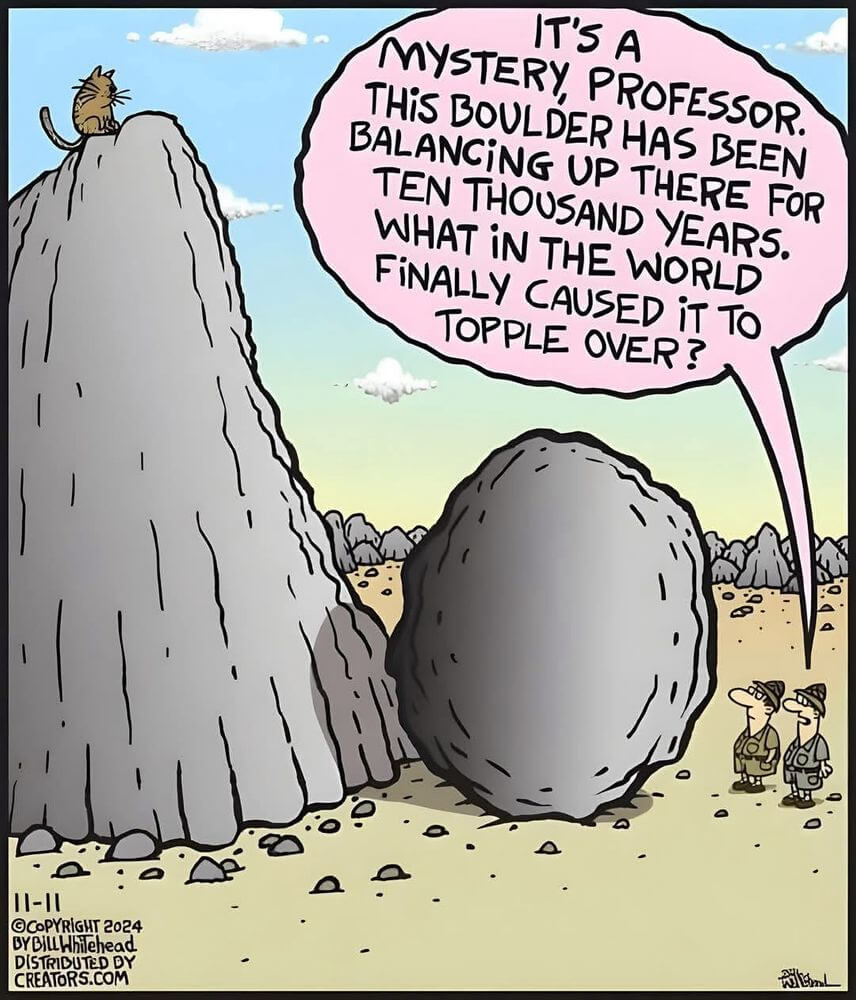
I had to squeeze this in. The cat goddesses are united and in good form, as always.

I’ve never had cable, so I’ve never watched South Park, but I couldn’t have avoided knowing a little about it even if I had wanted to. And I enjoyed every second of this video (which is not the actual episode, but a commentary on it with multiple clips)., even the rehashes of stuff we know from straight political news. I think you will also. (It is so good that, just in case it got taken down before you could see it, I downloaded software so I could download it and upload it to our library if I needed to. It is so good that there’s a petition to thank South Park for it.)

Share
Jul 202025
 

Yesterday, the radio opera was the second opera about Manon Lescaut. This one is called simply “Manon” and is by Jules Massenet. This is the version in which after des Grieux, her lover, has been kidnapped by his father and enters the seminary to become a priest (leaving Manon pretty much no choice except to hook up with the rich dude), she visits him in his church and you can guess what happens. The other two don’t spell that out. Also, in this version, she doesn’t even make it to Louisiana but dies en route to the ship which was to take her there. As I said last week, the stories are similar but not the same. About the music video  today – John D. Cundle is a Canadian who has produced and posted quite a little library of upbeat videos, many aimed at us in a friendly way. This is just one. It’s not satirical, although he also does satire. I also watched one about corruption, in which he appeared as “Judge Clarence.” I don’t know how much more pointed one can get than that.

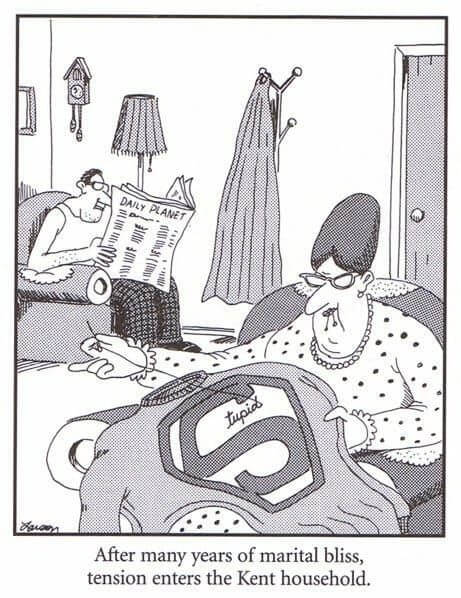
This is about the Superman movie I discussed recently.  MAGA was all up in arms to boycott is as “woke,” and they may be doing so,  considering their attitude toward non-humans, including people they consider to be non-human.  I don’t see them responding in the way this article describes.

(Not paywalled, but you need to close a popup) This from the 19th is on Instagram. It is good news about a workaround.

Share
Jul 132025
 

Yesterday, the radio opera was “Manon Lescaut” by Daniel Auber – something which I did not even know existed. I knew about “Manon” by Jules Massenet, and “Manon Lescaut” by Giacomo Puccini – which are going to be the next two operas in the radio series. All are from the same opera house in Turin, Italy, which decided to present all three in one season for comparison. You may remember I said about “The Queen of Spades” that the opera, the operetta, and the te original novella are three very different stories. Well, that’s pretty much true of Manon as well, except it’s four different stories, all three operas being adapted from the same novel. The one plot point they all have in common is that they all end with Manon being deported to Louisiana and dying there from poverty. If this strikes you as somewhat too politically appropriate, the WFMY group may have had that in mind, but the Teatre Regio probably didnt, and all three operas were recorded last October – and therefore likely scheduled some time in 2022, or even earlier. The Auber version, with a libretto by Eugene Scribe cleaned up the heroine’s morals somewhat. The other two didn’t but differ in other ways. (If you have any energy to spare, you might want to look up Eugene Scribe some time. The list of playwrights he influenced all over the western world is striking. You may never have heard of him, but you have seen plays or movies by writers he influenced.) Daniel Auber’s father and grandfather both had royal appointments, but when he was about 10, the French Revolution started and he had to find something else to make a living. What had been his hobby became his profession. So, there’s politics all over this opera. It does have spoken dialogue – the plot was not lofty enough for the Paris Opera, so it premiered at the Opera Comique, and was the first opera there with a tragic ending, preceding Bizet’s “Carmen” and probably paving the way for it – although Bizet’s librettist did not clean up the heroine’s morals, so it was still a scandal when it came along. Anyway, next week Massenet, and the following week Puccini, same story only different. The one by Auber for this week has delightful music including “bel canto.” The other two are newer, but both are also very listenable (neither of them cleaned up Manon’s morals, because by that time, Carmen had come along.) Off to see Virgil now – will check in upon return as always.

I know everyone is going to love this story, because if there’s anything we have in common besides being passionate about democracy, is being passionate about animal welfare. And I think I’m being pretty good at sticking to good news and apolitical humor for Sundays to give us a break. But if you can use more of a break, consider getting “The Smile” newsletter daily. The subscribe button is on this page.

Also referred by The Smile but either paywalled or ad-blocker-walled. From archive it’s all there.

Rocky Mountain Mike is back for a short one

Share
Jul 062025
 

Yesterday, the radio opera was an “opera-ballet” from the 18th century by Jean Philippe Rameau called “Les Fêtes d’Hébé.” The series has a more dignified translation, but I just call it “Hebe’s Parties.” Hebe, the goddess of youth, finds the gods “insincere” (which I assume is code for “too old” – sounds like the DNC) and comes to earth to seek more fun among humans. The three acts are unrelated episodes, though each symbolizes a different “lyric art”, and comprises both singing and dancing. Rameau had quite the sense of humor and was also apparently not afraid of anyone – one of his operas which Virgil and I saw in Santa Fe (yeah, it’s been a minute) is called “Platée” and features a female swamp creature who thinks she is a femme fatale, so when Jupiter, looking to set up an elaborate joke to take Juno’s mind off of his infidelities, proposes to her, she is sucked in, and the joke works – Juno, who comes to the “wedding” to catch him, sees the “bride” and cracks up laughing. The reason I share this as an example of Rameau’s fearlessness is that he wrote it for a royal wedding, in which the actual bride, though highly aristocratic, was known for her lack of good looks. And he got away with it. Today’s feature is not daring, it’s just for fun, and was staged by the Opera Comique because the conductor, a Baroque specialist, wanted to conduct it to celebrate his 80th birthday. (Conductors do tend to live long and prosper – one theory as to why is that the upper body exercise, although not terribly strenuous, is sufficient to strengthen the heart. Of course it doesn’t work for everyone. But it does for many.) Anyway, the music was lovely. There is a 59-second clip on YouTube which shows snippets of a variety of scenes while playing just the main theme which shows up in the prologue and every act.

This story is unsourced other than the DU member who posted it – but it is good news and I think we can all agree with the point made at the end.

This is exciting to me. I suspect it may not replace implants, because hearing loss at older ages may not be genetic (I’m pretty sure it wasn’t genetic in my mother abd grandmother, because I don’t have it, and for bothe of them the onset was at 10 years minimum younger than I am.) But for eople as young as those in this story it could well be genetic, and I would expect gene therapy to be a lot less invasive than implants.

Share
Jun 292025
 

Yesterday, the radio opera was so old that it predates the baroque period. I had never heard it, or even heard of it, but I did learn about that period in music history when they were inventing opera without realizing it (they thought they were bringing back ancient Greek theater.) The opera is called L’Orontea, and starts with a prologue where love and philosophy argue about who has more influence on humans. When in the first act the title character renounces love, it’s not hard to predict she is in for a bumpy ride. Also, there’s a new Betty Bowers video up.  It is so merciless that I decided to provide the link rather than post the video. Off to see Virgil now – I’ll check in when I get back.

This is the skinny on the next plan for national protesting. It’s good news because it means we are not stopping – and hopefully we are growing. The article is from Newsweek, but I was routed to it by The Smile.

This is from a Tucson TV news channel; I learned it from The Smile also.

I think this is a repeat, because i vaguely remember disapproval that she was allowed  “wine.”  Now that I can demonstrate that the “wine” she is allowed is non-alcoholic and specifically made for cats, I’m letting it run again.

Share
Jun 152025
 

Yesterday, the radio opera was Verdi’s “La Forza del Destino,” and I actually got to hear it on the radio, which I hadn’t expected, since it is pricey for a station to carry the series, and especially now, with the Mango Monster trying to remove all Federal funding. But my local station has decided to air at least the first half. It was a performance from La Scala in Milan, an opera house even more storied than the Met. With quite a cast. It was lovely – sad of course, but lovely. Also, Just as Carlo was executing his sister, I received a certified letter from Virgil’s facility asking me whether I’d be willing to hold his Medical Durable Power of Attorney. Well, I hadn’t thought about it, but if I had, I would have realized that was only a matter of time before that would happen. I think I’m competent, and I also think it’s part of my job. I emailed and said so and added that I’ll be down today if anyone is there and would like to talk with me. And now I’m off to visit him.

I almost hope this gets such wide coverage that I’ll need to look for something else by the time this posts. I doubt it’s news to anyone here that animals have more smarts than humans, but it’s a lovely story.

It isn’t enough … but it’s something. If it would catch on, that would be a much bigger (and better) story.

Now this story – this is personal (I don’t mean to me – I mean it involves and affects real individual people.) In a way it reminds me of an animal rescue story, except that this object is inanimate.

Today is Father’s Day. From the ACLU, here is a letter from Mahmoud Khalil to his newborn son. You will have to scroll down some, since the donation section is at the top. (I’m not really good at remembering Father’s Day, since mine died a few days after I was born. But I can recognize love when I see it.)

Share
Jun 012025
 

Yesterday, the radio opera was Rossini’s “The Barber of Seville,” One of two operas based on Beaumarchais’s trilogy which caused somuch scandal inits day by dissing the aristocracy (They barely made it past the censors.) The other is Mozart’s “Figaro’s Wedding.” There have been numerous attempts at operas intended to get the third play, “La Mère coupable,” into the repertory. So far John Corigliano has come the closest, with his “The Ghosts of Versailles.” It has received a fair number of performances (including one in Los Angeles with Patti Lupone in the role which Marilyn Horne created), but it’s not really in the repertory yet. But I digress. The story in “Barber” is how Count Almaviva courted Rosina with help from Figaro and even more from Rosina, in spite of opposition from her guardian, who wanted to marry her himself – the last thing she wanted. The cast appears to be from all over, and unknown to me, but I never saw or heard a performance I didn’t enjoy. I will say there’s only one tenor who has ever given me chills at the end when the count, his character, threatens the guardian and his sidekick with the Italian 18th-19th century version of “Nice life you’ve got. Be too bad if anything happened to it,” and that was a fellow named Rockwell Blake who must have just leaned on his white privilege. It’s kind of a plot point, so it’s unfortunate more tenors can’t do it. Anyway, I’m off to see Virgil and will check in as usual upon return.

This is good news for a number of reasons, and probably different reasons for different people. For me, there’s the factor that Yosemite means so much to me.

Not exactly news, but definitely good. Even though it’s blue, I can’t always be proud of my state. I can about this.

Kermit the Frog‘s graduation address at the University of Maryland (ending with The Rainbow Connection” and the presentation to Kermit of a Citation from the Governor.) I did not set out to do an double-frog post, honest. (Off topic, but the best-known orange frog will kill you.)

We’ll never know for sure why Harvard picked this moment to back fown on this – but from where I sit, it looks as though being attacked by a corrupt administration has provided a sense of proportion previously masked by privilege.

Randy Trump Derangement (That’s Entertainment) I clipped the ad, but if you want the whole enchilada you can go to YouTube.

Share