Joanne Dixon

Jan 032021
 

GEORGIA – Meidas Touch – The Second Coming of Christ* on GA’s Republican Senators

GEORGIA – Really American

Not a video – and not fun – but important

Parody of “Mr. Blue Sky” by Rocky Mountain Mike

Beau on Republicans Senators and Representatives

Keith from yesterday – I thought he might have something to say today, but if so, it isn’t up yet.

*I’m not kidding, he actually claims that

Share
Jan 022021
 

GEORGIA – Meidas Touch on Twitter

GEORGIA – Now This News

Glenn Kirschner on Justice – America needs a year of justice.

Parody of “2020 hits” album

The Trumpty Dumpty Cycle Episode 18

Beau – Gohmert’s (and other) lawsuits, Trump v. McConnell, and what to remember

Share

Everyday Erinyes #247

 Posted by at 10:20 am  Politics
Jan 022021
 

Experts in autocracies have pointed out that it is, unfortunately, easy to slip into normalizing the tyrant, hence it is important to hang on to outrage. These incidents which seem to call for the efforts of the Greek Furies (Erinyes) to come and deal with them will, I hope, help with that. As a reminder, though no one really knows how many there were supposed to be, the three names we have are Alecto, Megaera, and Tisiphone. These roughly translate as “unceasing,” “grudging,” and “vengeful destruction.”

This is an “Oregon Leads the Way” feel-good story. With information, and leads to more information, for any state which wants to do what Oregon has done.
================================================================

Oregon just decriminalized all drugs – here’s why voters passed this groundbreaking reform

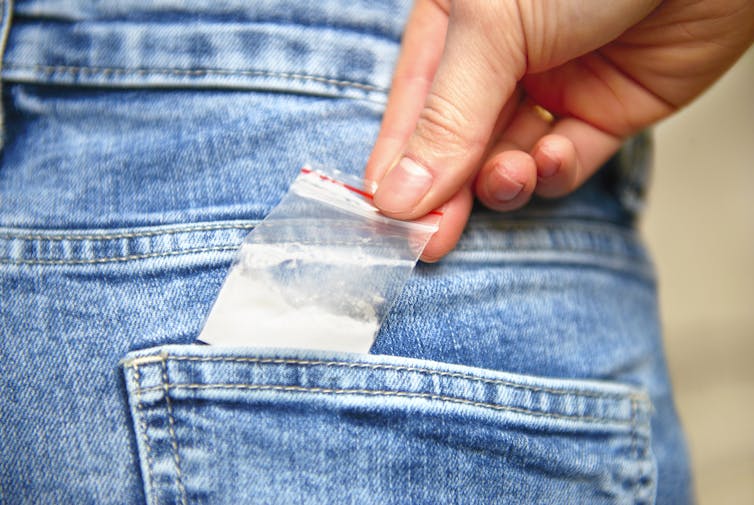
According to Oregon law, possessing a small amount of drugs for personal consumption is now a civil – rather than criminal – offense.
Peter Dazeley via Getty

Scott Akins, Oregon State University and Clayton Mosher, Washington State University

Oregon became the first state in the United States to decriminalize the possession of all drugs on Nov. 3, 2020.

Measure 110, a ballot initiative funded by the Drug Policy Alliance, a nonprofit advocacy group backed in part by Facebook’s Mark Zuckerberg, passed with more than 58% of the vote. Possessing heroin, cocaine, methamphetamine and other drugs for personal use is no longer a criminal offense in Oregon.

Those drugs are still against the law, as is selling them. But possession is now a civil – not criminal – violation that may result in a fine or court-ordered therapy, not jail. Marijuana, which Oregon legalized in 2014, remains fully legal.

Oregon’s move is radical for the United States, but several European countries have decriminalized drugs to some extent. There are three main arguments for this major drug policy reform.

#1. Drug prohibition has failed

In 1971, President Richard Nixon declared drugs to be “public enemy number one” and launched a “war on drugs” that continues today.

The ostensible rationale for harshly punishing drug users is to deter drug use. But decades of research – including our own on marijuana and drugs generally – has found the deterrent effect of strict criminal punishment to be small, if it exists at all. This is especially true among young people, who are the majority of drug users.

This is partly due to the nature of addiction, and also because there are simply limits to how much punishment can deter crime. As a result, the U.S. has both the world’s highest incarceration rate and among the highest rates of illegal drug use. Roughly 1 in 5 incarcerated people in the United States is in for a drug offense.

Criminologists find that other consequences of problematic drug use – such as harm to health, reduced quality of life and strained personal relationships – are more effective deterrents than criminal sanctions.

Because criminalizing drugs does not really prevent drug use, decriminalizing does not really increase it. Portugal, which decriminalized the personal possession of all drugs in 2001 in response to high illicit drug use, has much lower rates of drug use than the European average. Use of cocaine among young adults age 15 to 34, for example, is 0.3% in Portugal, compared to 2.1% across the EU. Amphetamine and MDMA consumption is likewise lower in Portugal.

Woman with a dog waits at a white van while a man drinks from a tiny cup
A mobile drug-services van in Lisbon gives out methadone, a medication for people with opioid use disorder, in 2017.
Horacio Villalobos – Corbis/Corbis via Getty Images

2. Decriminalization puts money to better use

Arresting, prosecuting and imprisoning people for drug-related crimes is expensive.

The Harvard economist Jeffrey Miron estimates that all government drug prohibition-related expenditures were US$47.8 billion nationally in 2016. Oregon spent about $375 million on drug prohibition in that year.

Oregon will now divert some the money previously used on drug enforcement to pay for about a dozen new drug prevention and treatment centers statewide, which has been found to be a significantly more cost-effective strategy. Some tax revenue from recreational marijuana sales, which exceeded $100 million in 2019, will also go to addiction and recovery services.

Oregon spent about $470 million on substance abuse treatment between 2017 and 2019.

Not everyone who uses drugs needs treatment. Decriminalization makes help accessible to those who do need it – and keeps both those users and recreational users out of jail.

3. The drug war targets people of color

Another aim of decriminalization is to mitigate the significant racial and ethnic disparities associated with drug enforcement.

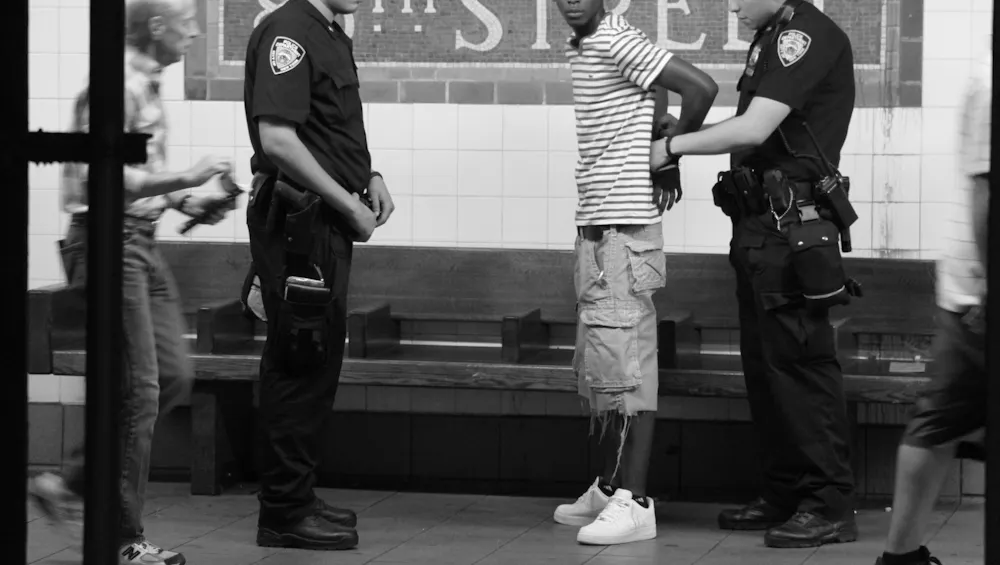
Black and whit image of police arresting a Black man in a New York subway station; no faces are seen
New York’s ‘stop and frisk’ policing most often resulted in marijuana possession charges and targeted young Black men. It was declared unconstitutional in 2013.
Third Eye Corporation/Getty

Illegal drug use is roughly comparable across race in the U.S. But people of color are significantly more likely to be searched, arrested and imprisoned for a drug-related offense. Drug crimes can incur long prison sentences.

Discretion in drug enforcement and sentencing means prohibition is among the leading causes of incarceration of people of color in the United States – an injustice many Americans on both sides of the aisle increasingly recognize.

Freed up from policing drug use, departments may redirect their resources toward crime prevention and solving violent crimes like homicide and robbery, which are time-consuming to investigate. That could help restore some trust between law enforcement and Oregon’s communities of color.

Risks of decriminalization

One common concern among Oregonians who voted against decriminalization was that lessening criminal penalties would endanger children.

“I think it sends a really bad message to them, and influences their perception of the risks,” James O’Rourke, a defense attorney who helped organize the opposition to measure 110, told Oregon Public Broadcasting in October.

But U.S. states that legalized marijuana haven’t seen adolescent use rise significantly. In fact, marijuana consumption among teens – though not among college-aged Americans – actually declined in some states with legal marijuana. This may be because legal, regulated marijuana is more difficult for minors to get than black-market drugs.

Woman browses various types of marijuana in glass jars on shelves, in well-lit, upscale setting
Customers must be 21 or older to purchase marijuana from dispensaries like Oregon’s Finest, in Portland.
Josh Edelson/AFP via Getty Images

Research also shows that for some people, particularly the young, banning a behavior makes it more alluring. So defining drugs as a health concern rather than a crime could actually make them less appealing to young Oregonians.

Another worry about decriminalization is that it will attract people looking to use drugs.

So-called “drug tourism” hasn’t really been a problem for Portugal, but it happened in Switzerland after officials in the 1980s and 1990s began officially “ignoring” heroin in Zurich’s Platzspitz Park. People came from across the country to inject heroin in public, leaving discarded needles on the ground.

The local government shut down Platzspitz Park. But rather than chase off or arrest those who frequented it, it began offering methadone and prescription heroin to help people with opioid use disorder. Public injection, HIV rates and overdoses – which had all become a problem in Zurich – plummeted.

Certain parts of Oregon already have higher rates of public drug consumption, namely Portland and Eugene. Because public drug use is still illegal in Oregon, however, we don’t expect a Platzspitz Park-style open drug scene to emerge.
These places should benefit from the expansion of methadone programs and other medication-assisted treatment, which is endorsed by the American Medical Association.

If neighboring Washington state decriminalizes drugs, which it is considering, the chances of drug tourism would drop further.

[The Conversation’s science, health and technology editors pick their favorite stories. Weekly on Wednesdays.]

Upside – and downside

There are risks with any major policy change. The question is whether the new policy results in a net benefit.

In Portugal, full decriminalization has proven more humane and effective than criminalization. Because drug users don’t worry about facing criminal charges, those who need help are more likely to seek it – and get it.

Portugal’s overdose death rate is five times lower than the EU average – which is itself far lower than the United States’. HIV infection rates among injection drug users also dropped massively since 2001.

These policies show that problem drug use is a public health challenge to be managed, not a war that can be won.The Conversation

Scott Akins, Professor, Sociology Department, Oregon State University and Clayton Mosher, Professor, Sociology Department, Washington State University

This article is republished from The Conversation under a Creative Commons license. Read the original article.

================================================================
Alecto, Megaera, and Tisiphone, treating misuses, abuse, and addiction of and to drugs as a public health problem rather than a political problem just makes so much sense. And it’s not as if we don’t have models for how this approach can work, and even for transitioning to this approach from approaches which don’t work. Look at alcohol. (BTW heartiest congratulations to Sir Anthony Hopkins on 45 years sober.)

And thank you, Oregon, for leading the way.

The Furies and I will be back.

Share
Jan 012021
 

GEORGIA – American Bridge

GEORGIA – Really American – https://www.democraticunderground.com/emoticons/rofl.gif

This, from The Lincoln Project, is over the top – but then, it’s aimed at someone who is also over the top.

Meidas Touch – just a factoid –

Stunning parody of “Hallelujah”

Beau – on a rock bottom fundamental issue.

Henri Le Chat Noir “Oh, Revoir”

Keith from yesterday. Nameless, you will like Keith’s name for the Senator.

Share
Dec 312020
 

GEORGIA – Now This News

Don Winslow – McConnell kills sick leave

Meidas Touch with Michael Cohen 12/29

Pink champagne for the New Year? (parody of “Cracklin’ Rosie”)

The Trumpty Dumpty Cycle Episode 17

Beau – on a joke which is not as funny as it seems

“Born to be Wild” covered by the Hampton String Quartet. There have been other quartet covers with different arrangements, but this was the first.

Share
Dec 302020
 

GEORGIA – Tweet from Rev. Warnock

GEORGIA – Really American

Meidas Touch with Michael Cohen 12/28

Henri did make a couple of commercials, one for a video festival and one for Friskies, which are existential too

Diaper Don (Parody of “Big Bad John” by Jimmy Dean)

Beau on a media tactic

Share
Dec 292020
 

GEORGIA – Meidas Touch

This is long (just under 7 minutes, and I expect most to skip it. But Chase Iron Eyes knows more than anyone else I know of about what is happening with justice and the Lakota (and other indigenous) people, and I wanted to make it available to everyone. Plus, it also has some information on Georgia’s runoff election.

Mrs. Betty Bowers – “Things Republicans are going to pretend to care about again”

Pardons Around the Christmas Tree

The Trumpty Dumpty Cycle Episode #16 “Invisible Man”

Beau on the end of 2020 and where to go from here.

Share