Meidas Touch – Rep. Grace Meng takes longer than Rep Lieu to excoriate ex-Guv Huckabee – and it”s golden
Robert Reich – How Corporations Crush the Working Class
New! Randy! Rainbow!
Dedicated to Karen (with so many memes I recommend going through twice – once forthe lyrics and once for the memes, maybe the second time slowed down with the sound off.)
Beau talked about “tomorrow” yesterday – so this concerns today – and is now already over – for today.
Experts in autocracies have pointed out that it is, unfortunately, easy to slip into normalizing the tyrant, hence it is important to hang on to outrage. These incidents which seem to call for the efforts of the Greek Furies (Erinyes) to come and deal with them will, I hope, help with that. As a reminder, though no one really knows how many there were supposed to be, the three names we have are Alecto, Megaera, and Tisiphone. These roughly translate as “unceasing,” “grudging,” and “vengeful destruction.”
As depressing as the topic of this article is, it is (or they are – five aspects are discussed) something we all need to be aware of and as nuch as possible able to present facts on. I don’t suppose we will ever actually reach the hearts of those who believe that people of color are, on account of their skin color, somehow “lesser,” much less those who on some level know that people of color are in no way “lesser” but who are so afraid of them they have trained themselves to be liev the myth. Not their hearts. Butit might be possible to get through to their minds or their consciences. Maybe. We have to try.
================================================================
Derek Chauvin trial begins in George Floyd murder case: 5 essential reads on police violence against Black men
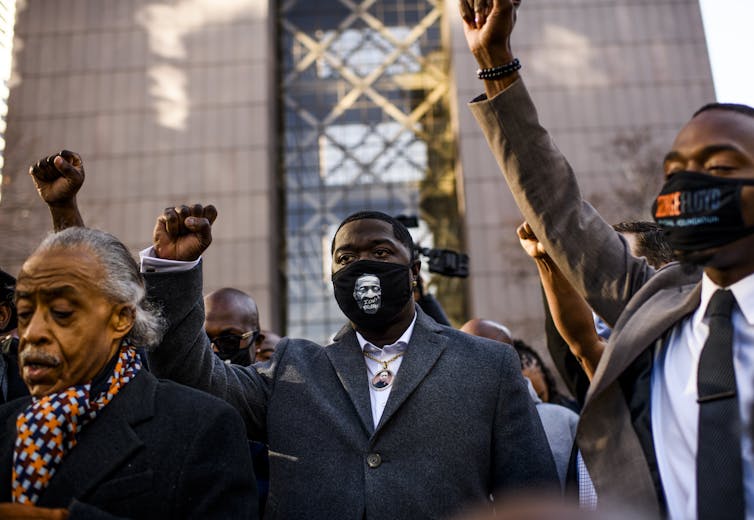
Floyd’s nephew, Brandon Williams (center), with the Rev. Al Sharpton (left) outside the heavily guarded Hennepin County Government Center, in Minneapolis, Minn., before the murder trial of Officer Derek Chauvin began, March 29, 2021. Stephen Maturen/Getty Images
Chauvin, who is white, is charged with second-degree murder, third-degree murder and manslaughter in connection with the death of George Floyd, who was Black, during an arrest last May. For 8 minutes and 46 seconds, Floyd – handcuffed and face down on the pavement – said repeatedly that he could not breathe, while other officers looked on.
A video of Floyd’s agonizing death soon went viral, triggering last summer’s unprecedented wave of mass protests against police violence and racism. Chauvin’s murder trial is expected to last up to four weeks.
These five stories offer expert analysis and key background on police violence, Derek Chauvin’s record and racism in U.S. law enforcement.
1. Police violence is a top cause of death for Black men
Since 2000, U.S. police have killed between 1,000 and 1,200 people per year, according to Fatal Encounters, an up-to-date archive of police killings. The victims are disproportionately likely to be Black, male and young, according to a study by Frank Edwards at the Rutgers School of Criminal Justice, in Newark.
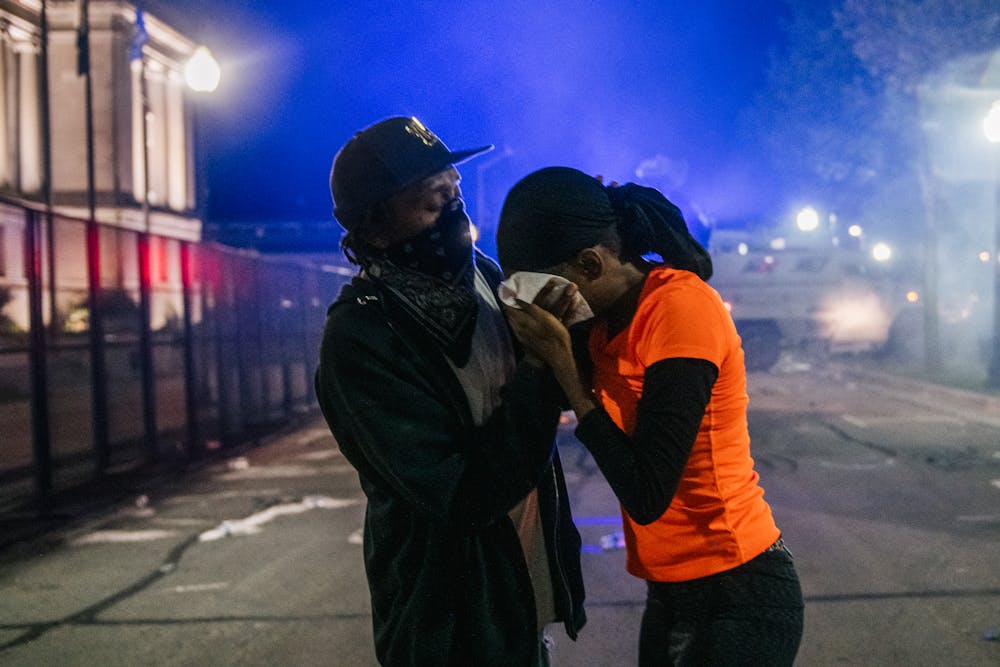
Protesters in Kenosha, Wisc. after another 2020 shooting of a Black man, Jacob Blake. Brandon Bell/Getty Images
In 2019, Edwards and two co-authors analyzed the Fatal Encounters data to assess how risk of death at the hands of police varies by age, sex and race or ethnicity. They found that while “police are responsible for a very small share of all deaths” in any given year, they “are responsible for a substantial proportion of all deaths of young people.”
Police violence was the sixth-leading cause of death for young men in the United States in 2019, after accidents, suicides, homicides, heart disease and cancer.
That risk is particularly high pronounced for young men of color, especially young Black men.
“About 1 in 1,000 Black men and boys are killed by police” during their lifetime, Edwards wrote.
In contrast, the general U.S. male population is killed by police at a rate of .52 per 1,000 – about half as often.
2. Chauvin has a track record of abuse
Many police officers who kill civilians have a history of violence or misconduct, including Chauvin.
In an article on police violence written after George Floyd’s killing, criminal justice scholar Jill McCorkel noted that Derek Chauvin was “the subject of at least 18 separate misconduct complaints and was involved in two additional shooting incidents.”
During a 2006 roadside stop, Chauvin was among six officers who fired 43 rounds into a truck driven by a man wanted for questioning in a domestic assault. The man, Wayne Reyes, who police said aimed a sawed-off shotgun at them, died. A Minnesota grand jury did not indict any of the officers.
Nationwide fewer than one in 12 complaints of police misconduct result in any kind of disciplinary action, according to McCorkel.
3. Bad police interactions hurt Black families
Even when officers who use excessive force are fired, as Chauvin was after the George Floyd killing, these incidents – occurring so frequently, for so many years – take an emotional toll on Black communities.
In a 2020 Gallup survey, one in four Black men ages 18 to 34 reported they had been treated unfairly by police within the last month.
The racism and inequality researchers Deadric T. Williams and Armon Perry analyzed data from the Fragile Families and Child Wellbeing Study, which surveyed nearly 5,000 families from U.S. cities, and found that negative police interactions have “far-reaching implications for Black families.”
“Fathers who reported experiencing a police stop were more likely to report conflict or lack of cooperation in their relationships with their children’s mother,” they wrote.
Black mothers also report “feelings of uncertainty and agitation” after Black fathers are stopped by police, Williams and Perry found. That can “affect the way that she views the relationship, leading to anger and frustration.”
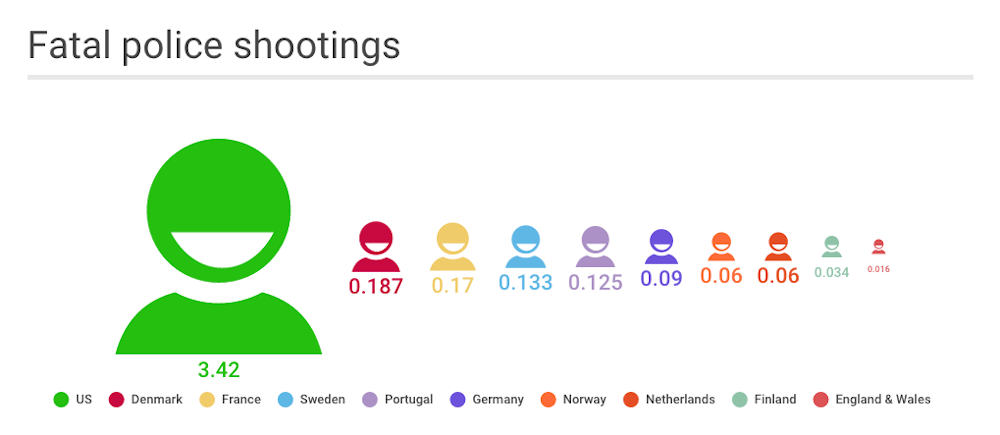
According to a 2014 study on policing in Europe and the U.S. by Rutgers researcher Paul Hirschfield, American police were 18 times more lethal than Danish police and 100 times more lethal than Finnish police.
Annual fatal police shootings per million residents as of 2014. Data are based on most recent available. US: 2014; France: 1995-2000; Denmark: 1996-2006; Portugal: 1995-2005; Sweden: 1996-2006; Netherlands: 2013-2014; Norway: 1996-2006; Germany: 2012; Finland: 1996-2006; England & Wales: 2014. CC BY
In most U.S. states, it is “easy for adults to purchase handguns,” Hirschfield wrote, so “American police are primed to expect guns.” That may make them “more prone to misidentifying cellphones and screwdrivers as weapons.”
U.S. law is relatively forgiving of such mistakes. If officers can prove they had a “reasonable belief” that lives were in danger, they may be acquitted for killing unarmed civilians. In contrast, most European countries permit deadly force only when it is “absolutely necessary” to enforce the law.
“The unfounded fear of Darren Wilson – the former Ferguson cop who fatally shot Michael Brown – that Brown was armed would not have likely absolved him in Europe,” writes Hirschfield.
In the South, the first organized law enforcement was white slave patrols.
“The first slave patrols arose in South Carolina in the early 1700s,” Hassett-Walker wrote. By century’s end, every slave state had them. Slave patrols could legally enter anyone’s home based on suspicions that they were sheltering people who had escaped bondage.
Northern police forces did not originate in racial terror, but Hassett-Walker writes that they nonetheless inflicted it.
From New York City to Boston, early municipal police “were overwhelmingly white, male and more focused on responding to disorder than crime,” writes Hassett-Walker. “Officers were expected to control ‘dangerous classes’ that included African Americans, immigrants and the poor.”
This history persists today in the negative stereotypes of Black men as dangerous. That makes people like George Floyd more likely to be treated aggressively by police, with potentially lethal results.
================================================================
AMT, I have not been watching the actual trial, but have been following it through the videos of Glenn Kirschner. So far it is all pprosecution witnesses. Much has been heartbreaking – which is good, because what happened, what was done, was heartbreaking, so hearbreaking testimony is appropriate and necessary. Mr. Kirschner has expressed, and it certainly seems, that the prosecution is doing a good job – better than good. But of course juries are juries. It will be a while before we learn whether there will be justice.
The Furies and I will be back.
P.S. Thanks again to all who congratulated me on Post #250. This post is actually the one I’ve been waiting for. 260 weeks ix exactly five years. Time certainly does fly.
Sorry to be so late. I had a grocery delivery which I couldn’t schedule for tomorrow because we’re expecting snow (well, I could have, but they aren’t paid enough to deliver in the snow IMO.)
The Lincoln Project – Rupert
Now This News – Colorado Shooting Victim’s family speaks
Armageddon Update “Biden Bumbles” (The title is )
Pokey the foster parent
Beau on diversity, Tammy Duckworth, and Joe Walsh (He may have missed a day … but I am still a few days behind.
No matter what you think of Tucker Carlson, we can all agree that his facial expressions run the gamut of emotions from A to B.
I thought that since he’s now the leading prevaricator for Fox “news” he could add a second one – but I was wrong!
Whenever I’ve see a photo of Tucker he always has the expression a dog makes when you try to explain quantum physics to him.
So it made perfect sense in Fox world to feature a live Picture-in-Picture of Carlson’s “panoply” of reactions during Pres. Biden’s recent address to the nation on the anniversary of the COVID lockdown.
The Twitterverse started mocking Fox’s decision, and soon it was clear to even Fox that it was a huge mistake. So they started running chyrons trying to convince viewers to stick around because Tucker was actually going to lie again say something shortly.
Sadly, they ran out of chyrons and started recycling them:
You would think that Fox and Tucker would have learned their lesson from a previous incident …
Experts in autocracies have pointed out that it is, unfortunately, easy to slip into normalizing the tyrant, hence it is important to hang on to outrage. These incidents which seem to call for the efforts of the Greek Furies (Erinyes) to come and deal with them will, I hope, help with that. As a reminder, though no one really knows how many there were supposed to be, the three names we have are Alecto, Megaera, and Tisiphone. These roughly translate as “unceasing,” “grudging,” and “vengeful destruction.”
Harry Golden, who invented, wrote, and published a home-made newsletter he called “The Carolina Israelite,” was writing in the fifties about the cultural significance of employment, and how, whether or not it is a good idea, we tie our worth to our job. And our identity. At that time, the work that gave people their identity was always outside the home. Unemployed people, even some retired people, would find reasons to leave the house every morning and return in the evening because they were literally ashamed not to. (What a blogger he would have made had he lived a generation or two later than he did!) I thought of that when I read this.
I’ve always had, I think a pretty good work ethic when I have had a job – doing it to the best of my ability, and with my heart – not watching the clock – even identifying with it to a degree. Two if the user names I use elsewhere than here on the internet include prior job titles in some way. But being now retired, and one of the lucky ones who can live on my retirement, I don’t miss it. I don’t need a job title to give me self respect. And I also am not a white supremacist. Apparently, those two things may be related.
================================================================
How the quest for significance and respect underlies the white supremacist movement, conspiracy theories and a range of other problems
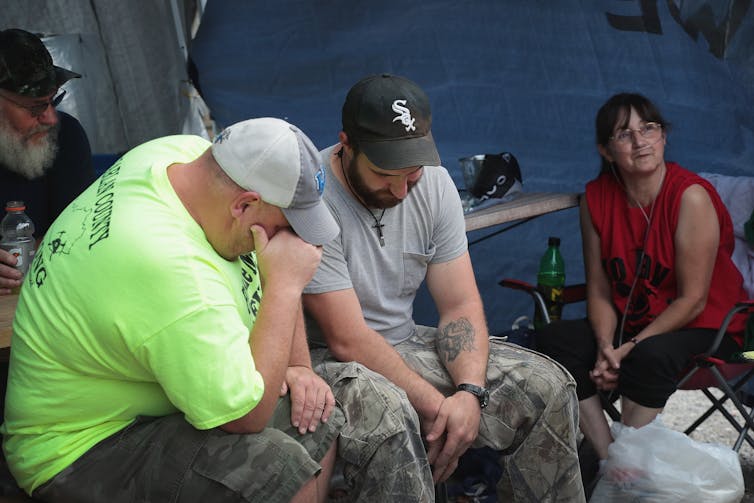
Unemployed Blackjewel coal miners, their family members and activists man a blockade along railroad tracks leading to their old mine on Aug. 23, 2019, in Cumberland, Kentucky. Scott Olson/Getty Images
President Joe Biden’s fundamental pitch to America has been about dignity and respect. He never tires of repeating his father’s words that “a job is about more than a paycheck, it is about … dignity … about respect … being able to look your kid in the eye and say, ‘Everything is going to be OK.’”
I am a psychologist who studies the human quest for significance and respect. My research reveals that this basic motivation is a major force in human affairs. It shapes the course of world history and determines the destiny of nations. It underlies some of the chief challenges society is facing. Among others, these are:
The growing rift in the Republican Party between moderates and extremists
In all these cases, people’s actions, opinions and attitudes aim, often unconsciously, to satisfy their fundamental need to count, to be recognized and respected.
Chanting ‘White lives matter! You will not replace us!’ and ‘Jews will not replace us!’ several hundred white nationalists and white supremacists march through the University of Virginia campus in Charlottesville on Aug. 10, 2017. Evelyn Hockstein/For The Washington Post via Getty Images
Triggering the quest
This quest for significance and respect must first be awakened before it can drive behavior. We don’t strive for significance 24/7.
The quest can be triggered by the experience of significant loss through humiliation and failure. When we suffer such a loss, we desperately seek to regain significance and respect. We are then keen to embrace any narrative that tells us how, and to follow leaders who show us the way.
The quest for significance can also be triggered by an opportunity for substantial gain – becoming a hero, a martyr, a superstar.
Over the past several decades, many Americans have experienced a stinging loss of significance and respect. Social scientists examined the perception of social class in the United States between 1972 and 2010. The results of their research were striking: In the 1970s, most Americans viewed themselves as comfortably middle class, defined at the time by conduct and manners – being a good neighbor and a good member of the community, exhibiting proper behavior.
In contrast, by the 2000s, membership in the middle class was determined primarily by income. And because incomes have stagnated over the past half-century, by 2010 many Americans (particularly the lower-income ones) lost their middle-class identity entirely.
Isolation from loved ones, the danger to our own health and the dread of an economic disaster are all stressors that make a person feel weak and vulnerable. They increase the attraction to ideas that offer quick fixes for loss of significance and respect.
Though the ideas that promise restoration of significance and dignity range widely, they share an important core: They depict the promotion of different social values as paths to significance. Promoting freedom and democracy, defending one’s nation or one’s religion, advancing one’s political party – all aim to earn respect and dignity in communities that cherish those values.
When the quest for significance and respect is intensified, other considerations such as comfort, relationships or compassion are sidelined. Any actions that promote significance are then seen as legitimate. That includes actions that would otherwise seem reprehensible: violence, aggression, torture or terrorism.
An intense quest for significance does not invite reprehensible actions directly. But it boosts a person’s readiness to tolerate and enact them for the sake of significance and dignity.
The path ultimately taken depends on the narrative that identifies significance-bestowing actions in a given situation. Depending on one’s moral perspective, such actions may be seen as “good,” “bad” or “ugly.” One might have an entirely different moral evaluation of the Black Lives Matter movement and the Proud Boys and yet recognize that, psychologically, both represent routes to significance.
A special danger to societies stems from the primordial, significance-lending appeal of violence.
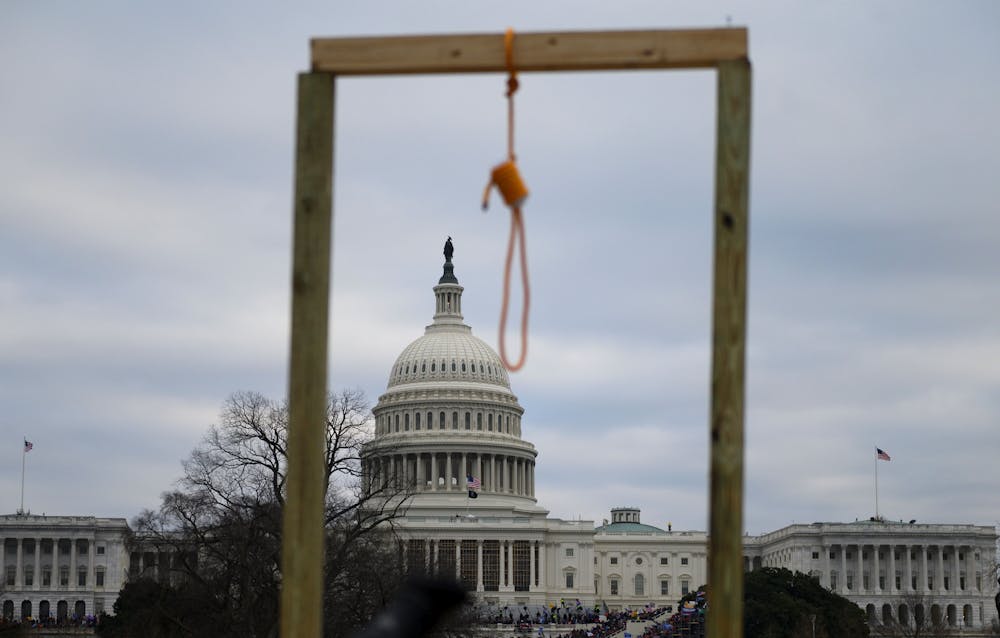
Among animals, dominance is established through “trial by combat,” to use Rudy Giuliani’s recent turn of phrase at the rally before the Capitol insurrection. And as President Theodore Roosevelt famously observed, walking with a “big stick” makes other nations pay attention and respect.
Evangelicals view Trump’s alleged battle against the “deep state” as divinely inspired. And a QAnon message from Jan. 13, 2018, stated: “You were chosen for a reason. You are being provided the highest level of intel to ever be dropped publicly in the history of the world. Use it – protect and comfort those around you.” These views sow division among segments of society, inviting fissures and polarization.
The quest for significance and respect is a universal and immutable aspect of human nature. It has the potential to inspire great works but also tear society asunder. The formidable challenge these days is to harness the energies sparked by this fundamental motive and channel them for the betterment of humanity.
================================================================
AMT, if my own attitudes, and those of others like me, are interfering with our understanding of what needs to e done to combat white supremacy (I don’t sat “eradicate” because I doubt that is even possible), then please help us to get a grasp if that – I almost said “get a grip.” That too.




 )
)