Yesterday, I spent a fair amount of time struggling with the internet and email – trying to get paperwork to my doctor’s office to get my car registration renewed. His email account is set to reject any email from someone he hasn’t approved. He did approve me,but my email was not going through. Thinking maybe it was the number of attachments, I sent seven separate ones today – one for each attachment. But it was late in the business day, so I’ll have to check again today. They were all jpgs – before retiring I converted them all into pdfs in case I have to resend again. If I can’t get it done in time, I’m going to go see Virgil Sunday anyway (I did get confirmation yesterday; I looked for it Monday but of course that was a holiday.) In less personal news (but still kind of personal, since we all love the Carters), Rosalynn has been diagnosed with dementtia. She is still at home with Jimmy and is able to see loved ones and enjoy the spring weather.
Cartoon –
Short Takes –
NMAI (National Museum of the American Indian) – Why We Serve
The National Museum of the American Indian is one of many institutions which come under the purview of the Smithsonian. There isn’t a lot of information about Native Americans that you won’t find somewhere under its umbrella. “Why We Serve” is a website dedicated to Native Americans in the military – active duty, veterans, and war dead. It’s an online exhibition that you can wader through, just as you would wander through a physocal exhibition on site. I was pleased to learn about NAWW – Native American Women Warrriors – group specifically for women veterans who are native Americans. The Museum’s “Object of the Month” for May is a blue jingle dress worn by Mitchelene BigMan (Apsáalooke [Crow]/Hidatsa) during the 2013 presidential Inaugural Parade. You’ll find it (along with three others) under the topic “War and Peace.”
The Warning (Steve Schmidt) – The distortion and delusion of the MAGA/GOP view
Quote – The greatest crime in human history began with the rise of a far-right political party of losers, crackpots, opportunists and alienation that sowed division, hate, intolerance and grievance against its enemies, status and condition. The Jews were the target of its scapegoating, hate, conspiracies and terror. Ultimately, an extremist political party became the State and then the nation. Hitler’s rise was abetted by countless small acts of moral appeasement and accommodation by people who were appalled by him. Ambition and cynicism fueled a merger of industry with extremism and hate with national identity. All of it was sustained by propaganda, lies, and conspiracy theories. Before it was over human civilization nearly fell. Click through for column. You’ll probably have to click on “Let me read it first.” It isn’t the full column, since I’m not a paid subscriber, but it’s enough to sound an alarm.
Yesterday,I did manage to get out and cut a couple of the irises to bring indoors. They won’t last very long … but they’ll be fun while they do. I also put ogether a grocery order for today, so if there are excssive typos tomorrow, that will likely be the explanation.
Cartoon –
Short Takes –
Civil Discourse – The Week Ahead
Quote – Protective orders like this are used when a defendant’s conduct threatens the safety and well-being of witnesses, victims, or anyone else related to the case. Prosecutors argued Trump’s history of making “harassing, embarrassing, and threatening statements” about other people in his various other legal disputes merited this action. Judge Merchan scheduled the hearing that requires Trump’s virtual attendance the day after Trump appeared on CNN’s town hall and lied, offered fake excuses, and insulted people. He called the prosecutors’ indictment in the Manhattan case a “fake charge.” Click through for various potential happenings. I appreciate Joyce giving us some stuff to watch out for.
Colorado Public Radio – France gave Colorado a thank-you train car after WWII. Then Colorado lost it
Quote – In 1947, Europe was rebuilding from the destruction of World War II. Big-hearted Americans wanted to help. So a train crossed this country gathering aid. The Friendship Train collected tens of millions of dollars in food and supplies. The Europeans were grateful. In 1949, the French sent a thank you note. Well, much more than a thank you note. France bestowed upon the United States 49 Merci train cars — one for each state at the time. (“Merci” is French for thank you.) Hawaii and The District of Columbia shared the 49th because of their notable contributions. Alaska didn’t get one. And these train cars were full. Click through for history. OK, this is not exactly breaking news. But it did happen within my lifetime, and t happened in every state except Alaska (which was then still a territory), and I was 4 years old in California, and I had no clue. None. This may not be one of the most inportant events in the history of the earth, or even i the history of the war, but dammit, it does have implications for foreign policy. I can understand people spuuressing, or trying to suppress it after 9/11, but this vanished from public knowledge long before that.
Yesterday, I got an alert from Axios that Senator Tim Scott (R-SC) has filed to run for the Presidency. I don’t know whether that’s incredibly gutsy – or incedibly delusional – or maybe a little of both. He is black, and Trump** isnot going to like this, and since Trump** cannot keep his mouth shut, he’s going to say so in no uncertain terms. I expect Scott to receive a plethora of death threats, and actual violence is not impossible either. It’s always possible, of course, that I am the one being paranoid here, but if I were Scott, I’d rather play it safe and wait
Cartoon –
Short Takes –
Letters from an American – May 17, 2023
Quote – Republican congressmen wrote that section [of the Fourteenth Amendment] to prevent Democratic opponents, who hated the newly powerful government that had won the Civil War, from changing the terms of repayment of the debt. Democrats called for turning gold interest payments into payments in paper money. That change would have significantly degraded the value of the debt. It would also have destroyed confidence in the government, a result those who had just lost the Civil War quite liked. Click through for the history – which we should all know but I’m confident were never taught in school. We do know that – though the names of the parties have changed – seditionists thrive on chaos.
Colorado Public Radio – Colorado is poised to set the nation’s first standards for green hydrogen. Will the federal government follow suit?
Quote – “The unique thing about hydrogen is it’s a molecule,” said Keith Wipke, who leads the laboratory’s fuel cell and hydrogen technology program. “You can move it around physically. You can store it. It just stays there.”… Due to [the concerns voiced by environmental groups], Colorado lawmakers recently amended a bill to include the nation’s first-ever clean hydrogen standards. Gov. Jared Polis is expected to sign the legislation, offering a potential preview of similar restrictions under consideration at the national level. Click through for some details – I deliberately chose to quote a sentence that I didn’t find very illuminating, but it isn’t all like that.
Yesterday (all tornado warnings having expired at 7:34 pm the previous night), the precipitation continued, but it was mostly rain. I said that quarter-sized hail would not be breaking any car windows, and I stick to that, because automotive glass is tempered. I didn’t promise no windows in buildings would break, and I didn’t promise there would be no hail bigger than quarter-size. Tennis-ball size was reported along I-70, and some golf-ball-size was photographed with a quarter to show the difference. One tornado was reported, in Morgan County (way northeast of me) which lasted from 5:55 to 6:45. I guess I’m going to have to put up a sign that says “Do not touch my roof. It’s under warranty and you are not certified by Gerard.” Because the roof vultures will be around as soon as the sun is back. Springtime in the Rockies!
Cartoon –
Short Takes –
Colorado Public Radio – [Democratic Rep. Joe] Neguse is reintroducing a bill in Congress that would boost pay and benefits for wildland firefighters
Quote – Now Neguse is reintroducing Tim’s Act, a bill to increase federal firefighter pay and benefits, with fellow Democratic Rep. Katie Porter of California. Tim Hart was a smokejumper who lost his life fighting a wildfire in New Mexico in 2021. Neguse credits Tim’s wife, Michelle, as one of the driving forces behind the legislation. Neguse and Porter pushed some parts of the bill across the finish line last Congress, such as improving retirement benefits and a temporary increase in pay through the bipartisan infrastructure bill. But Neguse wants to finish the job. Click through for details. Speaking of weather, it’s nice to have a bit of good news, even if it’s currently tentative. Yes, our (primary) fire season runs right through our hail season (and beyond.) Not that we can’t have fires just about any time. As can California.
Crooks and Liars – Nine GOP Senators (All On Judiciary) Got Checks From Harlan Crow
Quote – “There should be bipartisan outrage about the undisclosed gifts and travel billionaire megadonor Harlan Crow has given Justice Thomas,” Accountable.US president Kyle Herrig said last month. “Senate Judiciary Republicans should join their Democratic colleagues to act. However, their silence so far may be because they have received hundreds of thousands of dollars from Crow as well.” Click through for full list, including pictures of 8 of the 9. You will recognize every name. Every one of them is nationally known (and not for any positive reason.)
Yesterday, as I usually do on Mondays, I slept even later tnan usual. When I got up, I did a few personal things, then turned to my email. and immediately saw that Grace Bumbry had died. I assure you thre are better ways to start a day. Of course, the loss of a diva (or a divo) whom I admired enough to buy vinyl of (and I was very picky when I was doing that) is just going to happen to me more and more. And, although she is gone, her achievements, including the trailblazing she did, remain and will continue to be built upon. But there sre still better ways to start a day. I did do the Name Drop, and it was someone I had heard of (it isn’t always), but I cetainly never would have known that from the first clue, as I had no idea he had served at the Battle of Lepanto, and on the way home been captured by pirates and held for five years, and the second clue was also obscure. But on the third clue I figured out the dude was from La Mancha (and it was the referenced musical which gave that away.) I’m really not a competetive person (except with myself – I always want to learn and improve) – and that’s why I’m drawn to Name Drop. I almost always learn something, even if it’s not terribly useful. And if Cervantes was a veteran of one of the most important conflicts in history, and a POW, so to speak, for 5 years, that deserves to be remembered.
Cartoon –
Short Takes –
The 19th – Kimberlé Crenshaw’s work was cut from AP African American Studies. Now she’s fighting back
Quote – Crenshaw [led] the “Freedom to Learn” national day of action [last] Wednesday to protest rising censorship in schools. The day of demonstration includes rallies, book readings, teach-ins and live virtual events. The goal is to build a coalition — now including civil rights groups, Black Greek-letter organizations, the American Federation of Teachers and the National Education Association — that advocates for inclusive learning….. The “Freedom to Learn” national day of action stems from an open letter that scholars and their allies sent to the College Board, urging it to preserve the integrity of AP African American Studies by not eliminating from the course “divisive concepts” and works by academics including Crenshaw, Roderick Ferguson and the late bell hooks. In April, the College Board announced that it would make changes to AP African American Studies over the next few months, but it is uncertain if it will restore the pilot curriculum. Click through for article and interview. On the one hand, if anyone should be for education without political bias, it’s the College Board. On the other hand, exactly because it’s a private organization, little can be done to force it to live up to standards, even its own.
Fox 31 – Stolen Colorado tiny house found at Kansas grain elevator
Quote – Hamilton County Sheriff Michael Wilson said the Colorado State Patrol notified his office Sunday evening to be on the lookout for a tiny house and that it was possibly headed toward Coolidge. It had been taken from a farm in Otero County, Colorado…. The sheriff said the men also allegedly had a stolen trailer and a Bobcat. He said the suspects are being held in jail on suspicion of possession of stolen property. The tiny house is valued at $9,000. The sheriff said the $33,000 Bobcat was stolen out of Castle Rock, Colorado, and the $25,000 trailer is from Florida. Click through for details. Yes, this is from a Fox affiliate. But the keywords are “affliate” and “local.” One of the most maddening things about Fox, IMO, is that the affiliates generally have sound news departments with accurate local news. Unfortunately, this tends to validate all of Fox in weak minds.
Experts in autocracies have pointed out that it is, unfortunately, easy to slip into normalizing the tyrant, hence it is important to hang on to outrage. These incidents which seem to call for the efforts of the Greek Furies (Erinyes) to come and deal with them will, I hope, help with that. As a reminder, though no one really knows how many there were supposed to be, the three names we have are Alecto,Megaera, and Tisiphone. These roughly translate as “unceasing,” “grudging,” and “vengeful destruction.”
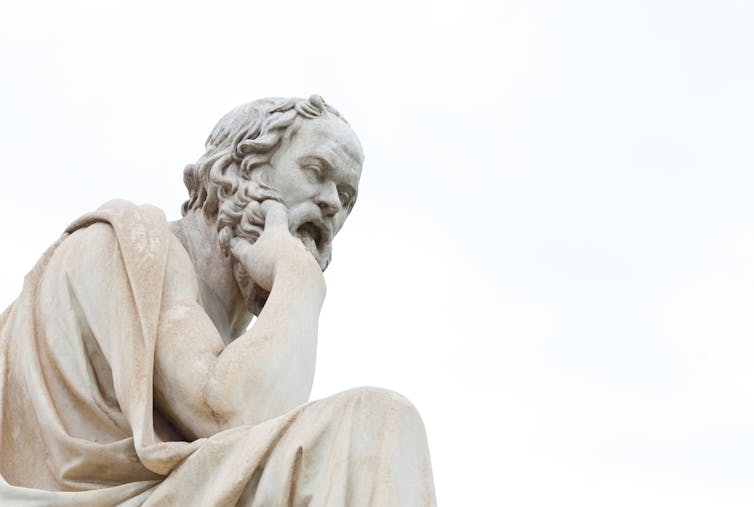
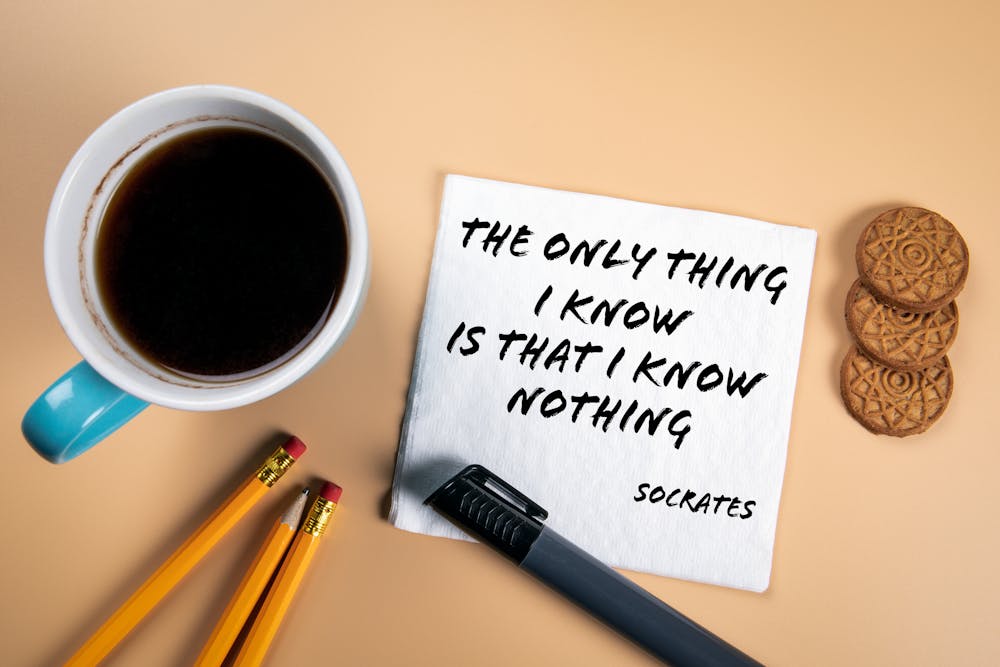
Messaging. We all know that our greatest difficulty is in messaging. When we achieve things, conditions improve foreveryone. With progessive administrators, the economy getsbetter. With progressive prosecutors, crime goesdown. And on and on. But – getting people whp don’t already think progressively to see it – That seems to be a Sisyphean challenge. And ths article on Socrates, aimed at helping people to message, really almost does the opposite. I mean – look at how ir worked for Socrates. However, his techniques do help us as individuals to understamd what we are talking about, what we know, and what we don’t know, which can be much more important. I’ll share what I believe to be a better guideline on bridging the gap between knowing and messaging below
==============================================================
What Socrates’ ‘know nothing’ wisdom can teach a polarized America
A common complaint in America today is that politics and even society as a whole are broken. Critics point out endless lists of what should be fixed: the complexity of the tax code, or immigration reform, or the inefficiency of government.
But each dilemma usually comes down to polarized deadlock between two competing visions and everyone’s conviction that theirs is the right one. Perhaps this white-knuckled insistence on being right is the root cause of the societal fissure – why everything seems so irreparably wrong.
As religion and philosophy scholars, we would argue that our apparent national impasse points to a lack of “epistemic humility,” or intellectual humility – that is, an inability to acknowledge, empathize with and ultimately compromise with opinions and perspectives different from one’s own. In other words, Americans have stopped listening.
So why is intellectual humility in such scarce supply? Of course, the quickest answer might be the right one: that humility runs against most people’s fear of being mistaken, and the zero-sum view that being right means someone else has to be totally wrong.
But we think that the problem is more complex and perhaps more interesting. We believe epistemic humility presents something of a twofold danger that makes being humble frightening – and has, ever since Socrates first put it at the heart of Western philosophy.
Knowing you don’t know
If your best friend told you that you were the wisest of all human beings, perhaps you would be inclined to smile in agreement and take the dear friend for a beer. But when the ancient Athenian Socrates was delivered this news, he responded with sincere and utter disbelief – even though his friend had confirmed it with the Delphic oracle, the fortune-telling authority of the ancient world.
This nascent humility – “No, get out of here, I’m definitely not the wisest” – helped spark what became arguably the greatest philosophical life of all time. Despite relative old age, Socrates immediately embarked on a journey to find someone wiser than himself and spent many days seeking out the sages of the ancient world, a quest Plato recounts in his “Apology of Socrates.”
The problem? He discovered that the sages thought they knew more than they actually did. Eventually, Socrates concluded that he himself was, in fact, the wisest of all men, because at least he “knew that he didn’t know.”
This is not to say that Socrates knew nothing: He demonstrates time and again that he knows a lot and routinely demonstrated good judgment. Rather, he acknowledged there were definite limitations to the knowledge he could claim.
This is the birth of “epistemic humility” in Western philosophy: the acknowledgment that one’s blind spots and shortcomings are an invitation for ongoing intellectual investigation and growth.
But this mindset can feel dangerous to other people – especially if they feel absolutely certain in their convictions.
In ancient Athens, as much as in the U.S. today, being perceived as right translated into money and power. The city-state’s culture was dominated by the Sophists, who taught rhetoric to nobles and politicians, and the Poets, ancient playwrights. Greek theater and epic poetry were closely related to religion, and their creators were treated as mouthpieces for aesthetic and moral truth.
What’s more, theater and poetry were also major moneymakers, which motivated artists to adopt a mentality of “fail fast, fail better,” with an eye to eventually proving correct and getting paid.
By critically interrogating the idols and polarized views of his culture, Socrates threatened the power holders of his city. A constantly questioning figure is a direct threat to individuals who spend their lives defending unquestioned belief – whether it’s belief in themselves, their superiors or their gods.
Take Euthyphro, for example, one of Socrates’ principal interlocutors. Euthyphro is so sure that he knows the difference between right and wrong that he is bringing his own father to trial. Socrates quickly disabuses him of his certainty, famously debating him about the true meaning of piety.
Or take Meletus, the man who eventually brought Socrates to trial on accusations of corrupting youth. In Plato’s account of the trial, it takes Socrates no time to show this “good patriot,” as Meletus calls himself, that he does not understand what patriotism truly means. Without any pretensions to knowing the absolute truth, Socrates is able to shed light on the underlying assumptions around him.
It’s frustrating to read the Platonic dialogues, the works of philosophy that recount Socrates’ life and teaching, in part because Socrates rarely claims the final word on any subject. In short, he gives more questions than answers. But what remains constant is his openness to uncertainty that keeps his inquiry on the move, pushing his inquiries further and deeper.
Paying the price
The second danger of epistemic humility is now probably in view. It’s the danger that Socrates faced when he was brought to trial for corrupting Athens’ youth – the danger to the humble skeptics themselves.
He is brought up on two very serious charges. The first was an accusation that he taught students to make the weaker argument appear to be the stronger – which is actually what the Sophists did, not Socrates. The second was that he had invented new gods – again, he didn’t do that; poets and playwrights did.
What was he really guilty of? Perhaps only this: Socrates criticized the arrogant self-assertion of his culture’s influencers, and they brought him to trial, which concluded in his death sentence.
Socrates taught that being humble about one’s own views was a necessary step in searching for truth – perhaps the most essential one. That was and perhaps still is a revolutionary view, because it forces us to challenge preconceived ideas about what we believe, what we worship and where we tap meaning. He placed himself in the middle of Athenians’ sharply polarized debates about what truth and goodness were, and he was the one who got hit.
“Humility like darkness,” wrote American philosopher Henry David Thoreau, “reveals the heavenly lights.” Put another way, humility about the verity, accuracy and wisdom of one’s ideas can reveal the fact that others have understandable reasons for thinking as they do — as long as you try to see the world as they are seeing it. In contrast, arrogance tends to extinguish the “heavenly light” about what we still don’t fully understand.
Being humble about one’s position in the world is not an invitation for a post-truth, anything-goes opinion free-for-all. Truth – the idea of truth – matters. And we can pursue it together, if we are always open to being wrong.
============================================================== Alecto,Megaera, and Tisiphone, the life and teachings of Socrates are certainly instructive as to why people who want simple, short, and easily grasped ideas consider those of us who want facts, hard data, and reality to be elitists who look down on them. But how to turn that knowledge nto actual messaging is something else entirely.
I have not seen a better summation of what it takes to message to Republican voters than this, from our own Lona (emphasis mine):
What Americans need are short simple messages from Democrats that are easy to understand…uhh much like Republican messaging, you mean? I hope Democrats learn the art of messaging in time. Short, directed at creating a gut-feeling not so much as giving all relevant information and easily remembered. Creating that is about the only thing Republicans are good at. Democrats will have a harder time, because theirs will have to have some truth in it.
Of course, knowing what we need to create is no the same as creating it. But then, if you’re not sure where you’re going, you’ll probably end up someplace else. At least having a destination is a start.
Experts in autocracies have pointed out that it is, unfortunately, easy to slip into normalizing the tyrant, hence it is important to hang on to outrage. These incidents which seem to call for the efforts of the Greek Furies (Erinyes) to come and deal with them will, I hope, help with that. As a reminder, though no one really knows how many there were supposed to be, the three names we have are Alecto, Megaera, and Tisiphone. These roughly translate as “unceasing,” “grudging,” and “vengeful destruction.”
“Protecting the Institution of the Presidency,” in and of itself,is not a bad idea. The bad ideas come in when it becomes confused with “protecting the President at all costs,” which is NOT the same thing by any means. I don’t expect to need to explain that to anyone here, but it apparently does need to be explained to a lot of people who really should know better. And way too many of those people are in Congress and sprinkled throughout the courts. Hopefully a look at what the founding fathers ctually thought – as evidenced by what they actually said (and did) could help to clear this up a bit.
==============================================================
Trump’s indictment is unprecedented, but it would not have surprised the Founding Fathers
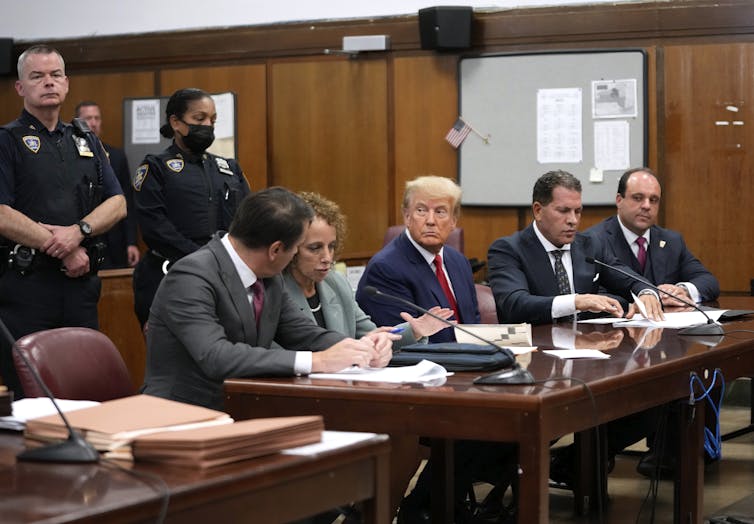
Much has been made of the unprecedented nature of the April 4, 2023 arraignment on criminal charges of former President Donald Trump following an indictment brought by Manhattan District Attorney Alvin Bragg. But a closer look at American history shows that the indictment of a former president was not unforeseen.
What the Constitution says about prosecuting a president
Article 1, Section 3, of the Constitution says that when a federal government official is impeached and removed from office, they “shall nevertheless be liable and subject to Indictment, Trial, Judgment and Punishment, according to Law.”
In his defense of this constitutional provision, Founding Father Alexander Hamilton noted that, unlike the British king, for whom “there is no constitutional tribunal to which he is amenable; no punishment to which he can be subjected,” a president once removed from office would “be liable to prosecution and punishment in the ordinary course of law.” Trump has been impeached twice, but not removed from office.
As a scholar with expertise in legal history and criminal law, I believe the punishment our Founding Fathers envisioned for high officeholders removed from office would also apply to those who left office in other ways.
Tench Coxe, a delegate from Pennsylvania to the Continental Congress from 1788–89, echoed Hamilton. He explained that while the Constitution’s speech and debate clause permanently immunized members of Congress from liability for anything they might do or say as part of their official duties, the president “is not so much protected as that of a member of the House of Representatives; for he may be proceeded against like any other man in the ordinary course of law.”
In Coxe’s view, even a sitting president could be arrested, tried and punished for violating the law. And, though Coxe didn’t say it explicitly, I’d argue that it follows that if a president can be charged with a crime while in office, once out of office, he could be held responsible like anyone else.
The indictment of Aaron Burr
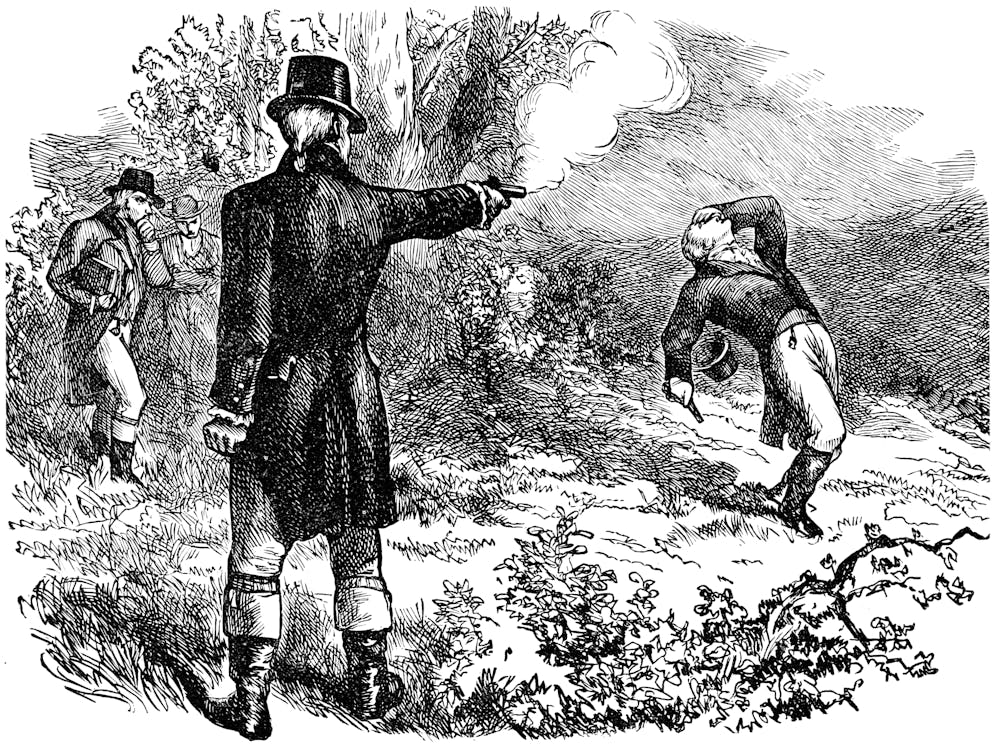
Hamilton’s and Coxe’s positions were put to an early test soon after the Constitution was ratified. The test came when jurors in New Jersey indicted Vice President Aaron Burr for killing Hamilton in a duel in that state.
The indictment charged that “Aaron Burr late of the Township of Bergen in the County of Bergen esquire not having the fear of God before his eyes but being moved and seduced by the instigation of the Devil … feloniously willfully and of his malice aforethought did make an assault upon Alexander Hamilton … [who] of the said Mortal wounds died.”
Indeed, Burr’s legal troubles were not over. In February 1807, after his term as vice president ended, he was arrested and charged with treason for plotting to create a new and independent nation separate from the U.S. This time, he stood trial and was acquitted.
The Strange case of Ulysses S. Grant
Fast forward to 1872, when the incumbent president, Ulysses S. Grant, was arrested in Washington, D.C., for speeding in his horse-drawn carriage.
The arresting officer told Grant, “I am very sorry, Mr. President, to have to do it, for you are the chief of the nation, and I am nothing but a policeman, but duty is duty, sir, and I will have to place you under arrest.”
As The New York Post recently recounted the story, Grant “was ordered to put up 20 bucks as collateral.” But he never stood trial.
20th and 21st century precedents
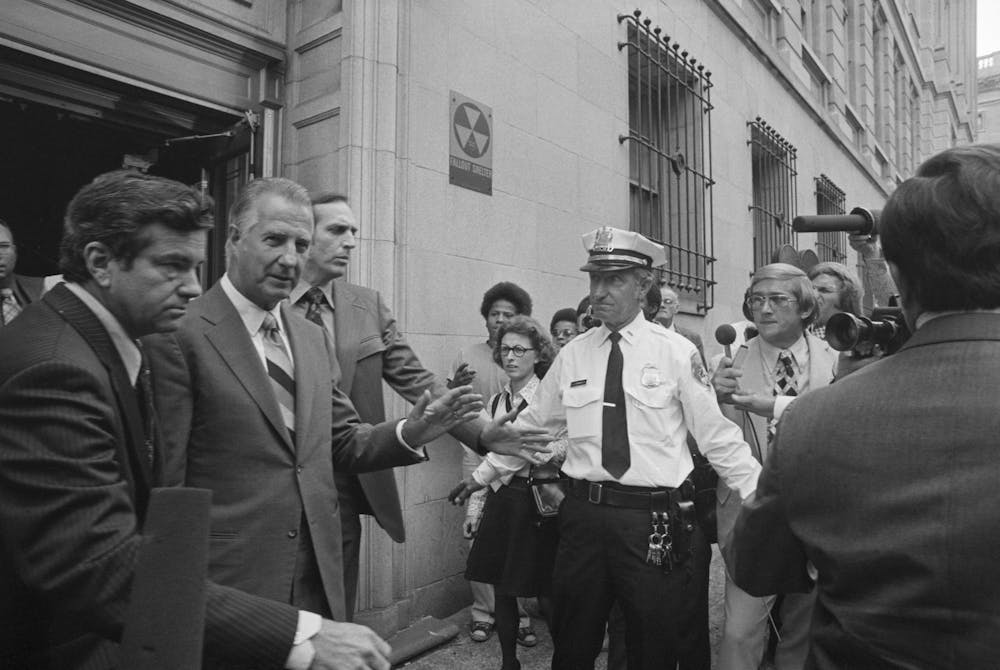
A little over a century later, Republican Vice President Spiro Agnew had a more serious brush with the law when he was accused by the Department of Justice of a pattern of political corruption starting when he was a county executive in Maryland and continuing through his tenure as vice president.
On Oct. 10, 1973, Agnew agreed to a plea bargain. He resigned his office and pleaded no contest to a charge of federal income tax evasion in exchange for the federal government dropping charges of political corruption. He was fined US$10,000 and sentenced to three years’ probation.
Spiro Agnew leaves a Baltimore federal courthouse on Oct. 10, 1973, after pleading no contest to tax evasion charges and resigning as vice president. Bettmann via Getty Images
Richard Nixon, the president with whom Agnew served, narrowly escaped being indicted for his role in the Watergate burglary and its cover-up. In 2018, the National Archives released documents, labeled the Watergate Road Map, that showed just how close Nixon had come to being charged.
Another occasion on which a president came close to being charged with a crime
occurred in January 2001, when, as an article in The Atlantic notes, independent prosecutor Robert Ray considered indicting former President Bill Clinton for lying under oath about his affair with former White House intern Monica Lewinsky.
Ultimately, Ray decided that if Clinton publicly admitted to “having been misleading and evasive under oath … he didn’t need to see him indicted.”
And in February 2021, after President Trump had left office, Republican Senate Minority Leader Mitch McConnell acknowledged that the former president, who had escaped being removed from office twice after being impeached, would still be legally “liable for everything he did while he was in office … We have a criminal justice system in this country. We have civil litigation. And former presidents are not immune from being held accountable by either one.”
What history teaches about Trump’s indictment
This brings us to the present moment.
For any prosecutor, including Alvin Bragg, the indictment and arrest of a former president is a genuinely momentous act. As Henry Ruth, one of the prosecutors who was involved in the Nixon case, explained in 1974, “Signing one’s name to the indictment of an ex-president is an act that one wishes devolved upon another but one’s self. This is true even where such an act, in institutional and justice terms, appears absolutely necessary.”
For the rest of us, this nation’s history is a reminder that ours is not the first generation of Americans who have been called to deal with alleged wrongdoing by our leaders and former leaders.
============================================================== Alecto, Megaera, and Tisiphone, I would have liked to read something about, say, Jackson, and Harding – but since neither faced any prosecution, their stories would really not add to this article, which is about actual and potential precedent. The point is, anyone who actually cared about what the founding fathers (would have) wanted would take steps to ascertain what that acually was, would they not? Republicans today are making it pretty obvious that they don’t care.
Yesterday, I visited Virgil (who returns all greetings). I hadn’t slept all that well, having been awakened over an hour early by pain in my left shoulder – I had been being careful with it, but I guess not careful enough. But I was fit to drive – I assume, since I navigated both ways without incident. The Scrabble set was in use when I arrived, but that visitor left early, so we got to use it right up to closing time. We didn’t keep score, just went for making things that worked. We played one complete game using every tile, and then a second with which we were in the end game when visitation ended. When I play with Virgil I don’t play any game competetively, since it’s not fun for either of us. Not keeping score helps that. I was mostly trying to spread out the board so there would be lots of openings, in which I only partially succeeded. But it was fun for both of us. Before I leave you with the news, I want to share this little tidbit., about what happens when cendorship gets so hot and heavy that a class in Renaissance Art gets censored – such as this one in Florida – and MSNBC picks it up and shares the censorship with a rude pun which they may or may not have known was a rude pun (in my experience, the usage is pretty much restricted to certain regions.)
Cartoon –
Short Takes –
https://joycevance.substack.com/p/why-waco? Civil Discourse – Why Waco?
Quote – Waco is a dark tale. It’s important for us to understand what it means for Trump to go there today. It’s not the sort of thing that should be brushed off as Trump being Trump. His presence will hold meaning for people who can be moved to action by it, just like the Proud Boys heard Trump’s call during the 2020 presidential debates to “stand back and stand by” as a call to future action. There is risk in tomorrow’s rally. That risk will continue as long as Trump remains on the public stage. It’s more important than ever that he be held accountable, both by the criminal justice system and by the voting public. Click through for history. This is really not flying over the heads, or under the radar, of those who pay attention to current affairs. However, way too many do not.
Daily Beast – How an Old Affidavit Could Undercut Trump’s Future Defense in the Stormy Daniels Case
Quote – back in 2000, Trump submitted a sworn affidavit to the Federal Election Commission demonstrating a complex understanding of some of the same campaign finance laws that now appear central to Bragg’s case. “I neither reimbursed, nor caused any other person to reimburse, any employee of Trump Hotels & Casino Resorts, Inc. or its subsidiaries for his or her contribution to Gormley for Senate,” Trump wrote at the time…. That case was fairly complex for a layperson, and it forced Trump to develop and express a sophisticated understanding of specific federal campaign finance laws. Click through for details. It would not surprise me if Trump** does plan to claim ignorance as a defense. Certainly his allies appear to be claiming it for him. It is to be hoped that that will not go well for him.