Yesterday, I didn’t do much. I received an order of groceries and for once got everything I ordered and nothing I didn’t. The news was light also, so I’m going with one deep and one women’s history today. When I say deep, I mean both serious and scary. Definitely worth some thought.
Heather Cox Richardson takes Talking Points Memo’s exposure of the SACR (Society for American Civic Renewal) and uses her knowledge of history to compare it to various happenings in our own history, leading up to the Civil War.
Yesterday, I learned that The Borowitz Report is now on substack. That email I received notifying me explains why I hadn’t received any newsletters for some time … although my New Yorker subscription is still up to date. This is not earthshaing in itself – I’m only sharing it to remind everyone that to read freecolumns on substack, there’s no paywall, but there is a request to become a paid subscriber, and you need to find that request and click on “Keep reading” or “Let me read it first” or whatever opt-out Substack has assigned to that particular participant. I recommend we all get used to it. Just since I started reading Substack authors, which is less than a year, Wonkette has joined it, and Talking Points Memo, and now Borowitz, and the number and names of people who blog there would suggest that one might not really need anythng else but Substack in order to be well informed. I’m not going there – I have numerous other sources I don’t want to give up – but just sayin’.
Yes, I know, Joe Manchin. But this time he’s exactly right. And if he can be right on this, he can be right on at least some other things. Which may explain why the party has put up with him for so long.
Right wing jurists. “History and tradition.” G.K, Chesterton once wrote that tradition is de,ocracy extended through time. His example was, Democracy says “Don’t ignore a good man’s opinion, even if he is (insert caste designator here.)” Tradition says, “Don’t ignore a good man’s opinion, even if he is dead.” Aside from the obvious facts that only men are included, and that all appear presumed to be “good” (IIRC he was writing in the nineteen-oughts), I have no objection to attending to the opinions of the dead. I’m fine if they vote. I’m not fine with their being dictators from the grave. History (with a little help from archeology) tells us that human sacrifice was a tradition for literally thousands of years. I don’t know, or know of, anyone who wants it back.
Yesterday, President Biden sent his budget to Congress – a trifling $7.3 trillion. I wouldn’t count on Congres, particularly the House, to act constructively. Also, I learned VP Harris will visit Colorado today. No, I won’t be there, but I expect to get a report from CPR today or tomorrow. And I found a link to the one-woman show about Ann Coulter. It was made in 2020, and will be available through 2026. It runs abou an hour and 53 minutes. If you have never seen it, you may want to – and if you have seen it, you may want to see it again.
Off topic, but, if you havent, please check out the open thread for March 9 – there’s news about Carrie (not, sadly good).
I don’t doubt this would make a lot of people angry – if they would see it – which they probably won’t. “Le secret des grandes fortunes sans cause apparente est un crime oublié, parce qu’il a été proprement fait” – Balzac – usually quoted in English as “Behind every great fortune lies a great crime.”
If you ever read “The 19th Magazine”, or if you saw this article in their newsletter, you instantly knew I would use it. Women’s History, Black History, even music history, all in one piece – of course I would.
Yesterday, the radio opera was Verdi’s “La Forza del Destino.” If you ever hear someone claim that opera has far-fetched, hard to believe, plots, this may be the one they are thinking of. It starts with the heroine planning to elope, since her father disapproves of her suitor. The suitor is a bit late, and, unfortunately, the father bursts into her room before they have left. He threatens the suitor, who responds by attempting to prove he is not an enemy by disarming. But the gun goes off (in the script he drops or throws it to the floor, which sets it off; this production is less clear about what happens.) And the unintended bullet kills her father, who, as he dies, curses his daughter. I used to say “And from there it just gets more unlikely.” Today I wouldn’t claim it gets less likely – however, it certainly doesn’t get any more likely either. The opera is not performed all that often, not because it isn’t popular (it is), but because the soprano part is at least as difficult as anything in opera, even Wagner’s operas, and Leontyne Prices just don’t turn up every day. There are excerpts from it which are frequently recorded separately – arias for the soprano and the tenor, a male chorus with soprano obligato, a duet with the tenor and the baritone – all of which are in different ways heartbreakingly beautiful.
Just a little exercise in “compare and conatrast” here:
“Not since President Lincoln and the Civil War have freedom and democracy been under assault at home as they are today…. History is watching. If the United States walks away, it will put Ukraine at risk. Europe is at risk. The free world will be at risk, emboldening others to what they wish to do us harm.” [President Joseph Biden, State of the Union Address, March 7, 2024]
“Fellow citizens, we cannot escape history. We of this congress and this administration will be remembered in spite of ourselves. No personal significance or insignificance can spare one or another of us. The fiery trial through which we pass will light us down in honor or dishonor to the latest generation We, even we here, hold the power and bear the responsibility.” [president Abraham Lincoln – Annual Message to Congress, December 1, 1862]
I did not watch or listen to the Republican response (can you blame me?), and, although some of this article has been “translated,” shall we say, it’s probably all we need to know about it.
Well, this is bad news for anyone with allergies who has ambitions of traveling into space! But I’m sure glad they found it out this way and not in use.
Heather Cox Richardson picked March 2, the anniversary of US Steel (founded 1901), to write about that and about the policy changes made by Teddy Roosevelt. She writes late, so I did not get it until the 3rd, and today is the 4th, so it’s 2 days late. But it really should never be forgotten.
Tennessee Brando made a video for Meidas Touch about what it’s like to be an addict, active and recovering. He made it in connection with Hunter Biden’s testimony. But I wish everyone could see it. I’m sharing the link to the DU article because you can always get from there to YouTube comments if you like, but you can’t go the other way.
So sorry I’m late. I had it ready bot forgot to post. Yesterday, the radio opera was Verdi’s “Ernani,” an early work, in a historic broadcast from 1962. For at least the last three years, the Met has been setting aside one broadcast for a historic performance, and they ask listeners to vote for whhich of ten or a dozen they would like to hear. I didn’t vote for “Ernani,” but I’m not surprised it won, because Leontyne Price. And the three male stars are equally prestigious to anyone who was listening to opera in the sixties. However, I voted for “Der Freischutz,” simply because one never hears it these days. But “Ernani” is almost as rare, and probably more interesting. One of the roles, the baritone, represents someone who actually lived and made history, though whether he was ever in love with Wlvira, or even whether she existed is doubtful. But Charles, Holo Roman Emperor, the fifth of that name, did exist, and was elected to that post by an “Electoral College” – a standing one, comprising princes (heads of state) of the countries within the empire. Charles, and Ernani (the tenor, an outlaw, as much due to politics as to poverty), and da Silva (the bass, a Spanish nobleman, and Elvira’s guardian) are all three in love with Elvira, who loves only Ernani. The character who strikes me as different from other characters in this opera, and indeed from most characters in opera is da Silva, who seems to think he’s Rodney Dangerfield, but unlike Dangerfield he means it seriously. I see no signs of him actually being persecuted – he just doesn’t always get his way (and who does?) But that victim mentality – almost a complex – may at least partially explain why he is so malicious. A play by Victor Hugo was the inspiraton for the opera.
https://en.wikipedia.org/wiki/Prince-elector
Phillis Wheatley was America’s first black woman poet. This article picks her up at the auction at which she was sold upon arrival – which was pretty consequential – and goes from there, as does the book, with vatious little-known information. IMO she deserves to better known, and not just her name.
This is a segment from The Young Turks featuring a doctor discussing Trump**’s inability to produce the correct word for the context. No, it won’t convince any of his cultists. But what interested me was his use of the term “brain damage.” Virgil has brain damage with far less symptoms than Trump**) and he and I both know how he got it – he got it from a traumatic brain injury (TBI). TBIs are often closed head injuries, as Virgil’s was but not always, but in any case it’s unlikely that one would experience one and have no idea that something had happened. How else could one damage one’s brain? Drugs would be one. Some condition which involved anoxia could. Could some or all of these symptoms go back to his bout of CoViD-19, for which he was hospitalized? I’m no doctor, but I would say absolutely. There is increasing evidence that even mild CoViD-19 can cause damage to the brain.
I learned that another state – Illinois – is now onn the bandwagon of keeping Trump off the ballot. Good luck to all of us.
Heather Cox Richardson is reminded in our time of the times of the “Know Nothing” Party in the 1850s. And with good reason. The actual party name was “the Native American Party,” and later just “the American Party.” Just as misidentified as today’s “Patriots.”
(I have multiple sources for all of this – Wikipedia is the main one but Performance Today deserves mention.) Today being the second day of Women’s History month, and on the heels of Black History month, it seems to me a good day to bring up Florence Beatrice Price, an American woman of color who was a composer in the 20th Century. She was told many times she was “not a good fit” by publishers – but the Chicago Symphony played her works and they were met with appreciation. Wanamaker’s there (the first retail department store in the U.S.) would hold annual composition contests for local composers, and she was a consistent winner, in one year winning first, second, and third place. But all her manuscripts were kept in the home she used as a summer residence, and when she died, it was abandoned. It was not until 2009 that someone interested in purchasing the home discovered them, and fortunately, was musical enough to know what they had. The works included four symphonies, two violin concertos, a piano concerto, other orchestral works, songs, choral works, chamber music, arangements of spirituals, and probably more piano solos than anything else. According to Performance Today, she is not the most performed female composer in America. And that happened in the 15 years between 2009 and now. I am so glad that I have lived to hear at least some of it. I am listening to one on the radio as I type – her Symphony #3. And it is beautiful.
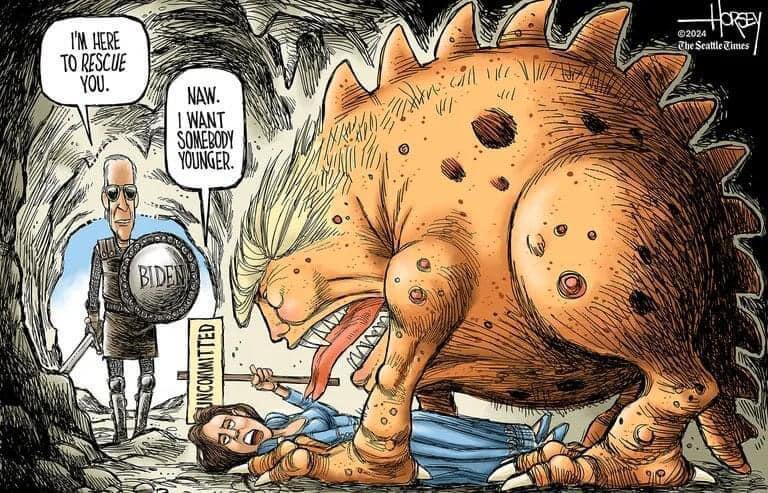
Yesterday, I got to thinking about “The City at the Edge of Forever – Episode 29 of Season I of the original Star Trek, it first aired in the spring of 1967. It made a deep impression on me. Just the thought of having to make a decision like that gave (and still gives) me the heebie-jeebies. But there is also trmendous relief associated with realizing one does not personally required to make that decision. Except that we are. Any election (not just Presidential) in which there is a spoiler candidate requires every eligible voter to make exactly that decision, and do it without the benefit of an omniscient entity who can show us exactly what the future will be on both sides of that decision. I can still hear in my mind the dialogue (Kirk) “But she was right!” (Spock) “Yes, she was. But she was right at the wrong time.” ooking back 57 years, I probably don’t have the exact words. But the meaning is exact. If you want to view it, it can be streamed free (but with ads) here, [You may need to turn on the sound and tell it to restart] or paid at Paramount Plus (you mught be able to get it on free trial) or Apple TV if you use either of those. If you just want to refresh your memory of the plot, Wikipedia is the place – and thrown in you get production history, information on all kinds of production disagreements, history of the music used, and a whole lot more, if you want it. And yes, I deliberately put together this and today’s cartoon.
Not only did the GOP (in the House) kill the National Security bill this week, but the GOP (all of them, even non-elected ones) are working overtime to make sure that security spending stays higher than is manageable. They yell at us for “Tax and spend,” but to me spending money you don’t have, and don’t have any idea how to get, is far more irresponsible.
At least something good happened (besides the Appeals Court verdict)- “The Post-Conviction Justice Unit of the Manhattan District Attorney’s Office moved to exonerate the two men after an investigation with defense counsel found the teenage witnesses who testified at trial had been treated as suspects.” No, they haven’t been locked up since 1987, thank God- they were released, one in 2007 and one in 2011, but that’s still way to long, and until now, they didn’t have a citizen’s full rights. And they’re far more gracious about it than I would be.