Yesterday, I received an email from the Holocaust Museum – not unusual. Sometimes I can handle reading some of the stories, sometimes not so much. But this one was only one story – about a survivor, David Bayer, who is also a museum volunteer, and is about to celebrate his 100th birthday. I signed an electronic birthday card for him, and you can too if you wish to. I really wonder – so many flat-earthers, and Holocaust deniers, and now election deniers – David has reached many people – but what will we do when he is gone? (Quote from the letter: “I’ve had many Museum visitors tell me it is firsthand experiences with survivors such as David that create a personal connection to Holocaust history.”
Cartoon –
Short Takes –
Letters from an American – September 16, 2022
Quote – As Josh Marshall of Talking Points Memo says, none of it adds up. None of it, that is, except the politics. DeSantis apparently dispatched the migrants with a videographer to take images of them arriving, entirely unexpectedly, on the upscale island, presumably in an attempt to present the image that Democratic areas can’t handle immigrants (in fact, more than 12% of the island’s 17,000 full-time residents were born in foreign countries, and 22% of the residents are non-white). But the residents of the island greeted the migrants; found beds, food, and medical care; and worked with authorities to move them back to the mainland where there are support services and housing. In the meantime, there are questions about the legality of DeSantis chartering planes to move migrants from state to state. Click through for full letter. She fills in the DeSantis travesty with background on Martha’s Vineyard and the truth about immigration and immigration policy.
Crooks & Liars – Lindell’s Subpoena Reveals ‘Subjects’ Of [election tampering] Investigation
Quote – The subpoena covers “all records and information” on Lindell’s phone that constitutes as evidence against seven named individuals or any other unnamed co-conspirators. It details several areas of interest for investigators related to Dominion voting systems and any efforts to damage or access them. Two of the individuals, Belinda Knisley and Sandra Brown, were Peters’ deputies in the Mesa County elections office and were charged in the Colorado state case earlier this year. Click through for more. I added “election tampering” to the title because there are so many investigation it’s hard to keep them straight.
Yesterday, The New Yorker’s newsletter informed me that Andy Borowitz has a new book out. It’s called, “Profiles in Ignorance.” In fact, so many newsletters were so informative today on interesting but less-than-earthshaking news the=at I was spoikled for choice. Elijah Cummings potrait was unveiled Wednesday (there’s a grammatical error in this one – it should be “lay in state,” not “lied in state.”) Heather Cox Richardson has a good overview of presidential (including their staff) lawlessness through the years. Axios has a story on the “Twitter Whistleblower,” about whom Beau of the Fifth Column says, “If we were scuba diving together, and he told me my bears was on fire, I’d blieve him.” And The Nib has an extended graphic story on the fraudulent lending practices of the nineties. And, in a story which is all over but can wait, the potential railroad strike appears to have been averted.
Cartoon –
Short Takes –
The 19th – The Affordable Care Act’s biggest gender-based protections are under threat
Quote – After a federal court decided that HIV prevention medication does not need to be covered under the Affordable Care Act, experts fear that many other reproductive health services — screening for sexually transmitted infections, breastfeeding counseling and even contraceptive care — could now be threatened. The ruling’s scope — including the nuances of how it could affect people’s insurance plans — will be addressed at a hearing [today]. If upheld, the case could ultimately reverse one of the most significant reforms established by the ACA, with particular impact on the law’s gender-based health protections. Click through for full article. These are the same “I’ve got mine, screw you” jerks who think they shouldn’t have to pay union dues, when in fact without the union their pay would be 50% less (and they’d have no weekends.) I think if they don’t want to be a part of the community, we should accomodate them in that by kicking them out.
Mother Jones – The Stigma of “Late-Term Abortions” Is the Point
Quote – As Laurie Bertram Roberts, who runs the Mississippi Reproductive Freedom Fund, puts it, the seemingly arbitrary 15-week mark “was right there where people start getting a little bit like, ‘Well, why would someone need an abortion that late?’” The reasons why people get them are often not all that different from “early-term” ones; in fact, many patients want to get their abortions earlier—but stigma, paired with the ever-growing net of restrictions pushed by lawmakers who claim to want to “protect women,” creates barriers that push people further into pregnancy before they can get care. Jessy Rosales knows from experience. Click through for the full reprint. Yes, it’s from 2021, but still needs to be pointed out. As Molly Ivins said, “No pregnant woman ever waddled by a Planned Parenthood and said, ‘Gee, it’s a nice day, I think I’ll get an abortion’.”
Yesterday, I saw my doctor for my annual visit. I’ve lost a little more weight since last year (some of it in my face, which is annoying, because on my cordless phones the answer/off puttons hit me right at the cheekbone, and now that the cheekbone is closer to the surface, I need to be reeally careful to not accidentally hang up), my blood pressure is the best it’s been in years, and my doctor tells me I look 10-15 years younger than I am. Not that any of that will prevent me from whining from time to time, but it may help cut down on any serious concern.
However, does anyone know anything about SpyKat? My Sunday message was returned with the message that her inbox was full, and I tried twice more (including yesterday) with the same result. The last time she commented or recommended was September 6. I have replied to that last comment hoping Disqus will notify her – although if she’s not checking her inbox, she may not see that either (unless they have a different email address for her.)
Cartoon –
Short Takes –
CPR – Clear Creek County deputies shoot and kill man who asked for help after car crash
Quote – After getting stuck on a dirt road in Clear Creek County in June, Christian Glass called 911 for help. Instead, the 22-year-old was killed while locked inside his own car after a long, tense, confusing and chaotic confrontation played out between him and Clear Creek deputies and a handful of other agencies. Video footage was released by his family’s lawyers. Click through for full story. Apparently the Clear Creek Sheriff’s Office is staffed with equal opportunity [insert epithet here]s. Glass was not a POC.
Daily Kos (David Neiwert) – Tragedy in small Michigan town once again demonstrates how lethal conspiracy theories can be
Quote – Responding officers first spoke with neighbors who had also reported gunfire. As they were doing so, they heard a gunshot from the Lanis’ house next door, and began moving toward it when Igor Lanis emerged from the front door, armed with shotgun. He reportedly fired at them and they fired back, killing him. It was the first time any Walled Lake police officer had ever shot anyone, Oakland County Sheriff Michael Bouchard said. “I think there was danger to anybody,” Bouchard said. “He had his keys with him so who knows where he was headed. …This is terribly sad on so many levels.” Click through for full story. There’s also a petition to sign. I note that the sister who was not present refers to QAnon as “demonic.” Some Christians do know where the demons are.
Yesterday, I added a video to the video thread after it had already published, because the breaking news in it appeared to me to be significant at lease. It was regarding an unplanned trip to DC made by Trump, in his jet, oddly dressed, with no publicity. The trip was late Sunday afternoon, and as of late Monday afternoon, there was still no word about it from the Trump** camp. The way Trump** broadcasts all of his movements down to the tiniest detail, the absence of publicity alone suggests that, whatever the trip was for, it must have been for some reason that was bad news for Trump**. And bad news for him is good news for us. That and one other thing inspired me so that I finished the September cartoons. (The other thing that cheered me was what Nameless posted about.)
Cartoon –
Short Takes –
Salon – Biden’s speech worked: Nearly 6 in 10 Americans agree MAGA is a threat to democracy
Quote – President Joe Biden gave a speech… [which] led to a great deal of media worrying about whether Biden’s speech was “divisive” or could backfire by recasting the fight to save democracy in “partisan” terms. There was reason to be worried. Americans tend to distrust politicians, viewing their public proclamations as political noise better dismissed than taken seriously. But in this case, it appears Biden’s choice to give the speech worked to focus voter attention on the very real threat to democracy posed by Trump and the MAGA movement. Click through – Of course he wasn’t going to reach active MAGA pushers, and eventually we shall have to deal with them. For now, the important thing is to get ALL non-MAGAs aware of the clear and present danger it reppresents.
CPR News – 4 things we learned from the first-ever release of data that shows how Colorado DAs prosecute cases
Quote – Eight district attorneys across the state — some representing rural areas, some from suburban districts and two representing Denver and Aurora — voluntarily participated in a year-long data project to shed some light on the secrecy behind prosecutions across the state in hopes of seeing how their offices could improve how they operate. The data, linked on eight different prosecutor websites, reveals some differences in how prosecutors treat white defendants and defendants of color, including Black and Hispanic. Click through for full story. To me,though the results are predictiable (and not great), the most hopeful thing about this story is that the participants instigated it themselves because that wanted to/thought they should be more transparent. That is hopeful.
Experts in autocracies have pointed out that it is, unfortunately, easy to slip into normalizing the tyrant, hence it is important to hang on to outrage. These incidents which seem to call for the efforts of the Greek Furies (Erinyes) to come and deal with them will, I hope, help with that. As a reminder, though no one really knows how many there were supposed to be, the three names we have are Alecto, Megaera, and Tisiphone. These roughly translate as “unceasing,” “grudging,” and “vengeful destruction.”
“It ain’t what you don’t know that gets you into trouble. It’s what you know for sure that just ain’t so.” This quote is credibly attributed to Mark Twain (since he said it, I’m sure he would not object to me doubting the attribution a little. So much is attributed to so few apeakers.) This is at least as true in politics as it is in any other endeavor. All one needs to do is look at any habitual Fox viewer to recognize that. And I’m sure no one will be surprised to learn that Dunning-Kruger also applies. But what people think and do in their life in general usually affects no one but themselves, and possibly a few people close to them whether personally or professionally. What people do in the voting booth affscts everyone else in the nation, as well as many all over the world.
==============================================================
Americans think they know a lot about politics – and it’s bad for democracy that they’re so often wrong in their confidence
As statewide primaries continue through the summer, many Americans are beginning to think about which candidates they will support in the 2022 general election.
Voters must navigate angry, emotion-laden conversations about politics when trying to sort out whom to vote for. Americans are more likely than ever to view politics in moral terms, meaning their political conversations sometimes feel like epic battles between good and evil.
But political conversations are also shaped by, obviously, what Americans know – and, less obviously, what they think they know – about politics.
In recent research, I studied how Americans’ perceptions of their own political knowledge shape their political attitudes. My results show that many Americans think they know much more about politics than they really do.
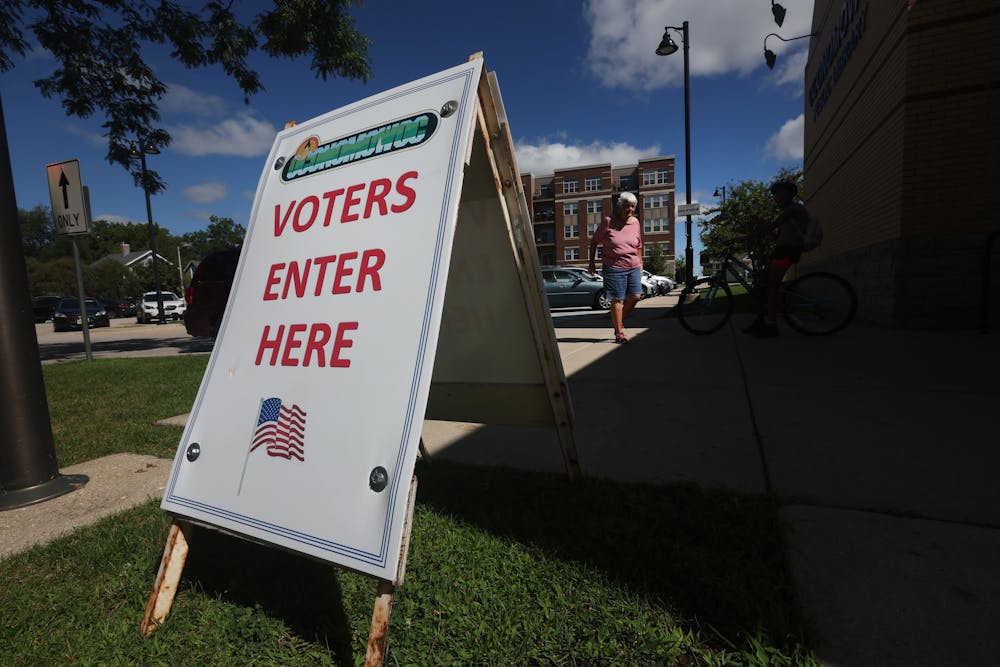
Voters arrive to cast their primary ballots at a polling place on Aug. 9, 2022, in Oconomowoc, Wisconsin. Scott Olson/Getty Images
Knowledge deficit, confidence surplus
Over the past five years, I have studied the phenomenon of what I call “political overconfidence.” My work, in tandem with other researchers’ studies, reveals the ways it thwarts democratic politics.
Political overconfidence can make people more defensive of factually wrong beliefs about politics. It also causes Americans to underestimate the political skill of their peers. And those who believe themselves to be political experts often dismiss the guidance of real experts.
Political overconfidence also interacts with political partisanship, making partisans less willing to listen to peers across the aisle.
The result is a breakdown in the ability to learn from one another about political issues and events.
A ‘reality check’ experiment
In my most recent study on the subject, I tried to find out what would happen when politically overconfident people found out they were mistaken about political facts.
To do this, I recruited a sample of Americans to participate in a survey experiment via the Lucid recruitment platform. In the experiment, some respondents were shown a series of statements that taught them to avoid common political falsehoods. For instance, one statement explained that while many people believe that Social Security will soon run out of money, the reality is less dire than it seems.
My hypothesis was that most people would learn from the statements, and become more wary of repeating common political falsehoods. However, as I have found in my previous studies, a problem quickly emerged.
The problem
First, I asked respondents a series of basic questions about American politics. This quiz included topics like which party controls the House of Representatives – the Democrats – and who the current Secretary of Energy is – Jennifer Granholm. Then, I asked them how well they thought they did on the quiz.
Many respondents who believed they were top performers were actually among those who scored the worst. Much akin to the results of a famous study by Dunning and Kruger, the poorest performers did not generally realize that they lagged behind their peers.
Of the 1,209 people who participated, around 70% were overconfident about their knowledge of politics. But this basic pattern was not the most worrying part of the results.
The overconfident respondents failed to change their attitudes in response to my warnings about political falsehoods. My investigation showed that they did read the statements, and could report details about what they said. But their attitudes toward falsehoods remained inflexible, likely because they – wrongly – considered themselves political experts.
But if I could make overconfident respondents more humble, would they actually take my warnings about political falsehoods to heart?
Poor self-assessment
My experiment sought to examine what happens when overconfident people are told their political knowledge is lacking. To do this, I randomly assigned respondents to receive one of three experimental treatments after taking the political knowledge quiz. These were as follows:
Respondents received statements teaching them to avoid political falsehoods.
Respondents did not receive the statements.
Respondents received both the statements and a “reality check” treatment. The reality check showed how respondents fared on the political quiz they took at the beginning of the survey. Along with their raw score, the report showed how respondents ranked among 1,000 of their peers.
For example, respondents who thought they had aced the quiz might have learned that they got one out of five questions right, and that they scored worse than 82% of their peers. For many overconfident respondents, this “reality check” treatment brought them down to earth. They reported much less overconfidence on average when I followed up with them.
Finally, I asked all the respondents in the study to report their levels of skepticism toward five statements. These statements are all common political falsehoods. One statement, for example, asserted that violent crime had risen over the prior decade – it hadn’t. Another claimed the U.S. spent 18% of the federal budget on foreign aid – the real number was less than 1%.
I expected most respondents who had received my cautionary statements to become more skeptical of these misinformed statements. On average, they did. But did overconfident respondents learn this lesson too?
Those who believe themselves to be political experts often dismiss the guidance of real experts. IvelinRadkov/iStock/Getty Images
Reality check: Mission accomplished
The results of the study showed that overconfident respondents began to take political falsehoods seriously only if they had experienced my “reality check” treatment first.
While overconfident respondents in other conditions showed no reaction, the humbling nature of the “reality check,” when they realized how wrong they had been, led overconfident participants in that condition to revise their beliefs. They increased their skepticism of political falsehoods by a statistically significant margin.
Overall, this “reality check” experiment was a success. But it reveals that outside of the experiment, political overconfidence stands in the way of many Americans’ ability to accurately perceive political reality.
The problem of political overconfidence
What, if anything, can be done about the widespread phenomenon of political overconfidence?
While my research cannot determine whether political overconfidence is increasing over time, it makes intuitive sense that this problem would be growing in importance in an era of online political discourse. In the online realm, it is often difficult to appraise the credibility of anonymous users. This means that false claims are easily spread by uninformed people who merely sound confident.
To combat this problem, social media companies and opinion leaders could seek ways to promote discourse that emphasizes humility and self-correction. Because confident, mistaken self-expression can easily drown out more credible voices in the online realm, social media apps could consider promoting humility by reminding posters to reconsider the “stance,” or assertiveness, of their posts.
While this may seem far-fetched, recent developments show that small nudges can lead to powerful shifts in social media users’ online behavior.
For example, Twitter’s recent inclusion of a pop-up message that asks would-be posters of news articles to “read before tweeting” caused users to rethink their willingness to share potentially misleading content.
A gentle reminder to avoid posting bold claims without evidence is just one possible way that social media companies could encourage good online behavior. With another election season soon upon us, such a corrective is urgently needed.
============================================================== Alecto, Megaera, and Tisiphone, the real estate business is supposed to come down to three things – location, location, and location. I’m tempted to say that fixing this issue comes down to civics, civics, and civics – but actually it would probably be more accurate to cite general education, critical thinking, and fact checking. Everything that the authoritarian right wing does not want.
In a sense, it is true that voting is not the only way, and in some ways not even the best way, to bring about progress. Before progress can happen, public opinion must be changed. But we are at a time in the history of our nation when pubic opinion is mostly with us, but the elected officials are not. In that impasse, only voting can help. We must, in spite of gerrymanding and other legal or even constitutional ways of rigging, vote people in who actually represent majority views, and vote people out who oppose them. Then perhaps we can make some actual progress.