Glenn Kirschner – Trump’s new $3 million criminal defense attorney paid for by his Save America PAC/his supporters.
Meidas Touch – BREAKING: Appeals Court RESPONDS to DOJ Mar-A-Lago Search Motion and SETS DEADLINE for Trump (Whew – that was fast)
The Lincoln Project – S.O.S. (I sent this to my Secretary of State, who is running for re-election. Maybe TLP will let her use it on TV.)
Senator Sheldon Whitehouse – The Scheme 18: Leonard Leo’s $1.6 Billion Payday (You can find ## 1-17 here [scroll down a bit], all neatly lined up) https://www.youtube.com/user/SenatorWhitehouse
Hey Fletch – GOP HAS GOT TO GO (The Midterm Song)
Beau – Let’s talk about who gets to pick Georgia’s next gov….
Yesterday, I decided that if I wanted to recognize Banned Books Week, I had better do so before the week was over (hence the FFT). I also received a grocery order. It came kind of late, and a few things were missing, but no substitutions, thank heaven. Both store that deliver are getting better at this (I probably should knock on wood as I type that.) Both now allow you to go down the entire list and mark each item “no substitutions” (or not) – so they don’r need to do any second guessing. One of them allows you to select a preferred substitute from a list of similar items – or specify no substitutions if none of them works This can be time consuming, but it’s way preferable to fighting after the fact about a bad substitution.
Also – Tish James has a mystery press conference scheduled for this morning at 10:30 Eastern.
Cartoon – 21
Short Takes –
Political Wire – Liz Cheney Introduces Bill to Avoid Repeat of January 6
Quote – [T]he legislation would direct challenges to state elections to courts and limit the vice president’s role in electoral vote-counting as “ministerial.” It also would raise the bar to challenge a state’s electors to one-third of both the House and Senate. Currently, if one member of Congress from each chamber objects to a presidential election during the arcane certification process, the chambers have to debate and hold a vote on the objection, as was done in 2021 Click through for article. It will definitely help (if they can get it through both houses, of course. The co-sponsor is Zoe Lofgren. Both are (says Captain Obvious) on the J6 committee. The more the committee learns, the tighter they could probably make it – but this is insurance against losing one or both houses. No point letting the perfect be the enemy of the good.
CPR News – New COVID Boosters: What to know about the bivalent vaccines that offer better protection against omicron
Quote – Q How is this new bivalent booster different from the original booster? A The original vaccines and booster were monovalent, which means they only contained genetic information for the original coronavirus strain. The new bivalent booster contains information for both the original strain we’ve seen since 2020 and the most commonly seen one now — omicron and its subvariant BA.5, which we’re seeing causing the most infections in Colorado. Click through for details. Colorado may be aabout a week late to the party, so you may already know this. But just in case.
Yesterday, I received an email from the Holocaust Museum – not unusual. Sometimes I can handle reading some of the stories, sometimes not so much. But this one was only one story – about a survivor, David Bayer, who is also a museum volunteer, and is about to celebrate his 100th birthday. I signed an electronic birthday card for him, and you can too if you wish to. I really wonder – so many flat-earthers, and Holocaust deniers, and now election deniers – David has reached many people – but what will we do when he is gone? (Quote from the letter: “I’ve had many Museum visitors tell me it is firsthand experiences with survivors such as David that create a personal connection to Holocaust history.”
Cartoon –
Short Takes –
Letters from an American – September 16, 2022
Quote – As Josh Marshall of Talking Points Memo says, none of it adds up. None of it, that is, except the politics. DeSantis apparently dispatched the migrants with a videographer to take images of them arriving, entirely unexpectedly, on the upscale island, presumably in an attempt to present the image that Democratic areas can’t handle immigrants (in fact, more than 12% of the island’s 17,000 full-time residents were born in foreign countries, and 22% of the residents are non-white). But the residents of the island greeted the migrants; found beds, food, and medical care; and worked with authorities to move them back to the mainland where there are support services and housing. In the meantime, there are questions about the legality of DeSantis chartering planes to move migrants from state to state. Click through for full letter. She fills in the DeSantis travesty with background on Martha’s Vineyard and the truth about immigration and immigration policy.
Crooks & Liars – Lindell’s Subpoena Reveals ‘Subjects’ Of [election tampering] Investigation
Quote – The subpoena covers “all records and information” on Lindell’s phone that constitutes as evidence against seven named individuals or any other unnamed co-conspirators. It details several areas of interest for investigators related to Dominion voting systems and any efforts to damage or access them. Two of the individuals, Belinda Knisley and Sandra Brown, were Peters’ deputies in the Mesa County elections office and were charged in the Colorado state case earlier this year. Click through for more. I added “election tampering” to the title because there are so many investigation it’s hard to keep them straight.
Experts in autocracies have pointed out that it is, unfortunately, easy to slip into normalizing the tyrant, hence it is important to hang on to outrage. These incidents which seem to call for the efforts of the Greek Furies (Erinyes) to come and deal with them will, I hope, help with that. As a reminder, though no one really knows how many there were supposed to be, the three names we have are Alecto, Megaera, and Tisiphone. These roughly translate as “unceasing,” “grudging,” and “vengeful destruction.”
“It ain’t what you don’t know that gets you into trouble. It’s what you know for sure that just ain’t so.” This quote is credibly attributed to Mark Twain (since he said it, I’m sure he would not object to me doubting the attribution a little. So much is attributed to so few apeakers.) This is at least as true in politics as it is in any other endeavor. All one needs to do is look at any habitual Fox viewer to recognize that. And I’m sure no one will be surprised to learn that Dunning-Kruger also applies. But what people think and do in their life in general usually affects no one but themselves, and possibly a few people close to them whether personally or professionally. What people do in the voting booth affscts everyone else in the nation, as well as many all over the world.
==============================================================
Americans think they know a lot about politics – and it’s bad for democracy that they’re so often wrong in their confidence
As statewide primaries continue through the summer, many Americans are beginning to think about which candidates they will support in the 2022 general election.
Voters must navigate angry, emotion-laden conversations about politics when trying to sort out whom to vote for. Americans are more likely than ever to view politics in moral terms, meaning their political conversations sometimes feel like epic battles between good and evil.
But political conversations are also shaped by, obviously, what Americans know – and, less obviously, what they think they know – about politics.
In recent research, I studied how Americans’ perceptions of their own political knowledge shape their political attitudes. My results show that many Americans think they know much more about politics than they really do.
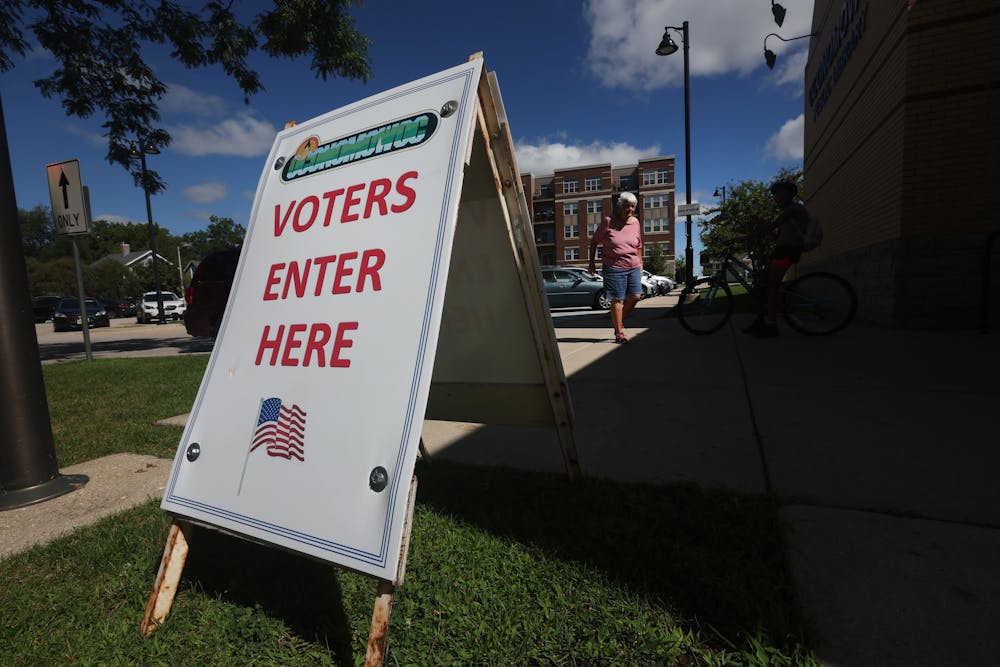
Voters arrive to cast their primary ballots at a polling place on Aug. 9, 2022, in Oconomowoc, Wisconsin. Scott Olson/Getty Images
Knowledge deficit, confidence surplus
Over the past five years, I have studied the phenomenon of what I call “political overconfidence.” My work, in tandem with other researchers’ studies, reveals the ways it thwarts democratic politics.
Political overconfidence can make people more defensive of factually wrong beliefs about politics. It also causes Americans to underestimate the political skill of their peers. And those who believe themselves to be political experts often dismiss the guidance of real experts.
Political overconfidence also interacts with political partisanship, making partisans less willing to listen to peers across the aisle.
The result is a breakdown in the ability to learn from one another about political issues and events.
A ‘reality check’ experiment
In my most recent study on the subject, I tried to find out what would happen when politically overconfident people found out they were mistaken about political facts.
To do this, I recruited a sample of Americans to participate in a survey experiment via the Lucid recruitment platform. In the experiment, some respondents were shown a series of statements that taught them to avoid common political falsehoods. For instance, one statement explained that while many people believe that Social Security will soon run out of money, the reality is less dire than it seems.
My hypothesis was that most people would learn from the statements, and become more wary of repeating common political falsehoods. However, as I have found in my previous studies, a problem quickly emerged.
The problem
First, I asked respondents a series of basic questions about American politics. This quiz included topics like which party controls the House of Representatives – the Democrats – and who the current Secretary of Energy is – Jennifer Granholm. Then, I asked them how well they thought they did on the quiz.
Many respondents who believed they were top performers were actually among those who scored the worst. Much akin to the results of a famous study by Dunning and Kruger, the poorest performers did not generally realize that they lagged behind their peers.
Of the 1,209 people who participated, around 70% were overconfident about their knowledge of politics. But this basic pattern was not the most worrying part of the results.
The overconfident respondents failed to change their attitudes in response to my warnings about political falsehoods. My investigation showed that they did read the statements, and could report details about what they said. But their attitudes toward falsehoods remained inflexible, likely because they – wrongly – considered themselves political experts.
But if I could make overconfident respondents more humble, would they actually take my warnings about political falsehoods to heart?
Poor self-assessment
My experiment sought to examine what happens when overconfident people are told their political knowledge is lacking. To do this, I randomly assigned respondents to receive one of three experimental treatments after taking the political knowledge quiz. These were as follows:
Respondents received statements teaching them to avoid political falsehoods.
Respondents did not receive the statements.
Respondents received both the statements and a “reality check” treatment. The reality check showed how respondents fared on the political quiz they took at the beginning of the survey. Along with their raw score, the report showed how respondents ranked among 1,000 of their peers.
For example, respondents who thought they had aced the quiz might have learned that they got one out of five questions right, and that they scored worse than 82% of their peers. For many overconfident respondents, this “reality check” treatment brought them down to earth. They reported much less overconfidence on average when I followed up with them.
Finally, I asked all the respondents in the study to report their levels of skepticism toward five statements. These statements are all common political falsehoods. One statement, for example, asserted that violent crime had risen over the prior decade – it hadn’t. Another claimed the U.S. spent 18% of the federal budget on foreign aid – the real number was less than 1%.
I expected most respondents who had received my cautionary statements to become more skeptical of these misinformed statements. On average, they did. But did overconfident respondents learn this lesson too?
Those who believe themselves to be political experts often dismiss the guidance of real experts. IvelinRadkov/iStock/Getty Images
Reality check: Mission accomplished
The results of the study showed that overconfident respondents began to take political falsehoods seriously only if they had experienced my “reality check” treatment first.
While overconfident respondents in other conditions showed no reaction, the humbling nature of the “reality check,” when they realized how wrong they had been, led overconfident participants in that condition to revise their beliefs. They increased their skepticism of political falsehoods by a statistically significant margin.
Overall, this “reality check” experiment was a success. But it reveals that outside of the experiment, political overconfidence stands in the way of many Americans’ ability to accurately perceive political reality.
The problem of political overconfidence
What, if anything, can be done about the widespread phenomenon of political overconfidence?
While my research cannot determine whether political overconfidence is increasing over time, it makes intuitive sense that this problem would be growing in importance in an era of online political discourse. In the online realm, it is often difficult to appraise the credibility of anonymous users. This means that false claims are easily spread by uninformed people who merely sound confident.
To combat this problem, social media companies and opinion leaders could seek ways to promote discourse that emphasizes humility and self-correction. Because confident, mistaken self-expression can easily drown out more credible voices in the online realm, social media apps could consider promoting humility by reminding posters to reconsider the “stance,” or assertiveness, of their posts.
While this may seem far-fetched, recent developments show that small nudges can lead to powerful shifts in social media users’ online behavior.
For example, Twitter’s recent inclusion of a pop-up message that asks would-be posters of news articles to “read before tweeting” caused users to rethink their willingness to share potentially misleading content.
A gentle reminder to avoid posting bold claims without evidence is just one possible way that social media companies could encourage good online behavior. With another election season soon upon us, such a corrective is urgently needed.
============================================================== Alecto, Megaera, and Tisiphone, the real estate business is supposed to come down to three things – location, location, and location. I’m tempted to say that fixing this issue comes down to civics, civics, and civics – but actually it would probably be more accurate to cite general education, critical thinking, and fact checking. Everything that the authoritarian right wing does not want.
In a sense, it is true that voting is not the only way, and in some ways not even the best way, to bring about progress. Before progress can happen, public opinion must be changed. But we are at a time in the history of our nation when pubic opinion is mostly with us, but the elected officials are not. In that impasse, only voting can help. We must, in spite of gerrymanding and other legal or even constitutional ways of rigging, vote people in who actually represent majority views, and vote people out who oppose them. Then perhaps we can make some actual progress.
Yesterday, Queen Elizabeth II quietly passed away. This saddens me because I don’t have a lot of respect for, or confidence in, the new Charles III. But – of course – it is what it is. The New Yorker has published a very thoughtful retrospective on her. Also yesterday, I received approval to visit Vergil Sunday, so it will be one of those days.
Cartoon –
Short Takes –
HuffPost – Hundreds of Law Enforcement, Military Part of Jan. 6-Linked Oath Keepers: Report
Quote – The Anti-Defamation League Center on Extremism pored over more than 38,000 names on leaked Oath Keepers membership lists and identified more than 370 people it believes currently work in law enforcement agencies — including as police chiefs and sheriffs — and more than 100 people who are currently members of the military. It also identified more than 80 people who were running for or served in public office as of early August. The membership information was compiled into a database published by the transparency collective Distributed Denial of Secrets. Click through for story. On one level this is terrifying – but Beau actually found it encouraging, because 370 out of 38,000 and 100 out of 38,000 are not very large percentages. If he had looked up the actual number of law enforecement and active duty military (665,380 and 1.195 million respectively), he might have felt even better. But it’s important to know, and good that there’s now a database.
The New Yorker – The Election Official Who Tried to Prove “Stop the Steal”
Quote – Douglas Frank,… a high-school math and science teacher with a doctorate in chemistry, had previously been promoting another mathematical formula that, he claimed, allowed him to determine the number of covid cases more accurately than state health authorities and the media. “I was modelling every single county in the United States, and people would come to my social-media pages to find out what the real numbers were,” Frank said. “So that’s how Sherronna first met me. I was on her podcast, and I had her on mine.” Frank told me that, after building an audience of covid skeptics with his revisionist statistics, he was invited by several politicians to examine their 2020 election results. “I noticed a pattern,” Frank said. “And the pattern enables me to go into any state and look at one county. And, once I’ve looked at one county, I can predict all of the other counties to preposterous accuracy.” PolitiFact, the fact-checking arm of the Poynter Institute, a nonprofit journalism school and research organization, has given one of Frank’s claims about vote manipulation a hundred-per-cent “Pants on Fire” rating, Click through for full investigative reporting. This really scares me, more so than the obviously violent.
Glenn Kirschner – Judge Cannon’s unjustified special master ruling; Barron’s bedroom; and DOJ’s continued inaction (Southern District of Florida appeals to the Eleventh Circuit. The SCOTUS justice assigned to the Eleventh Circuit is Clarence Thomas. God help us)
Meidas Touch – Top British Broadcaster SLAMS Mainstream Media FREAKOUT over Biden’s Pro-Democracy Speech
The Lincoln Project – Last Week in the Republican Party, Sep. 6, 2022
MSNBC – Not Everyone With ‘Political Integrity’ Should Run, Says Writer (Long, but good point[s])
“Honest Russian Army Ad”
Beau – Let’s talk about the loneliest man on Earth….