Yesterday, I visited Virgil. Most of the time I was the ony visitor, but another one came after I got there (and left before I did.) Virgil returns all greetings as usual – this time he went so far as to say he was “thrilled” (his word) by them. On the way down, before getting on the Interstate, I came to a traffic light which turned green while I was approaching, but no one moved. When I got close enough to see why, it was because we were all waiting for a gaggle of Canada geese to finish crossing the road on foot. We do get a lot of them come through, and not just in the winter. Sometimes one only hears them (from a couple of blocks away – they can be quite loud.) Golf course managers detest them but are not allowed to harm them, thankfully. I do sympathize. Goose droppings are not something one wants on a golf course. But they can be so charming (the geese, not the managers)!
Cartoon –
Short Takes –
Aeon – Hail the maintainers
Quote – As the pursuit of innovation has inspired technologists and capitalists, it has also provoked critics who suspect that the peddlers of innovation radically overvalue innovation. What happens after innovation, they argue, is more important. Maintenance and repair, the building of infrastructures, the mundane labour that goes into sustaining functioning and efficient infrastructures, simply has more impact on people’s daily lives than the vast majority of technological innovations. Click through for complete essay. Aeon has Creative Commons, but only for “idea”s, and this is an “essay.” Otherwise I think I moght have used it for a Furies column. It expresses, far better than I could, what was trying to say in last week’s Furies about not everyone in Congress needs to write legislation to be a successful legislator. Also, there are comments (though you need to bring them up), of which one references the Hindu trinity (the Trimurti) very effectively.
Crooks & Liars – Transcripts: Jared Blocked Biden Transition From Covid Planning
Quote – A former Trump administration official, Alyssa Farah Griffin, told the committee that Dr Deborah Birx, who headed the White House’s coronavirus task force under Mr Trump, had in the days after election day, asked if the Biden team should be looped in to plans to combat the pandemic. “Absolutely not,” Ms Griffin said Mr Kushner had told the meeting. She added: “And then we just moved on”. Click through for story. You may already have seen it. Well, color me nor surprised.
Experts in autocracies have pointed out that it is, unfortunately, easy to slip into normalizing the tyrant, hence it is important to hang on to outrage. These incidents which seem to call for the efforts of the Greek Furies (Erinyes) to come and deal with them will, I hope, help with that. As a reminder, though no one really knows how many there were supposed to be, the three names we have are Alecto, Megaera, and Tisiphone. These roughly translate as “unceasing,” “grudging,” and “vengeful destruction.”
Going into a New Year, a new Congress, and a new election cycle, after the end of a cycle which has produced some of the – to be charitable – weirdest candidates ever seen in the United States (at least in our lifetimes), I thought it might be a good idea to take a critical look at suggestions for how to find, draft, and elect candidates who will work for us. Let me say right now, I am not totally on board with the scoring system the author proposes – I see the possibiity (or probability, especially for Republicans) of ambitious legislators drafting and introducing large amounts of nonsense legislation in order to get high marks. Not everyone is, or should be, a creator. We also need analysts – and above all, votes. Good, sound votes. But it is a place to start.
==============================================================
Workhorses, not show horses: Five ways to promote effective lawmaking in Congress
Americans dislike Congress, especially when it fails to act on pressing problems. They are then surprised by legislative accomplishments on climate change, gun control and maintaining competitiveness with China.
We have spent more than a decade exploring the thousands of bills and hundreds of laws produced by members of Congress each year. We find that individual representatives and senators vary dramatically in how interested they are in lawmaking and how effectively they advance their proposals. And we see opportunities to build a better Congress.
We have devised and generated a “Legislative Effectiveness Score” for each member of the House and Senate for each two-year Congress for the past 50 years. These scores are based on 15 metrics, capturing how many bills each lawmaker sponsors, how far they progress toward law and how substantively significant they are. The scores are politically neutral, with members of both parties scoring higher upon advancing whatever policies they think are best.
Voters can use these scores to see how their political representatives have fared in this measure, perhaps finding them among the 23% of representatives or 19% of senators who were highly effective in the most recently completed Congress. And researchers use them to determine the factors that make lawmakers effective in Congress.
Based on our work, we have identified five ways that legislators, reformers and voters can help promote effective lawmaking in Congress.
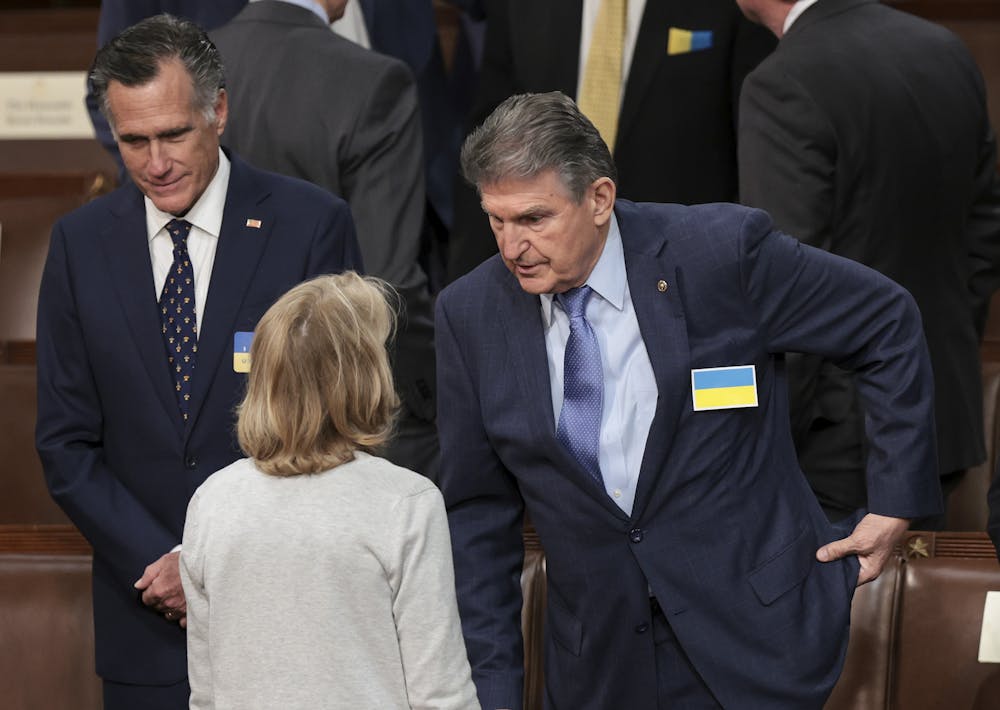
Lawmakers willing to work with those from the other party are the most successful at advancing their bills through Congress. GOP Sens. Mitt Romney of Utah, left, and Lisa Murkowski of Alaska and Democratic Sen. Joe Manchin of West Virginia talk during a joint session of Congress. Win McNamee/Getty Images
1. Lawmakers can focus their legislative agendas on their interests, committee assignments and constituency needs
Members of Congress face many demands on their time. They are almost always campaigning or raising money for the next election. Their time on Capitol Hill is punctuated with committee meetings and calls to votes on the House or Senate floor.
Such pressures leave little time to formulate new policies, build coalitions and advance their proposals. Effective lawmakers do not have more time than others – they simply align these various activities toward a common goal of lawmaking.
Effective lawmakers introduce bills that combine their own interests and passions with the needs of their constituencies and their committee assignments.
Thus, time spent away from Washington, in their home states and districts, is focused on identifying the policy needs of their constituents and highlighting their policy successes; time in committee is spent making and refining their policy proposals; time milling around between votes is used to build coalitions.
For the effective lawmaker, all these different activities form a coherent whole.
2. Legislators can view lawmaking as a team sport
No member of Congress can accomplish anything by himself or herself. Effective lawmakers recognize this and build a successful team.
They then join with like-minded colleagues to take advantage of the added resources provided by legislative caucuses, such as additional staff support and independent policy analyses, apart from the help provided by party leadership.
Moreover, for effective lawmakers, their team is not limited to their political party. Those willing to co-sponsor bills written by members of the other party find more bipartisan support for their own efforts. Our analysis demonstrates that such bipartisan lawmakers are the most successful at advancing their bills through Congress.
3. Lawmakers can specialize and develop policy expertise
Members of Congress need to be generalists to vote knowledgeably on diverse policy topics on any given day. Many take that generalist view to their lawmaking portfolio, sponsoring legislation in each of the 21 major issue areas addressed by Congress.
But we find that the most effective lawmakers dedicate about half of their time, attention and legislative proposals to a single issue area. By becoming an acknowledged experts in issues of health or education or international affairs, for example, lawmakers become central to policy formulation in their area of interest.
4. Reforms can reinforce good lawmaking habits
Individual lawmakers in Congress could adopt any of the practices above to become more effective. But institutional reforms could help reinforce such good behaviors.
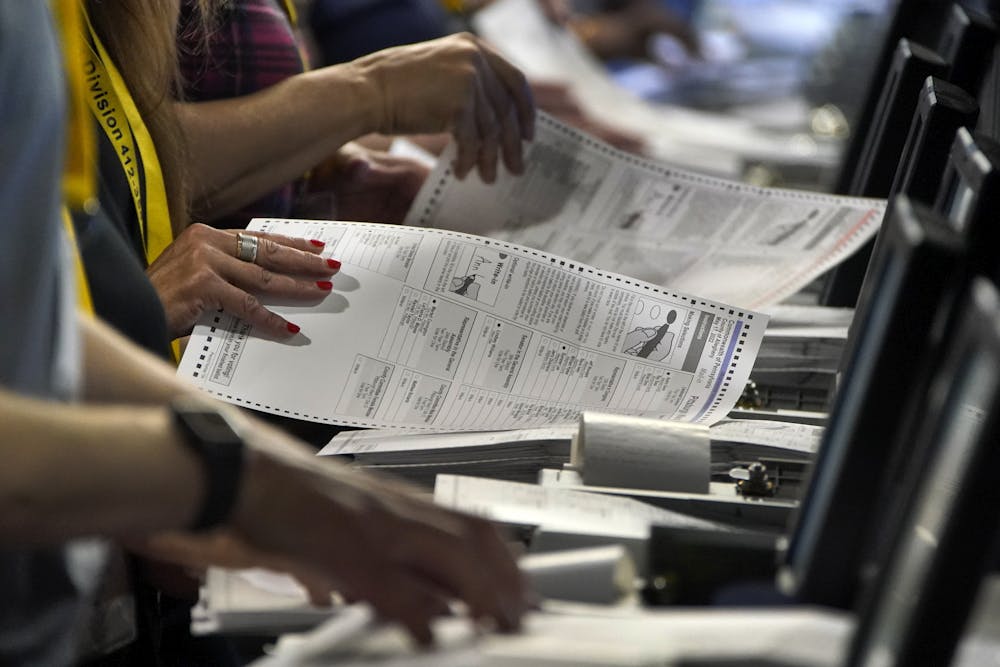
Election workers in Pittsburgh recount ballots on June 1, 2022, from the recent Pennsylvania primary election. AP Photo/Gene J. Puskar
5. Voters can reward effective lawmaking
Without electoral rewards for effective lawmaking, members of Congress may focus on being show horses rather than legislative workhorses.
The role of voters starts with the initial selection of candidates. Voters might consider whether candidates demonstrate policy expertise and speak about the benefits of bipartisanship, for example. They might consider our analysis showing that effective state legislators and women tend to be more effective lawmakers in Congress, on average.
On the whole, Congress can function much better. Effective lawmakers from the past have shown the path forward. Our analysis of 50 years of data offers lessons that any representative or senator can adopt, as well as reforms and electoral pressures that can nudge them in the right direction.
============================================================== Alecto, Megaera, and Tisiphone, I realize bipartisan action is pretty well necessary for change (in fact, for any change – positive of negative). At this point in time, however, broad bipartisanship is not going to be helpful … because any idea all, or even a good majority, of Republican legislators agree on is going to be guanopsychotic. Seriously. It was recently pointed out that there is a debate on whose fault it is that George Santos got elected, and the two candidates for blame are – the Democrats and the Media. No one seems to think Republicans are to blame – because everyone has come to expect that lies are simply who Republicans are. (See today’s video thread.) Of course that will hurt them in the long run, and when it does, the hurt will be long lasting. But, for now, we are stuck with it.
Yesterday, the opera wasn’t an opera, but a collection of excerpts from operas previously broadcast, some more or less recently, some way, WAY back. What they had in common was that each was from the Met debut of a singer(/actor/storyteller – plus one conductor) who later became an international star. Kiri Te Kanawa was one, and another was Latonia Moore (you may remember I heard that debut – she stepped in as understudy and I was, like, “Wow!”) Not all, of course, were quite that “A Star Is Born” dramatic – some stars were pretty well established elsewhere before coming to the Met – but some were (Astrid Varnay and Te Kanama). The range was from Moore (2012), the newest, all the way back to Bidu Sayão on February 13, 1937.
Cartoon –
Short Takes –
ProPublica – They Called 911 for Help. Police and Prosecutors Used a New Junk Science to Decide They Were Liars.
Quote – Junk science in the justice system is nothing new. But unvarnished correspondence about how prosecutors wield it is hard to come by. It can be next to impossible to see how law enforcement — in league with paid, self-styled “experts” — spreads new, often unproven methods. The system is at its most opaque when prosecutors know evidence is unfit for court but choose to game the rules, hoping judges and juries will believe it and vote to convict. Click through for details. You thought facial recognition technology was bad? Hold these p[eople’s beer (And I use the term “people” loosely. I questin their humanity.)
National Public Radio – Why scientists dug up the father of genetics, Gregor Mendel, and analyzed his DNA
Quote – Sequencing his DNA revealed genetic variants linked to diabetes, heart problems, and kidney disease. The variant that most intrigued Fairbanks was in a gene that has been associated with epilepsy and neurological issues. “He suffered throughout his life from some sort of a psychological or neurological disorder that caused him to have very severe nervous breakdowns,” says Fairbanks. “That may well have been an inherited condition – and that was a fascinating discovery that these scientists made.” Click through for story. At first it sounds morbid – but on reflection, I think he would take it in the sirit of homage in which it was done. (He might have even gotten a chuckle out of it.)
Yesterday, I decided that, since almost everyone is doing end-of-year retrospectives, I didn’t have to. Instead, since I have a couple of depressing sories which unfortunately are important, I at least made a satire sandwich. I hope the middle one gives you a chuckle or a grin, maybe even a LOL.
Cartoon –
Short Takes –
Trigger Warning Denverite – Migrants in Denver faced horror on their journeys to the U.S., but despite their desperate risks, many will be forced to leave.
Quote – Kevin, who’s 22 and declined to tell us his last name, is one of at least 1,500 newly arrived migrants who’ve been sheltered by the city this month. He’s one of millions who’ve taken dangerous paths through jungles and deserts over the years to ask the U.S. government for asylum, legal and safe passage into the country. But that status is far from a guarantee. “Imagine traveling with your child, then your child dies and you arrive in the United States only to be deported,” he told us in Spanish during a recent visit to a church-run shelter. “You lost your child and you lost your dream. So then it’s difficult.” Click through for full story, if you can bear it There is a trigger warning.
SATIREWonkette – Donald Trump Has Not Turned His Back On Me! He’s Turned His Front Towards Himself! By Sean Hannity.
Quote – I can hear all my listeners out there asking, “Sean, why are you letting the neighborhood children break wooden boards over your head? Is this a Make a Wish Foundation thing? Are the kids all cancer patients whose dying dream was to beat the crap out of Sean Hannity with a two-by-four?” Well, I can assure you it’s nothing like that. I would never do anything nice for a sick child. No, what’s happening is that a bunch of angry MAGA types in the area sent their little brats to beat up on me because they heard I admitted under oath in a deposition that I did not actually believe “for one second” that Donald Trump lost the election due to widespread voting fraud. Click through – It couldn’t happen to a nicer guy. (Try not to overdose on Schadenfreude.)
Yo_Mama_Been_Loggin (Democratic Underground) Associated Press – Supreme Court asked to bar punishment for acquitted conduct
Quote – A jury convicted Dayonta McClinton of robbing a CVS pharmacy but acquitted him of murder. A judge gave McClinton an extra 13 years in prison for the killing anyway…. McClinton’s case and three others just like it are scheduled to be discussed when the justices next meet in private on Jan. 6. Click through for details. Even for today’s Republican party, this is jaw-dropping abuse of power.








 Yo_Mama_Been_Loggin (Democratic Underground)
